
We Tried to Plan Delhi, Kashmir & Ladakh Together. Here’s Why Every Operator Said It Couldn’t Be Done — And What We Found Instead
The Taj Mahal at dawn. A shikara gliding across Dal Lake at golden hour. Bactrian camels on sand dunes beneath snow peaks. Pangong Lake in electric turquoise. All of it — in twenty days, one private vehicle, one operator, zero headache. This is the trip most travellers piece together badly. Here is how to do it right.
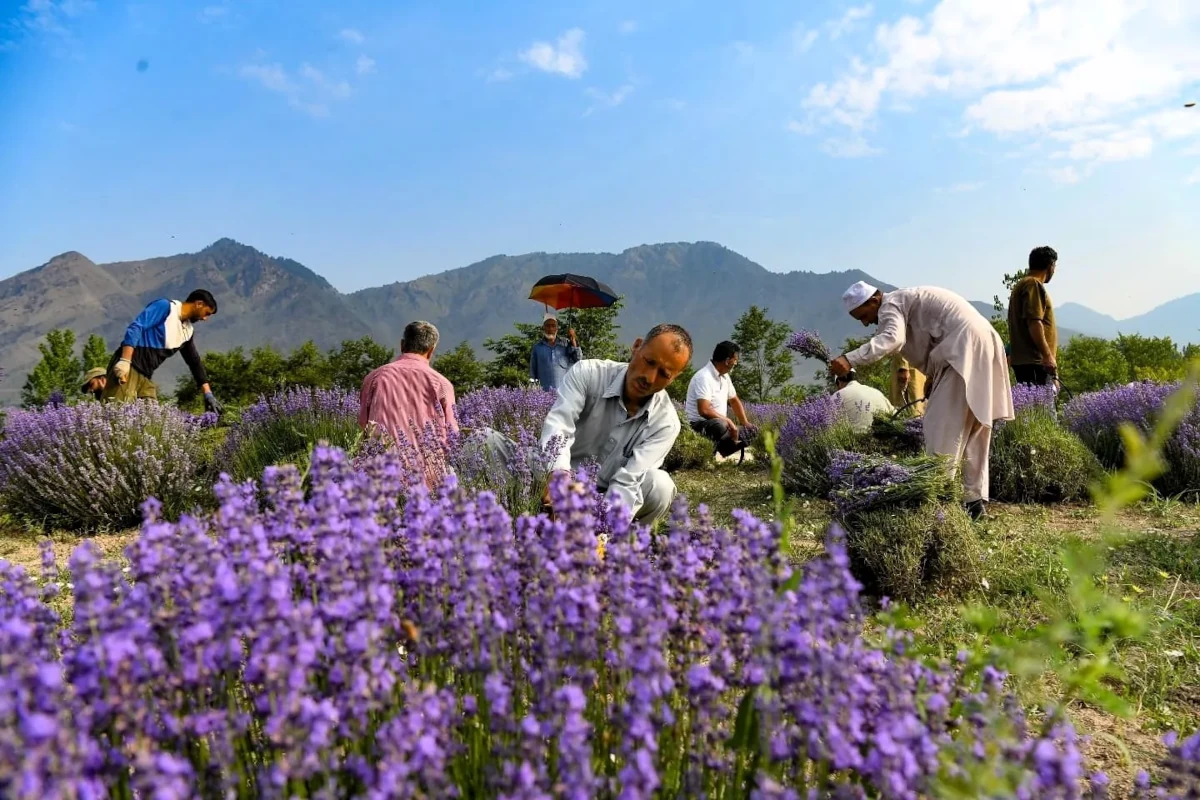
I have a confession to make. When I first started planning a trip that combined India’s Golden Triangle with Kashmir and Ladakh, I spent three weeks drowning in browser tabs. Seventeen different operators. Twelve different itineraries. None of them joined up.
The Delhi tour companies knew the Golden Triangle cold — Taj Mahal, Amber Fort, all of it — but when I asked about Kashmir, they referred me elsewhere. The Kashmir operators were excellent on Dal Lake and Gulmarg, but when I asked about crossing overland to Ladakh, the conversation went quiet. And the Ladakh specialists? Outstanding on Pangong and Nubra, but they all assumed you’d fly into Leh. Nobody — not one operator — offered to take you seamlessly from the Red Fort in Delhi to the turquoise shores of Pangong Lake, with everything in between handled.
That is exactly the problem that the India Grand Circuit by Summit Routes solves. And having now done this trip, I can tell you: the fact that this package exists at all, in the form it does, is quietly remarkable.
This is not a standard tour. It is the only fully managed, private, end-to-end circuit in north India that connects three of the subcontinent’s greatest travel regions — the Mughal Golden Triangle, the Kashmir Valley, and the Ladakh plateau — under one operator, one vehicle network, and one logical route that gains altitude progressively from the plains to the Himalayan high desert. From Delhi all the way to Leh, with the Taj Mahal, Dal Lake, Zojila Pass, Khardung La, and Pangong Tso between them.
Twenty days. One team. Nothing falls through the cracks.
The Fragmentation Problem: Why Travellers From Seoul, Singapore and Stuttgart All Hit the Same Wall
Whether you are flying in from Seoul, Singapore, Taipei, Bangkok, Amsterdam, or Munich, the planning challenge is identical. India is enormous, and the north Indian Himalayan corridor — from Delhi to Kashmir to Ladakh — spans three entirely different cultural and administrative zones, each with its own permit system, its own seasonal road windows, its own altitude considerations, and its own network of local operators.
The Golden Triangle is handled by Delhi-based cultural tour companies. Kashmir is handled by Srinagar-based valley operators. Ladakh is handled by Leh-based high-altitude specialists. Each group is excellent within its territory. None of them cross over. If you attempt to stitch three separate bookings together independently, here is what typically happens:
You arrive in Leh — the crown jewel of the whole journey — already exhausted from the logistical joins, without proper altitude preparation, because nobody told you that flying directly from Srinagar to Leh without the overland acclimatisation window significantly increases your risk of altitude sickness. Or you lose two days in Delhi waiting for a Kashmir booking to align. Or you discover at the last minute that your Pangong Lake permit was never arranged because your Srinagar operator assumed your Leh operator would handle it, and your Leh operator assumed you’d sort it yourself.
The India Grand Circuit exists precisely because Summit Routes — based in Kashmir, operating across all three regions — got tired of watching international visitors arrive in fragments. The tour is designed as a single flowing journey, not three holidays bolted together. The route is logical: fly into Delhi, drive the Golden Triangle south, fly to Srinagar, traverse the Kashmir Valley north and east, cross the Zojila Pass overland into Kargil, drive the monastery belt into Leh, and complete the full Ladakh high-altitude circuit before flying out. One direction. Progressive altitude gain. One operator throughout.
Three Circuits, One Journey: From Mughal Marble to Himalayan Desert in Twenty Days
The Grand Circuit divides naturally into three movements, each with its own character, its own pace, and its own cultural register. Understanding this structure helps you appreciate why twenty days is not excessive — it is the minimum needed to do all three justice.
Delhi · Agra · Jaipur · Four days of Mughal and Rajput India
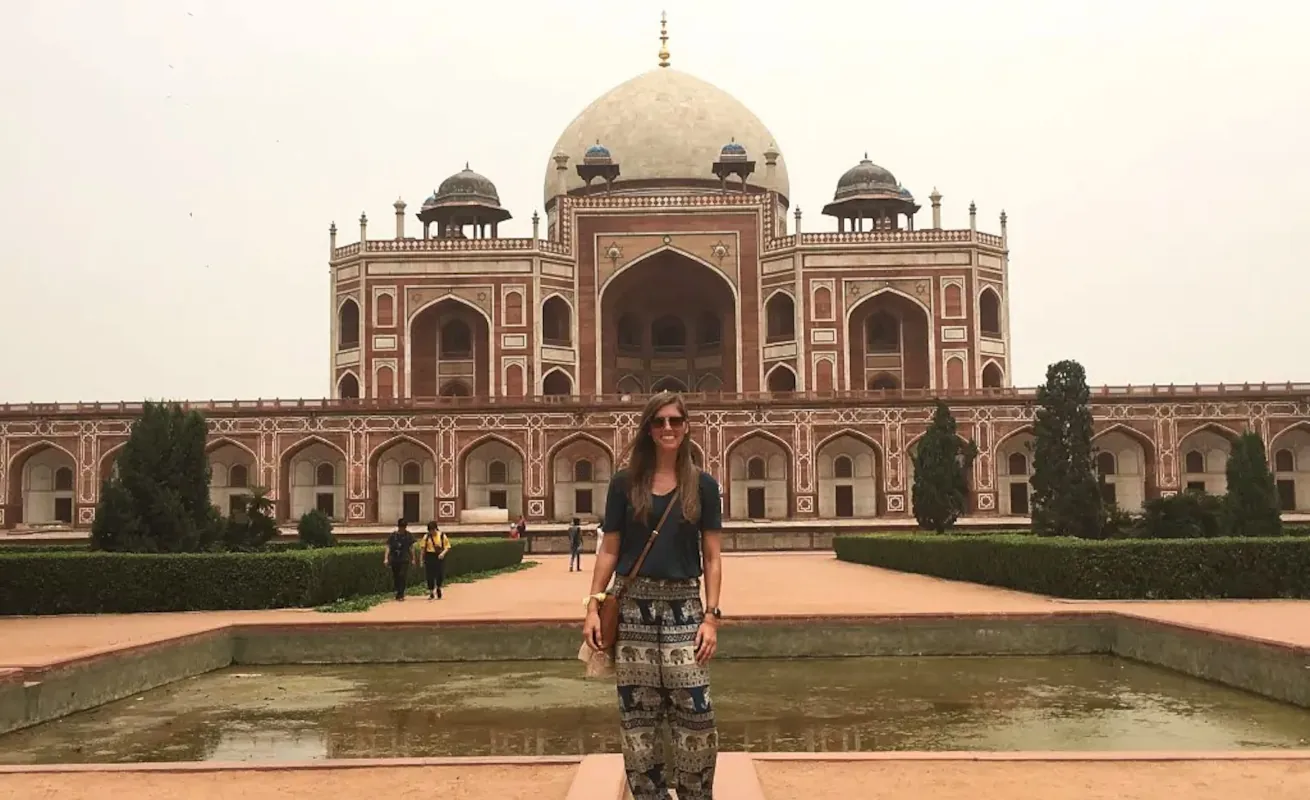
For travellers from East and Southeast Asia, this section alone justifies the intercontinental flight. The Mughal empire at its peak produced three of the most extraordinary architectural sites on earth within a two-hundred-kilometre triangle — and the Grand Circuit gives you all three properly, without rushing.
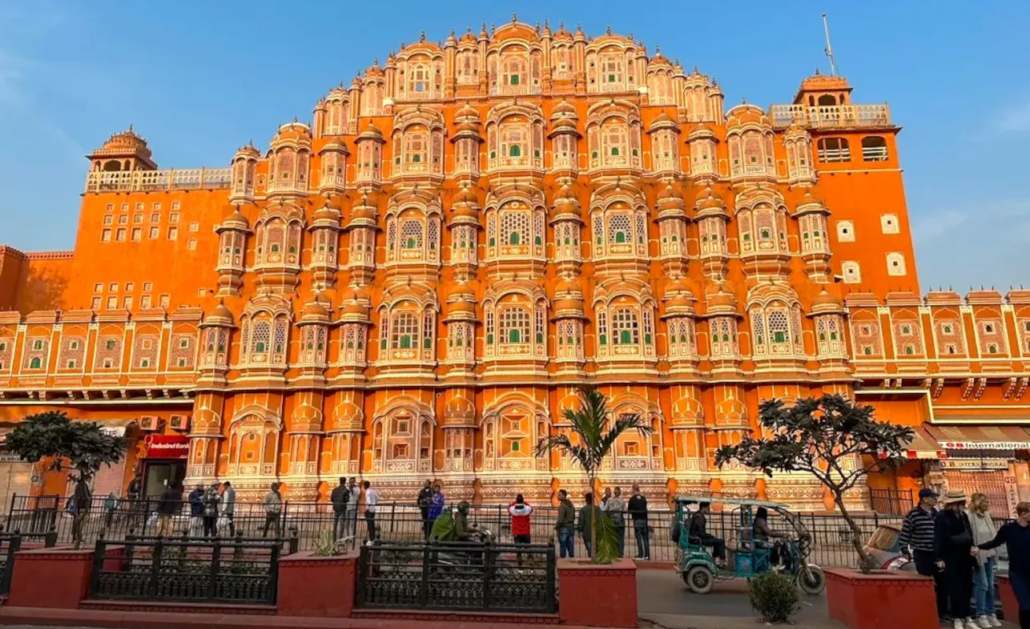
The Red Fort in Delhi, where Shah Jahan built his capital in 1638, sets the register immediately: sandstone and marble on a scale that announces imperial power. The Taj Mahal — visited in early morning light, before the crowds build — is the singular moment that stops most travellers in their tracks. Even those who have seen it in a thousand photographs describe the same thing: nothing quite prepares you for the proportions, the whiteness, the way the reflection pool doubles the monument and makes the sky feel like a second landscape. The Amber Fort in Jaipur, with its Rajput militarism and the extraordinary Sheesh Mahal (Hall of Mirrors), is the counterpoint — if the Mughals built for eternity, the Rajputs built for drama.
Fatehpur Sikri — the abandoned Mughal capital built and deserted within fourteen years — is the detour that most tour groups skip and every serious traveller is glad they made. The entire sandstone city stands intact. It is one of the finest UNESCO World Heritage Sites in Asia, and it receives a fraction of the attention of the Taj Mahal it deserves.
Srinagar · Pahalgam · Gulmarg · Sonamarg · Kargil · Eight days in the Himalayan paradise
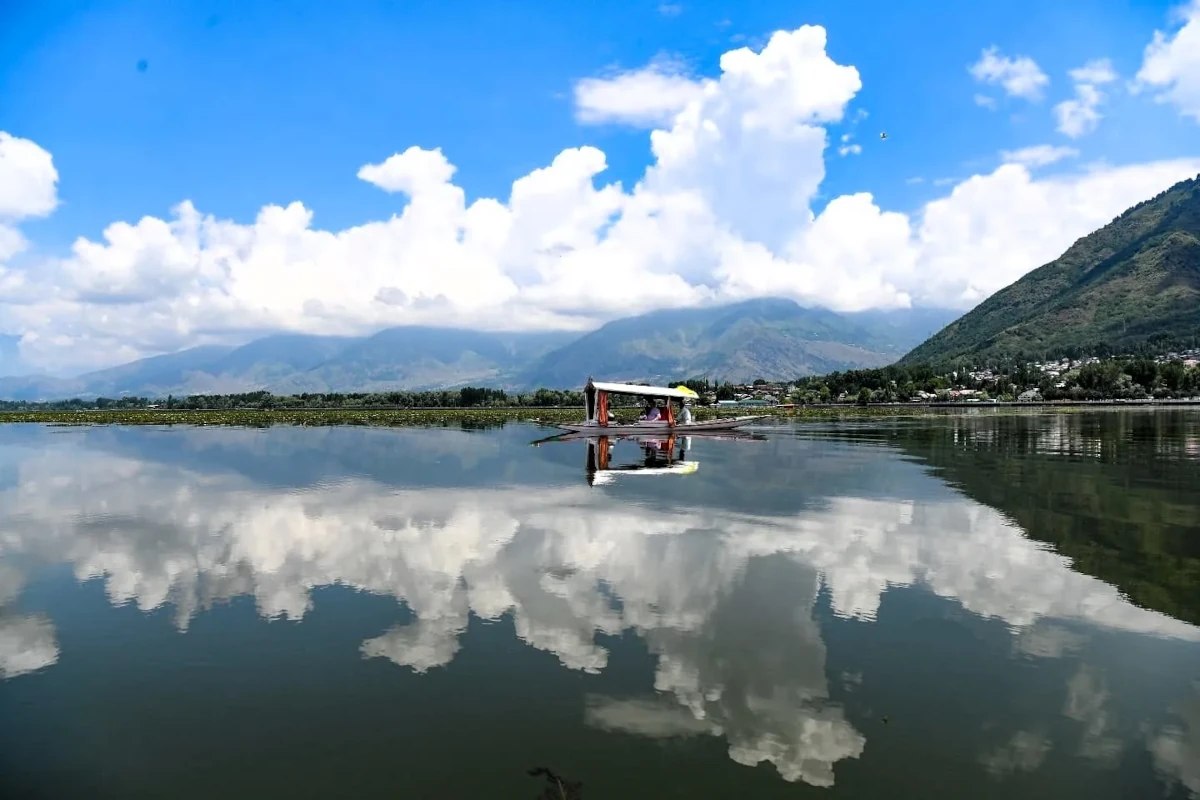
Kashmir is the part of this itinerary that surprises people most. Travellers who associate north India purely with the Mughal monuments of the Golden Triangle, or with the high-altitude drama of Ladakh, are often unprepared for what the Kashmir Valley actually is: lush, green, and — in the right season — one of the most beautiful places on the planet.
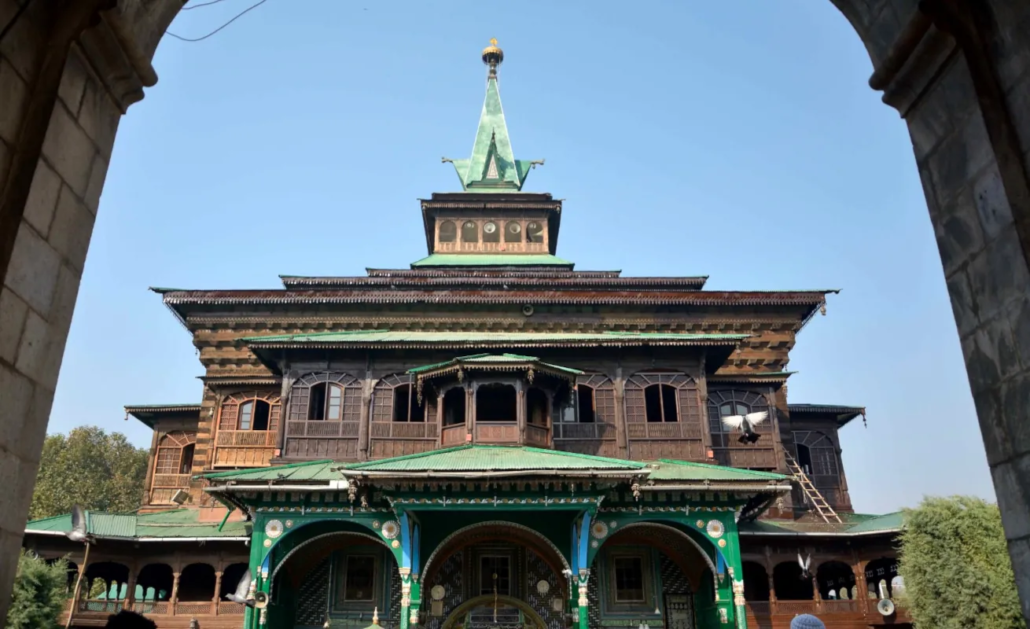
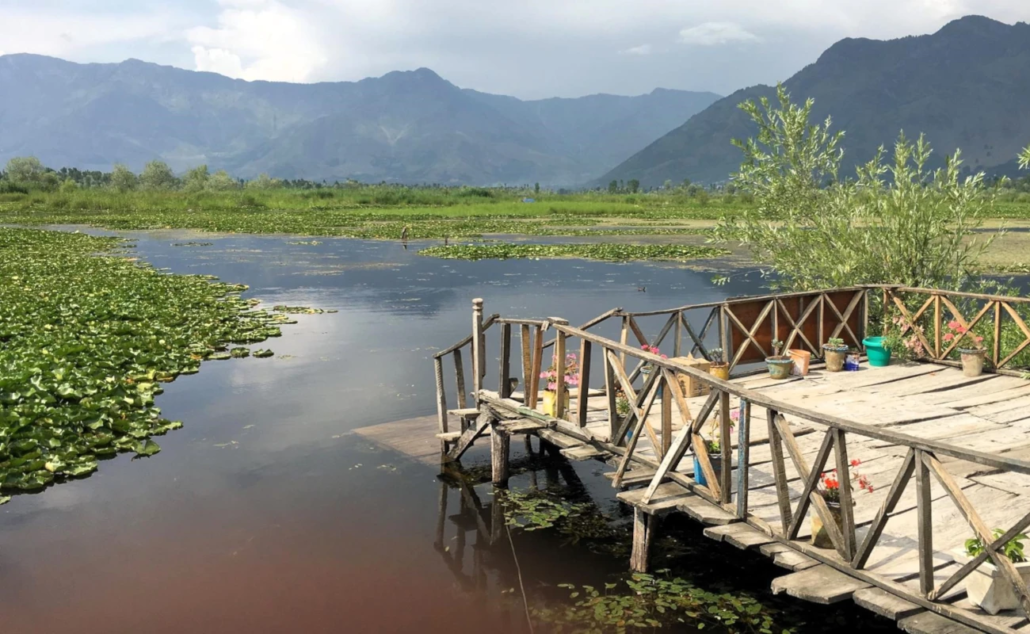
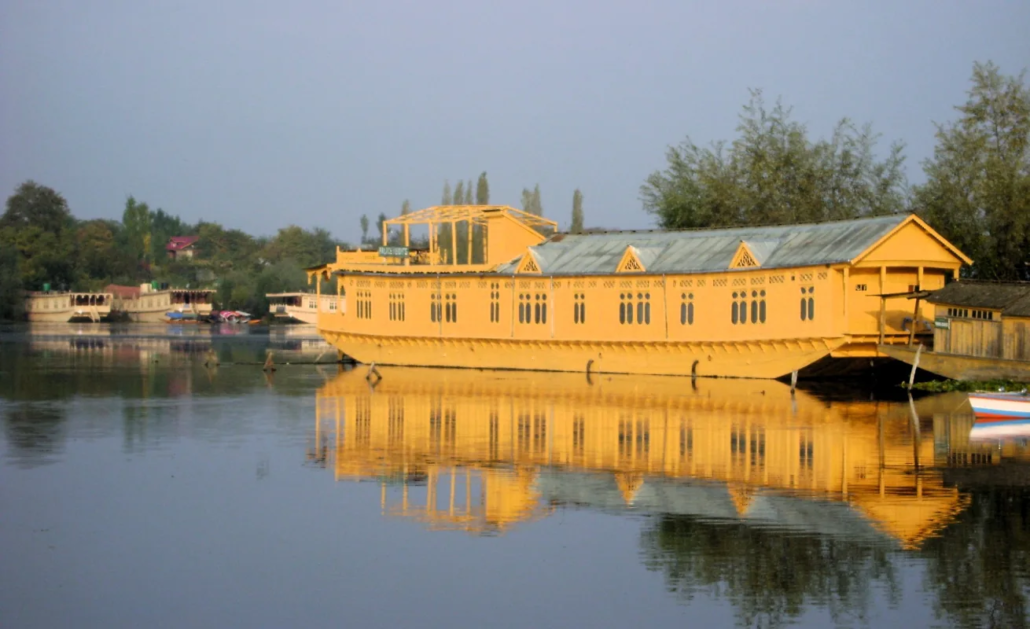
The Dal Lake shikara ride at golden hour in Srinagar is one of South Asia’s singular travel experiences. The wooden boat, the floating vegetable gardens, the houseboats reflected in the water, the Zabarwan Hills going amber behind them — it is the kind of scene that most travellers do not believe is real until they are sitting in it. The Mughal Gardens — Nishat Bagh, Shalimar Bagh, Chashma Shahi — are among the finest formal gardens in Asia, arranged in the Persian char-bagh tradition on the hillsides above the lake.
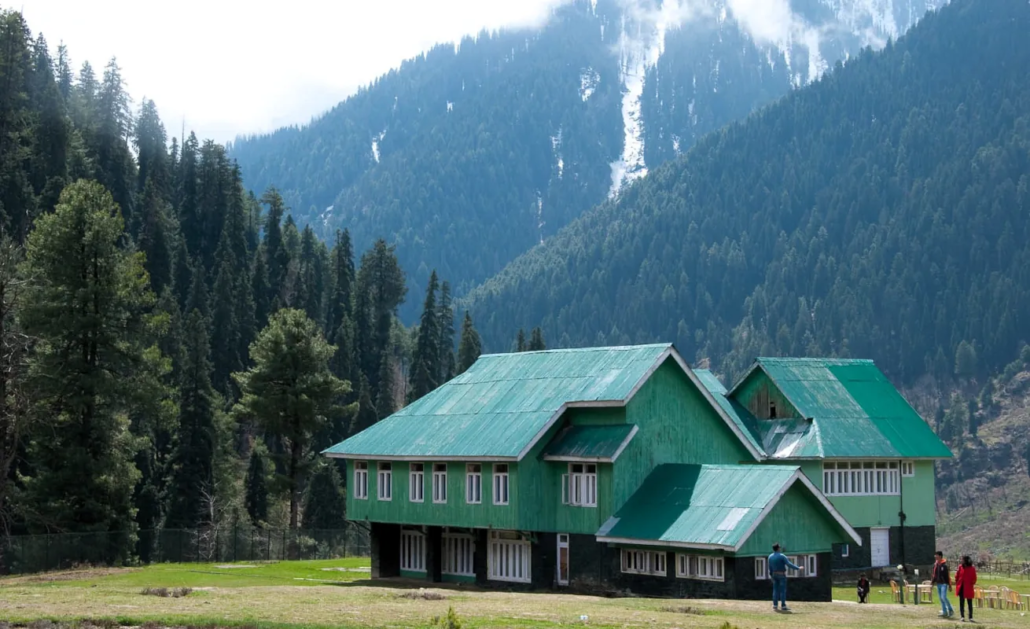
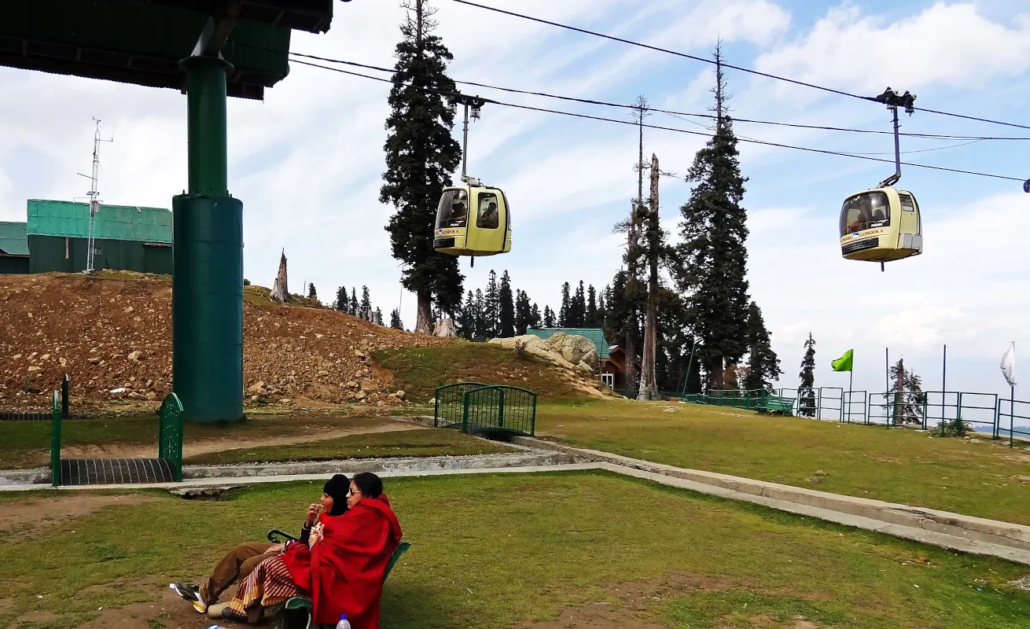
Pahalgam and its side valleys (Betaab Valley, Aru Valley, Chandanwari) offer a quality of mountain landscape — pine forest, fast river, snow peaks — that feels more like Switzerland than most people’s idea of India. Gulmarg‘s gondola rises to 3,980 metres on the Apharwat Ridge, with views on clear days to Nanga Parbat on the northwestern horizon. And Sonamarg, the golden meadow at the head of the Sind Valley, is the emotional crescendo of the Kashmir section: the last lush green before the world turns arid on the other side of Zojila.
The crossing from Sonamarg to Kargil via Zojila Pass is where the circuit changes register entirely. Within twenty kilometres of the summit, the pine forests of Kashmir give way to the bare, eroded ridgelines of Ladakh. The Kargil War Memorial at Drass — moving, understated, and rarely visited by international tourists — is one of the most significant stops on the entire twenty-day journey.
Leh · Nubra Valley · Turtuk · Pangong Tso · Tso Moriri · Eight days at altitude
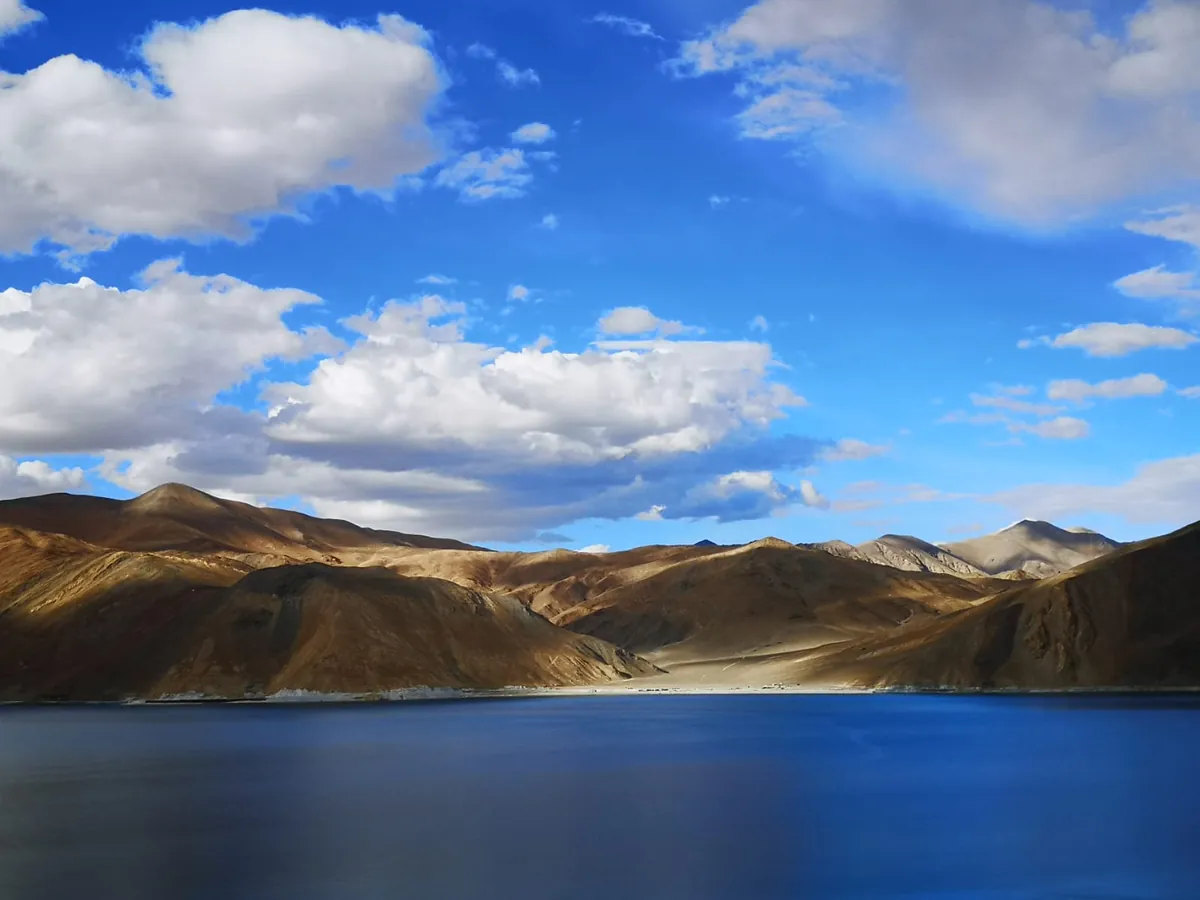
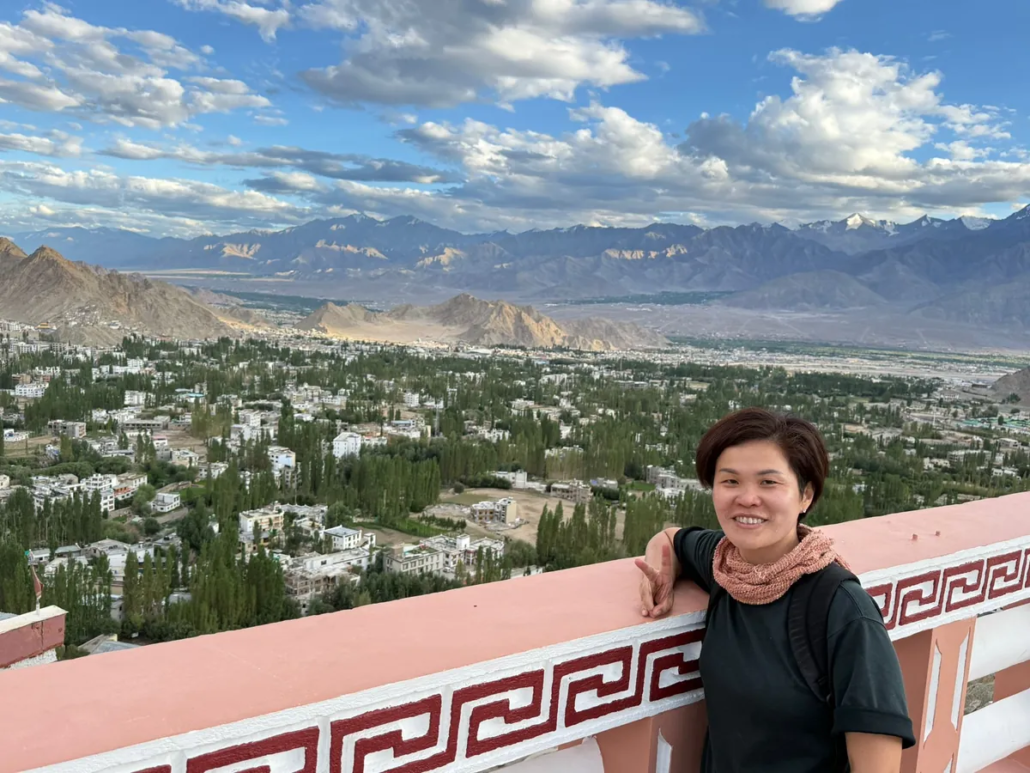
Ladakh is where the circuit reaches its highest pitch — literally and emotionally. The landscape here is unlike anything else on earth: a high-altitude cold desert flanked by the Karakoram to the north and the Himalayas to the south, dotted with ancient Buddhist monasteries and turquoise lakes that sit above 4,000 metres. No photograph does it justice. The scale is simply too large, and the air is too thin to believe without standing in it.
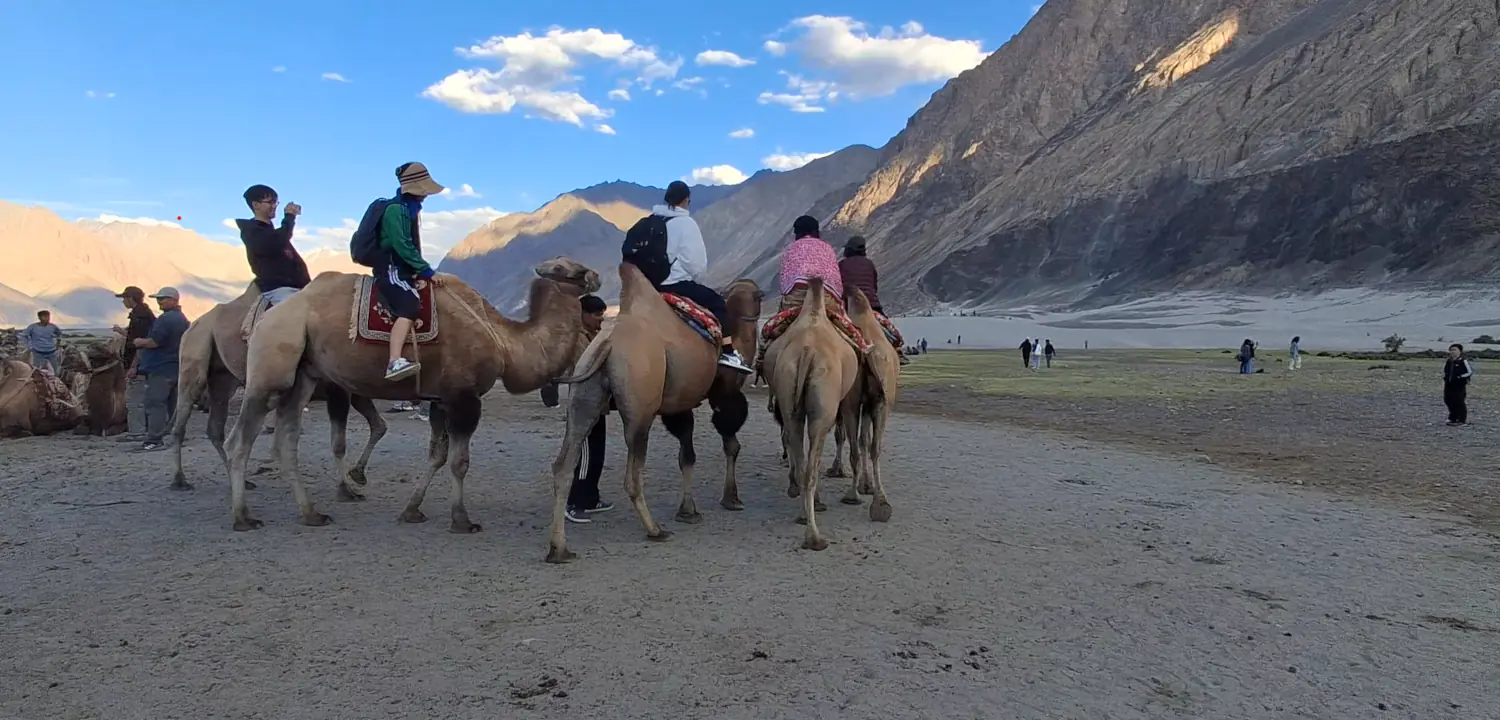
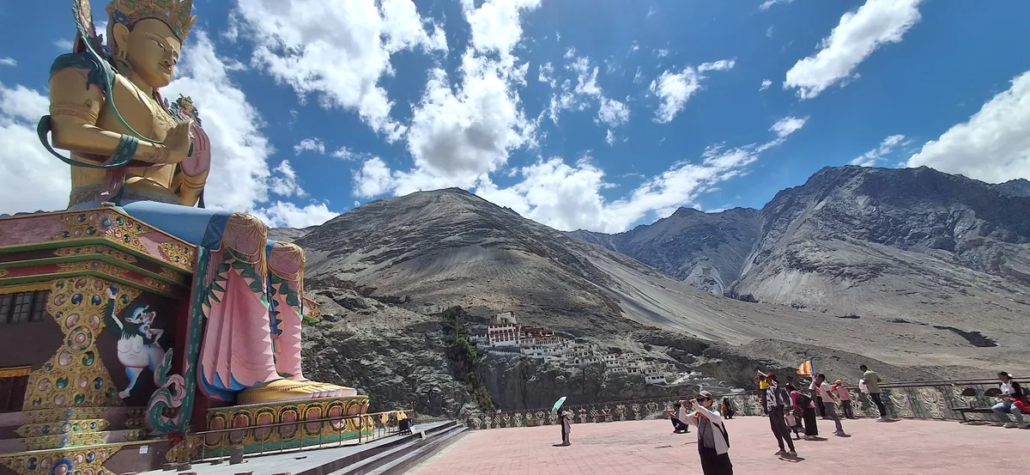
Khardung La at 5,359 metres — crossed on Day 14 — is one of the highest motorable passes in the world. The descent into the Nubra Valley reveals one of the most improbable landscapes in the Himalayas: wide river valley, sand dunes, and Bactrian camels (double-humped, Silk Road survivors) grazing between the dunes and the snow peaks. The village of Turtuk — India’s last village before the Pakistan border, accessible only since 2010 — is the circuit’s most unexpected discovery: a Balti village of apricot orchards and carved wood architecture that feels like nowhere else in India.
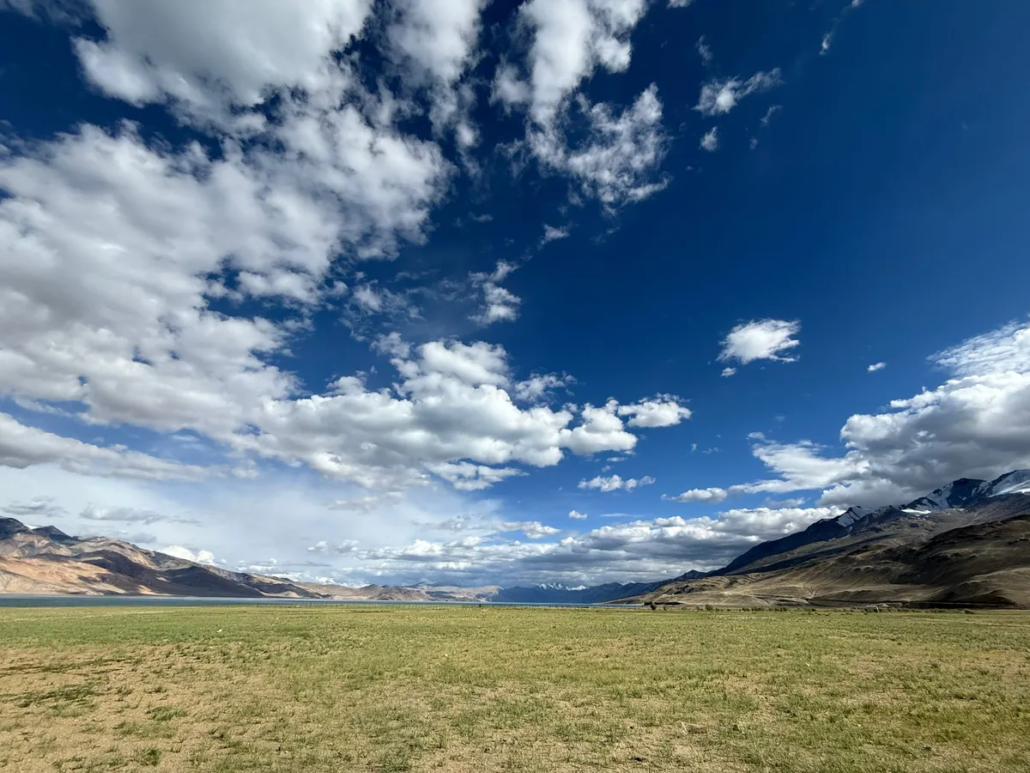
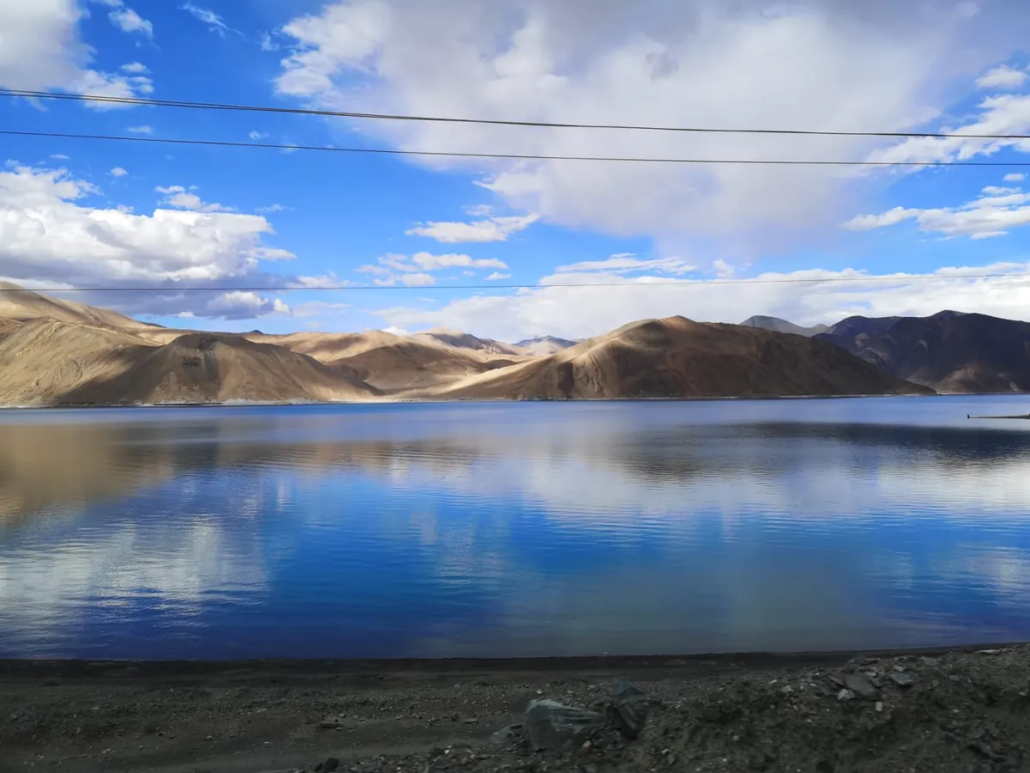
Pangong Tso at 4,350 metres — the 134-kilometre lake straddling India and China — is the moment most people have seen in photographs and still cannot quite believe when they arrive. The colour shifts from cobalt to electric turquoise across a single afternoon. Overnight on the shore, pre-dawn light on the water, is the photograph of a lifetime.
Tso Moriri and Tsokar — the wilder southern lakes that most Ladakh tours skip — are where the Grand Circuit earns its distinction. Tso Moriri at 4,522 metres is a UNESCO Ramsar wetland, home to black-necked cranes and bar-headed geese, ringed by the Korzok range in silence. Tsokar’s salt flats with Changpa nomads and their pashmina herds is a window into a way of life most travellers never see. The altitude across the Changthang plateau requires genuine preparation — which is precisely why the overland approach from Kashmir matters so much.
Why One Operator Matters More Than You Think: Everything That Falls Apart When You Piece It Together Yourself
Here is a practical list of what Summit Routes manages on this circuit that a self-planned or multi-operator version leaves exposed — because all of these things have happened to travellers attempting this route independently.
All Inner Line Permits — Pre-Arranged
Foreign nationals require Protected Area Permits for Nubra Valley, Turtuk, Pangong, and Tso Moriri. Indian nationals require Inner Line Permits. These are arranged by Summit Routes before each excursion. You carry your original ID. The paperwork is done.
Private Vehicle Throughout — No Shared Coaches
The entire 20-day circuit — Delhi to Agra, Srinagar to Leh, Leh to Nubra and Pangong and back — runs on private vehicles exclusively arranged for your group. No shared coaches, no waiting for strangers, no fixed departure times at 5am that don’t suit you.
Three Licensed Guides — Handoff System
A Golden Triangle heritage guide in Delhi, a registered Kashmiri guide for the valley, and a Ladakhi guide for the plateau. Each is a regional specialist. The handoffs are coordinated by Summit Routes — you are never between guides.
19 Nights Accommodation — All Curated
Hotels in Delhi, Agra, Jaipur, Srinagar, Pahalgam, Gulmarg, Sonamarg, Kargil, Leh. Guesthouses in Nubra. A camp on Pangong shore. A high-altitude hotel at Tso Moriri. Every room has been selected for location, reliability, and bathroom quality. Nothing is left to booking apps.
All Entry Tickets — Included
Taj Mahal, Agra Fort, Fatehpur Sikri, Amber Fort, City Palace, Jantar Mantar, Gulmarg Gondola (both phases), Lamayuru, Alchi, Diskit, Thiksey. Every entrance fee is included. You arrive, you go in.
Medical Oxygen in the Vehicle — Ladakh Segment
A first-aid kit and supplemental oxygen travel with your vehicle throughout the Ladakh circuit above 3,500m. The guide monitors SpO₂ readings at key points. In the event of altitude sickness, the protocol is clear and the equipment is there. This is not a standard offering. Read more about altitude sickness preparation.
Domestic Flight Coordination
Two domestic flights are required: Delhi to Srinagar (Day 4) and Leh to Delhi (Day 20). These are not in the package price but are coordinated by Summit Routes — preferred fares, timing matched to the ground itinerary, and confirmation that your Leh departure catches the morning window before afternoon winds close the airport.
Seasonal Road Window Management
Zojila Pass, Khardung La, Tanglang La, and the Nubra and Pangong roads all have seasonal opening and closing windows that do not align perfectly year to year. Summit Routes monitors road status from its Kashmir base and adjusts the programme as needed. A traveller booking independently often does not find out about a closed pass until they are sitting at the checkpoint.
Why This Trip Works Particularly Well for Travellers Coming from East Asia and Europe
The Grand Circuit has been designed with international arrival in mind — specifically the patterns of travellers coming from South Korea, Taiwan, Singapore, Malaysia, Thailand, the Netherlands, Germany, France, and the UK. Here is what makes this relevant to how you travel.
한국 및 대만 여행자를 위한 안내
The Grand Circuit is the answer. It covers the Taj Mahal and Pangong Lake — the two single most photographed sites in north India — in the same itinerary, with all logistics managed. No transfers between operators. No language uncertainty. No altitude risk from flying directly to Leh without preparation. The Summit Routes team has guided Korean and Taiwanese groups extensively and can coordinate Korean-language printed materials on request.
Direct flights from Seoul (ICN) and Taipei (TPE) to New Delhi (DEL) are available with multiple carriers. From Singapore (SIN) and Kuala Lumpur (KUL), Delhi is a four-to-five-hour flight. The tour begins the day you land.
Regional hub access · 20-day window · Full managed programme
The programme is fully private, which means it runs on your dates, not a fixed group departure calendar. A family travelling from Singapore, a couple from Kuala Lumpur, a group of colleagues from Bangkok — each books on their own dates with their own private vehicle and guide. The maximum group size of ten keeps things manageable at border checkpoints and high-altitude sites.
The visa situation for Indian tourism is straightforward for most Southeast Asian nationalities — e-Visa is available for Singapore, Malaysia, Thailand, Indonesia, and the Philippines, typically granted within 72 hours.
Germany · Netherlands · France · UK · Scandinavia
The Grand Circuit runs as a single point of contact. Enquiry, booking, itinerary confirmation, domestic flight coordination, permit documentation, and day-to-day communication throughout the trip — all handled by Summit Routes. The team operates in English across all touchpoints.
European summer (June, July, August, September) coincides exactly with the optimal season window for the complete circuit, including the high-altitude Ladakh roads and the Zojila crossing. This is not a coincidence — the seasonal windows align because the Himalayan summer is the northern hemisphere summer.
The Twenty Moments That Stay With You: A Practical Tour of What Twenty Days Actually Feels Like
I want to be specific about what this trip actually feels like on the ground — because itinerary tables do not convey experience, and experience is the only thing that justifies twenty days away from home.
Day 2 — The Taj Mahal at First Light
The gateway to the Taj Mahal opens at sunrise. You walk through it into the forecourt, and the monument appears at the far end of the reflection pool. The moment is always the same regardless of how many photographs you have seen: your pace slows involuntarily. The proportions are wrong — too large, too white, too perfectly symmetrical — and then your eyes adjust and you understand that the proportions are exactly right.
Day 6 — Dal Lake at Golden Hour
The shikara moves slowly across the lake as the light drops behind the Zabarwan Hills. A vegetable seller’s boat crosses ahead of you. The water is still enough to double the sky. This is the Kashmir of imagination — and it is real, and it is better than the photograph.
Day 9 — Gulmarg Gondola, Phase 2
The gondola rises to 3,980 metres on the Apharwat Ridge. On a clear day, the Kashmir Valley lies below you in its entirety — green and enclosed and vast — and on the northwestern horizon, Nanga Parbat (8,126m) appears above the clouds. Most people stand at the summit in silence for a moment before they reach for their cameras.
Day 11 — Zojila Pass: The World Changes
The road crosses the pass at 3,528 metres and the landscape transforms within twenty minutes of descent. The pine forest ends. The green ends. The bare, eroded ridgelines of Ladakh begin. You are in a different world, at different altitude, in a different cultural zone. The physical sensation of the shift is real and memorable.
Day 12 — Lamayuru Monastery
The oldest monastery in Ladakh sits on a cliff above a moonscape of eroded cliffs and an ancient lake bed. The village appears to have grown directly from the rock over a thousand years. The interior murals are vivid and specific — this is not a tourist monastery. It is a working religious community.
Day 14 — Bactrian Camels at Hunder
The descent from Khardung La into the Nubra Valley reveals sand dunes at 3,000 metres, backed by snow peaks. The Bactrian camels — double-humped descendants of Silk Road trade caravans — graze between the dunes and the river. This is the single most surreal landscape on the circuit, and the circuit has several contenders for the title.
Day 15 — Turtuk Village
The last Indian village before Pakistan. Open to visitors only since 2010. The apricot orchards in late summer, the carved wooden architecture, the view toward the Line of Control from the upper lanes — Turtuk is the quiet discovery most travellers come back and describe as their favourite stop, and it is the one nobody had heard of before they went.
Day 16 — Pangong Lake at Sunset
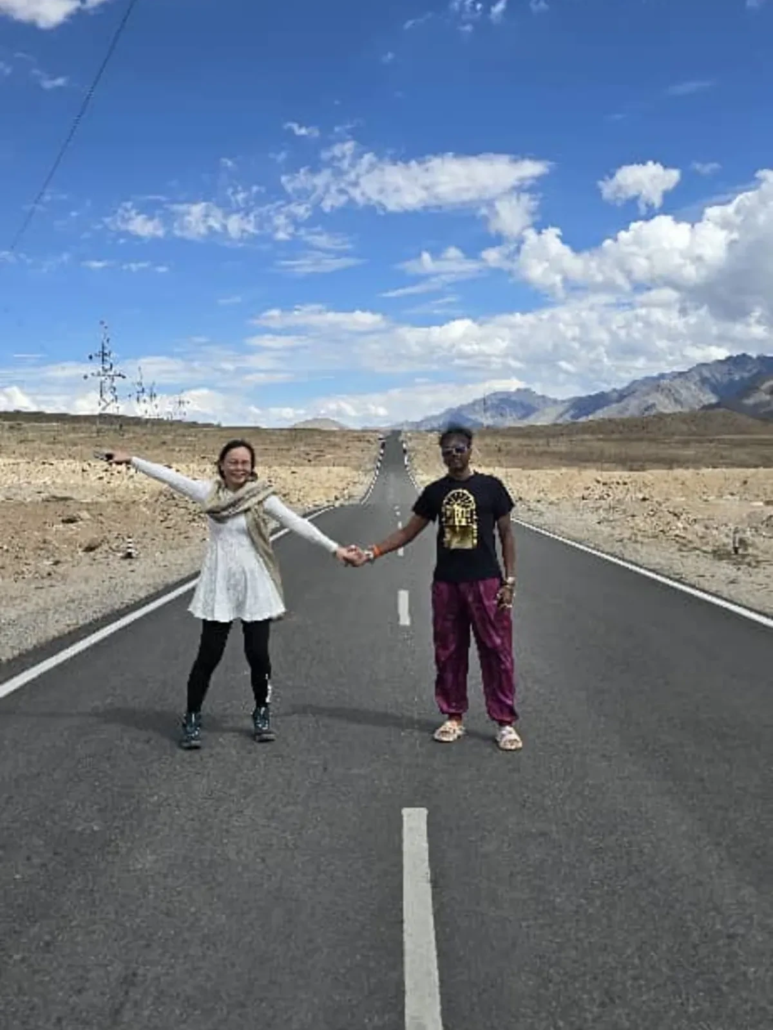
The lake is 134 kilometres long. One-third is India. Two-thirds is China. The colour shifts from deep cobalt to electric turquoise to pale green and then, at sunset, to orange and gold against the Ladakh range. No photograph reliably conveys it. Overnight on the shore. Dawn the next morning. This is the moment most people mean when they say Ladakh changed them.
Before You Book: What You Need to Know About the Grand Circuit
| Topic | Detail |
|---|---|
| Price | From USD 1,795 per person (2 travellers, twin sharing). Groups of 3–4: USD 1,651. Groups of 5–6: USD 1,562. Groups of 7–10: USD 1,472. The price scales — bringing two more friends reduces your cost meaningfully. |
| Best Season | June to September. High passes (Zojila, Khardung La, Tanglang La) are open and all Ladakh restricted zones are accessible. July–August gives warmest temperatures and guaranteed road access. September gives exceptional clarity and emptier roads. |
| Tour Type | Fully private. No shared coaches, no group departures, no strangers. Runs on your chosen dates within the season window. Maximum group size 10. |
| Entry to India | e-Visa available for most nationalities at indianvisaonline.gov.in. Apply at least 4 business days ahead. Valid 30, 60, or 365 days depending on nationality. Summit Routes can advise on visa class for your passport. |
| Domestic Flights | Two required: Delhi to Srinagar (Day 4, ~1.5 hrs) and Leh to Delhi (Day 20, ~1.5 hrs). Not in the package price but fully coordinated. Budget USD 80–160 per person per flight. Book 6–8 weeks ahead in peak season. |
| Acclimatisation | The overland route from Sonamarg via Zojila and Kargil provides the acclimatisation advantage no fly-in Ladakh trip can offer. A mandatory rest day in Leh on Day 13 precedes all high-pass crossings. Read the full altitude guide. |
| Permits | All Inner Line Permits (ILP) and Protected Area Permits for Nubra, Turtuk, Pangong, and Tso Moriri are arranged by Summit Routes. Carry original passport/ID throughout Ladakh. Full permits guide here. |
| Travel Insurance | Mandatory. Must explicitly cover travel above 5,000m and include emergency helicopter evacuation. This is not optional — it is a condition of the programme. Altitude evacuation from Tso Moriri or Pangong by road can take many hours. |
| Packing | Layers are the key. Delhi in summer is 35°C. Ladakh passes at night are below 0°C. A down jacket is essential. SPF 50 minimum for the plateau. See the full Himalayan gear list. |
| Food | Breakfast and dinner are included daily. Lunches are at local restaurants selected by your guide. The circuit covers Mughal and Rajasthani cuisine, Kashmiri Wazwan, and Ladakhi staples (thukpa, momos, butter tea). Vegetarian and vegan options are available throughout. Dietary requirements accommodated on prior notice. |
Want Just One Circuit? Component Trips Are Available Separately
Ladakh Delight — 10 Days
The complete Ladakh experience: Leh, Nubra, Turtuk, Pangong, Tsomoriri, and Tsokar. The Ladakh-only version of the Grand Circuit’s third movement — for travellers flying into Leh directly.
View trip →
Majestic Kashmir — 7 Days
Dal Lake, Pahalgam, Gulmarg, and Sonamarg — the Kashmir Valley circuit that forms Days 5–10 of the Grand Circuit, available as a standalone programme.
View trip →
Explore Kashmir — 9 Days
A deeper Kashmir Valley immersion with more time in Srinagar and the Mughal heritage circuit. For travellers who want Kashmir properly before combining it with Ladakh.
View trip →
Markha Valley Trek — 10 Days
The classic Ladakh trek, crossing the Kongmaru La at 5,260m through whitewashed villages. The natural extension for travellers who finish the Grand Circuit and want to walk the high valleys they just drove through.
View trek →
Frequently Asked About the Grand Circuit
Can I really do Delhi, Kashmir, and Ladakh together in one trip?
Yes — and the India Grand Circuit is the only managed private programme that does this seamlessly. Most operators handle one region. Summit Routes operates the full arc from Delhi through the Golden Triangle, across the Kashmir Valley, and over the Zojila Pass into Ladakh — with one vehicle network, one guide handoff system, and one point of contact throughout. Twenty days is the right duration; anything shorter requires cutting one of the three circuits.
Is altitude sickness a serious risk on this trip, and how does the overland route help?
Altitude sickness is real at Leh (3,500m) and especially above 5,000m on the passes. The Grand Circuit’s overland approach — via Sonamarg (2,730m), Zojila Pass (3,528m), and Kargil (2,676m) — gives your body two days of progressive altitude gain before arriving in Leh, rather than the abrupt jump from sea level that a direct Srinagar–Leh flight produces. A mandatory rest day in Leh precedes all high-pass crossings. Medical oxygen and a first aid kit travel in the vehicle throughout Ladakh. Mild headache on the first day in Leh is normal; anything beyond that is managed by the team.
What is the best time of year for international travellers to do this circuit?
June through September is the window when all three circuits are simultaneously accessible — the Golden Triangle roads are always open, the Zojila Pass opens by late May, and the Ladakh restricted zone roads to Nubra, Pangong, and Tso Moriri are open from June to October. July and August give the warmest temperatures and guaranteed access. September is preferred by experienced travellers — the crowds thin, the light improves, and the high-altitude lakes reach their finest colour as autumn approaches. Full seasonal guide here.
We are a group of four travelling from Singapore / Seoul / Taipei. How does private pricing work?
The Grand Circuit is fully private — it runs on your dates with your group only. Pricing scales with group size: two travellers pay from USD 1,795 per person; a group of four pays from USD 1,651 per person; five or six pays from USD 1,562. The programme accommodates up to ten people. Contact Summit Routes through the enquiry form with your dates and group size for a specific quote.
Do I need trekking experience or special fitness for this trip?
No. The India Grand Circuit is entirely road-based — all sightseeing is by private vehicle with short walks at each location. No trekking experience is required. Good general health is essential, and the ability to walk comfortably on uneven surfaces (at monastery sites and the Taj Mahal complex) is useful. The altitude requirement is acclimatisation, not fitness — which is why the overland approach and rest days are built into the itinerary.
Can the tour be customised — can we add more time in Kashmir or skip Jaipur?
Yes. The 20-day itinerary is the recommended structure, but Summit Routes builds the programme around you. More time in Kashmir (extending the Explore Kashmir component), a shorter Golden Triangle, an extra night at Pangong — all are possible. The programme can also be extended with a Varanasi addition before Delhi, or with the Markha Valley Trek after Leh. Contact the team with your preferences.
Is this trip suitable for families with children or older travellers?
Yes, with two considerations. First, altitude acclimatisation applies to all ages — children generally acclimatise quickly but should be monitored, and older travellers with cardiovascular conditions should consult their doctor before booking. Second, the programme is entirely vehicle-based, making it accessible for travellers of all mobility levels. The Golden Triangle and Kashmir segments are straightforward family travel. The Ladakh segment is manageable for most healthy travellers, including children aged 10 and above. Inform Summit Routes of any health conditions at the time of enquiry.
One Operator. Three Circuits. Zero Compromises. From the Taj Mahal to Pangong Lake.
The India Grand Circuit runs June through September on private dates for groups of two to ten. Every permit, every vehicle, every guide, every room has been arranged. Tell us when you can come, where you are flying from, and how many people are travelling — we will confirm the itinerary and send you everything you need.