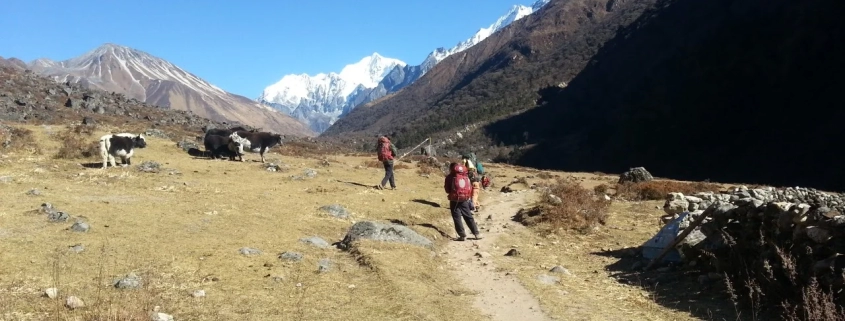
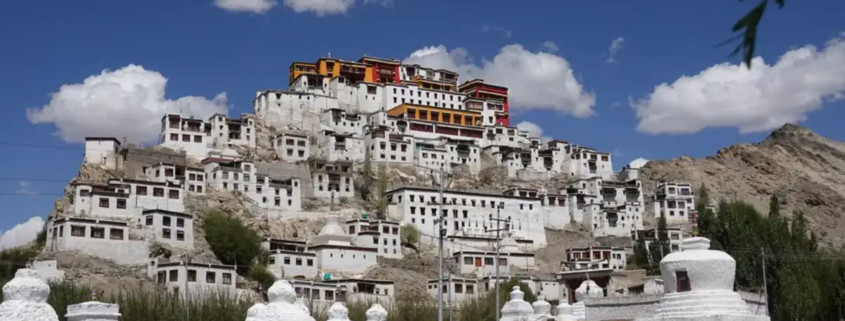
Three countries. One mountain range. Entirely different worlds. Here is the honest comparison that helps you stop deliberating and start planning. We’ve operated across all three for over a decade. This is the comparison we give clients when they ask us directly โ not the diplomatic answer, the honest one.
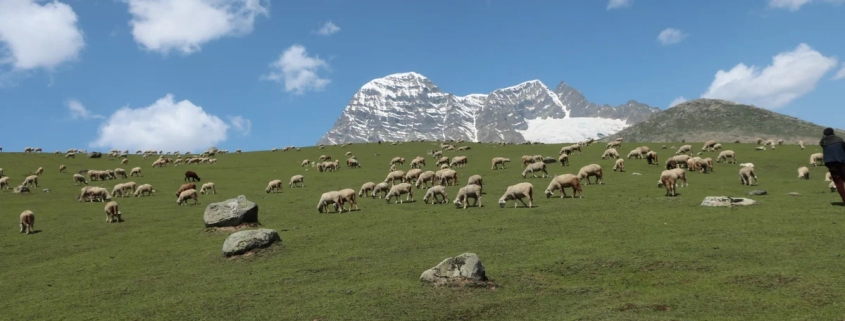
Kashmir Valley sits between the Pir Panjal range and the Greater Himalayas. The outer range intercepts the first wave of moisture; the valley receives light, intermittent rain โ enough to turn the meadows vivid green, not enough to close the trails. Ladakh sits further north still, behind two mountain barriers. It receives less than 100mm of annual precipitation. During monsoon, the skies over Leh are typically blue.
Himalayan trekking is not technically difficult. There is no rock climbing, no ropes, no equipment beyond trekking poles on standard routes. What makes it demanding is something else entirely: sustained, consecutive effort at elevation, day after day, often with a loaded pack, in conditions that may include cold, wind, and reduced oxygen.
Eleven mountain passes. Twenty-four days. One of the most remote inhabited valleys on earth. Fewer than 200 people complete it each year. This is a full guide to what makes it extraordinary โ and what it genuinely takes to be one of them.
Altitude sickness is real, it is manageable, and with the right itinerary and operator it should not stop you from trekking in the Himalayas. The vast majority of cases are mild and resolve with rest and proper acclimatisation.
Choose EBC for the bucket-list prestige, raw high-altitude drama, and the Sherpa culture of the Khumbu. Choose ABC for more varied scenery, warmer temperatures, less crowding, and a slightly more achievable challenge.
Destination: India (Kashmir, Himachal, Uttarakhand), Nepal, or Bhutan. Bhutan has a mandatory government fee. Nepal has the cheapest independent trekking infrastructure. Kashmir sits in the middle.