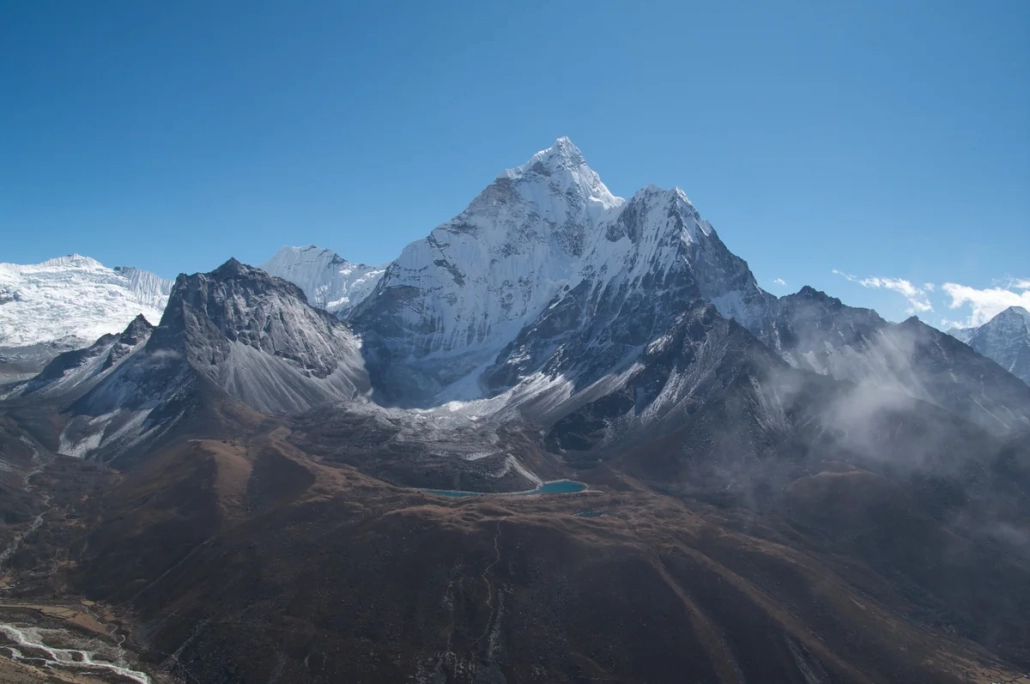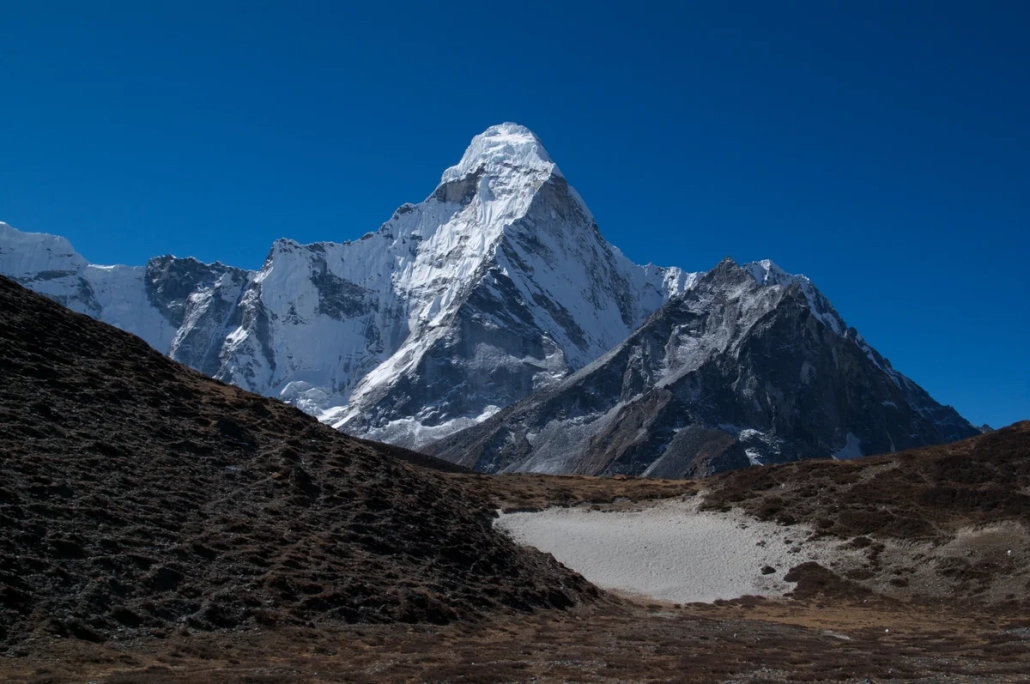
Island Peak Expedition Nepal

Island Peak / Imja Tse Expedition — Overview
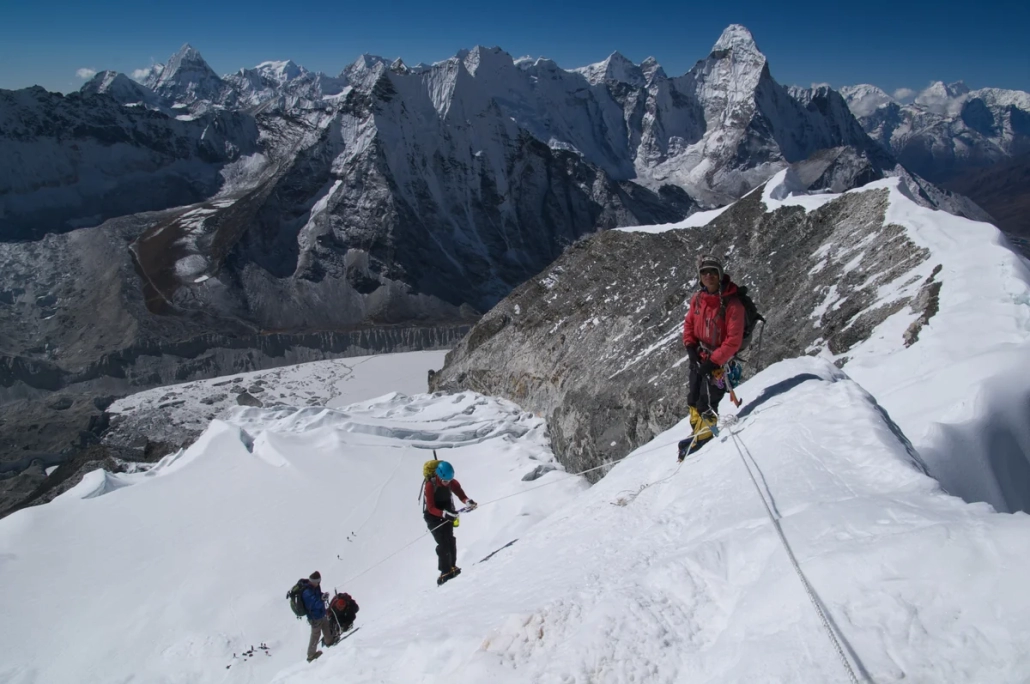
At 6,189 metres, Island Peak (Imja Tse) is the most climbed trekking peak in Nepal and the finest introduction to technical Himalayan mountaineering available anywhere in the world. Named by Eric Shipton’s 1952 Everest reconnaissance expedition — the peak appeared to rise from the surrounding glaciers like an island in a frozen sea — it sits deep in the Khumbu, flanked by the colossal south face of Lhotse (8,516m) and the wild upper reaches of the Imja Valley. The climb requires genuine technical competence: glacier travel, crampon and ice axe technique, fixed-rope ascent, and a sustained 200-metre headwall at 40–50° that is the crux of the route and demands focus and fitness in equal measure.
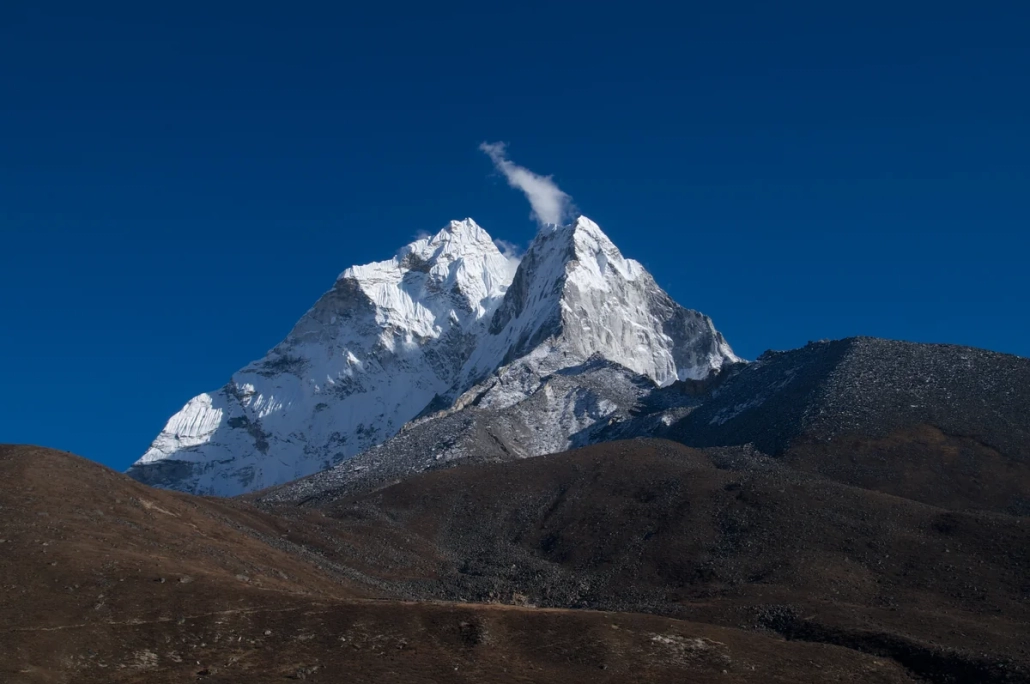
This is not a walk-up peak. It is a real climb — and that is precisely what makes it the ideal first technical Himalayan objective for motivated, fit trekkers who want to push beyond the tea-house trail and onto an actual high-altitude summit. The approach through the heart of the Khumbu — Namche Bazaar, Tengboche Monastery, Dingboche — covers the full scenic and cultural core of the region before branching into the quieter, more remote Chhukung Valley for the final approach to base camp. On the summit, Lhotse, Makalu (8,485m), Baruntse (7,129m), Ama Dablam (6,812m), and Nuptse (7,861m) form a panorama that is one of the most concentrated collections of high Himalayan peaks visible from any single summit in Nepal.
Summit Routes runs Island Peak fully supported with certified high-altitude guides, complete technical equipment, and a 17-day itinerary built around three structured acclimatisation days — not the fastest possible turnaround, but the one most likely to put you on the summit.
Why Island Peak
- Nepal’s Most Popular Trekking Peak — Island Peak is the benchmark trekking peak in the Himalaya, climbed by more aspiring high-altitude mountaineers than any other summit in Nepal and widely regarded as the ideal first technical Himalayan objective for fit, motivated climbers.
- A Genuine Technical Challenge — The upper mountain features a 200m fixed-rope headwall at 40–50°, glacier travel, crevasse navigation, and a bergschrund crossing just below the summit ridge. This is a real climb, not a walk-up — and completing it is a meaningful mountaineering achievement.
- The Khumbu Panorama — The summit view takes in Lhotse (8,516m) at close range, Makalu (8,485m), Baruntse (7,129m), Ama Dablam (6,812m), and Nuptse (7,861m) — an unbroken wall of high Himalayan giants that rewards every metre of effort to reach it.
- The Heart of the Khumbu on Approach — The route to Island Peak passes through Namche Bazaar, Tengboche Monastery, and Dingboche — the full cultural and scenic core of the Khumbu — before entering the quieter Chhukung Valley for the final approach.
- Fully Supported with All Technical Equipment — Crampons, harness, ice axe, helmet, fixed lines, carabiners, and jumar ascenders are all provided. A mandatory pre-climb training session at Base Camp on Day 11 covers all technical skills — no prior technical climbing experience is required, though good high-altitude trekking fitness is essential.
Important Notes
- Best Seasons: April–May (spring) and October–November (autumn). Spring brings stable summit windows and the highest summit success rates; October is the most popular month with excellent visibility. Avoid the monsoon and winter months — the upper mountain becomes dangerously icy and the headwall impassable with heavy snowfall.
- Alpine Grade: PD (Peu Difficile) — the route involves genuine technical terrain. The 200m headwall at 40–50° is strenuous and requires rope technique and physical endurance. Prior experience on steep snow or ice is helpful but not required — the Day 11 training session is designed to prepare trekkers with no prior technical background.
- Summit Height: 6,189m. High Camp at 5,600m is the overnight high point before summit day. Chhukung Ri (5,546m) on Day 9 is the acclimatisation high point.
- Technical Requirements: Crampons, ice axe, harness, helmet, and fixed-rope technique (jumar or French technique) are required on the upper glacier and headwall. All technical equipment is provided by Summit Routes. Climbers who have used crampons or ascenders before will have an advantage; those who have not will be fully trained on Day 11.
- Prerequisite Experience: At least one multi-day high-altitude trek above 4,500m is strongly recommended. Prior glacier or snow experience is genuinely helpful. Climbers with no trekking experience above 4,000m should discuss their background with us before booking — the acclimatisation profile on this itinerary is designed for motivated trekkers, not complete beginners.
- Permits: Summit Routes arranges all required permits, including the Island Peak climbing permit (NMA), Sagarmatha National Park entry permit, and TIMS card. All permits are included in the price.
- Lukla Flight: The trek begins and ends with a 35-minute flight to/from Lukla. Weather cancellations are common, particularly in spring. A buffer day (Day 14) is built into the itinerary, but do not book non-refundable onward connections within 48 hours of your scheduled Lukla return.
- Fitness Standard: Must be comfortable trekking 8–19 km daily for multiple consecutive days with a loaded pack above 4,000m, and physically capable of sustained effort on steep terrain at 5,600–6,189m. Cardiovascular fitness from regular hiking, running, or cycling is the most important preparation. If this is your first high-altitude experience, read our guide to altitude sickness in the Himalaya before departure.
Brief Itinerary
| Day 1 | Arrive Kathmandu (1,400m) — Expedition Briefing |
| Day 2 | Fly Kathmandu to Lukla (2,860m) — Trek to Phakding (2,610m) |
| Day 3 | Trek Phakding to Namche Bazaar (3,440m) |
| Day 4 | Acclimatisation Day — Namche Bazaar (hike to ~3,880m) |
| Day 5 | Trek Namche Bazaar to Tengboche (3,867m) |
| Day 6 | Trek Tengboche to Dingboche (4,410m) |
| Day 7 | Acclimatisation Day — Dingboche (hike Nangkartshang ~5,083m) |
| Day 8 | Trek Dingboche to Chhukung (4,730m) |
| Day 9 | Acclimatisation — Hike Chhukung Ri (5,546m) |
| Day 10 | Trek Chhukung to Island Peak Base Camp (5,100m) |
| Day 11 | Pre-Climb Technical Training & Rest — Base Camp (5,100m) |
| Day 12 | Move to Island Peak High Camp (5,600m) |
| Day 13 | Summit Day — Island Peak / Imja Tse (6,189m) — Descend to Chhukung |
| Day 14 | Buffer / Rest Day — Chhukung (weather contingency) |
| Day 15 | Trek Chhukung to Namche Bazaar (3,440m) |
| Day 16 | Trek Namche Bazaar to Lukla (2,860m) |
| Day 17 | Fly Lukla to Kathmandu — Departure |
Altitude Profile
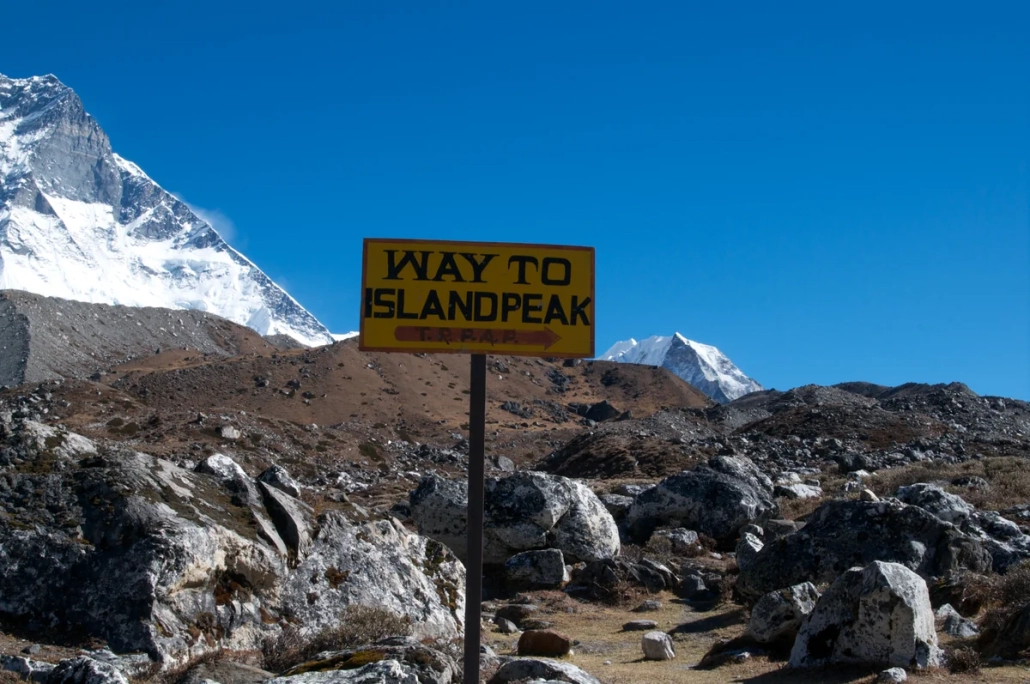
Island Peak / Imja Tse Expedition — 17-Day Itinerary (Kathmandu to Kathmandu)
Route: Lukla — Phakding — Namche — Tengboche — Dingboche — Chhukung — Island Peak Base Camp — High Camp — Summit (6,189m) — Chhukung — Namche — Lukla
Day 1: Arrive Kathmandu (1,400m) — Expedition Briefing
- Arrive at Tribhuvan International Airport (KTM) and private transfer to hotel in Kathmandu.
- Equipment check, expedition briefing, and permit verification with your Summit Routes guide. Review all technical gear requirements — crampons, harness, ice axe fit — and confirm boot compatibility before departure.
- Evening summit-day protocol briefing: headwall technique, rope team procedures, turnaround policy, and safety protocols.
- Overnight: Hotel Amaryllis or similar, Kathmandu
- Meals: Dinner
Day 2: Fly Kathmandu to Lukla (2,860m) — Trek to Phakding (2,610m)
Flight: ~35 minutes • Trek: ~7 km | 2–3 hours
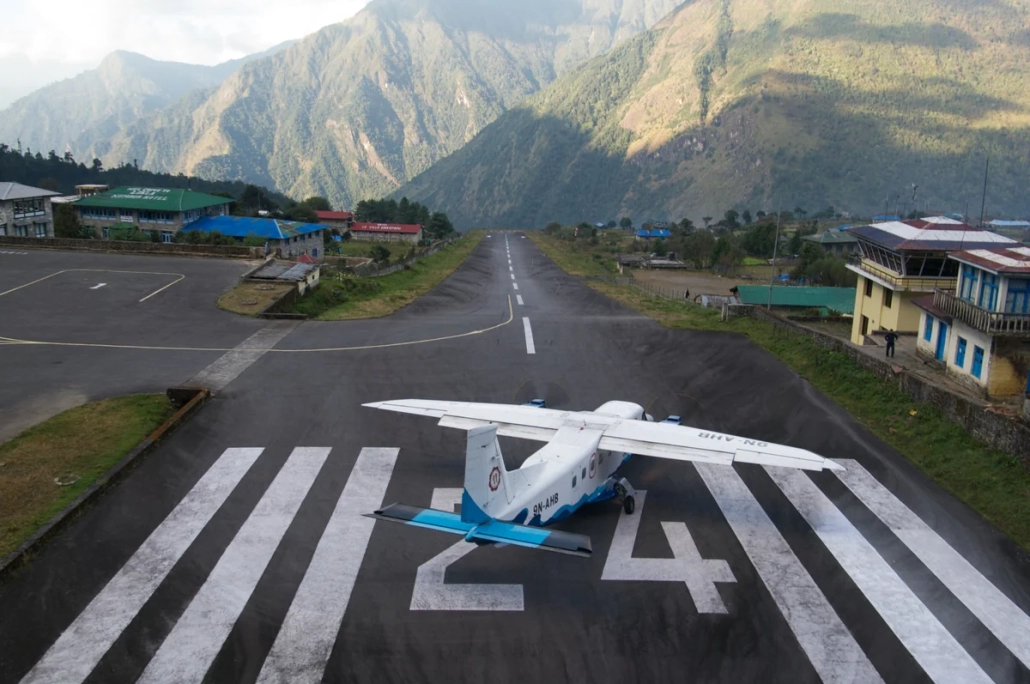
- Early morning transfer to the domestic terminal for the flight to Tenzing-Hillary Airport, Lukla — one of the world's most dramatic short flights, landing on a steeply inclined runway at 2,860m with a rock face at the far end. Depart early to avoid afternoon turbulence; weather cancellations are possible.
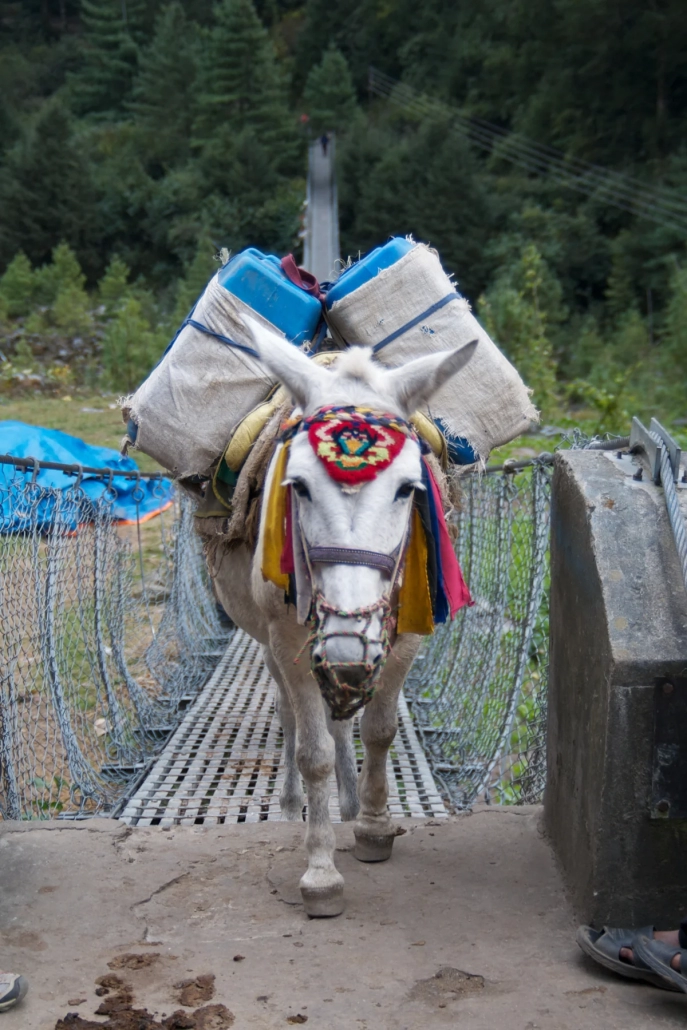
- Begin trekking immediately on arrival. A short, gently descending walk along the Dudh Koshi River through pine and rhododendron forest to Phakding, crossing several suspension bridges along the way.
- First views of Kusum Kanguru (6,369m) above the valley on the approach.
- Overnight: Tea-house in Phakding
- Meals: Breakfast, Lunch, Dinner
Day 3: Trek Phakding to Namche Bazaar (3,440m)
Trek: ~9 km | 4–5 hours
- Cross the iconic Hillary Suspension Bridge over the Dudh Koshi gorge and enter Sagarmatha National Park at the Monjo checkpoint — permits inspected here.
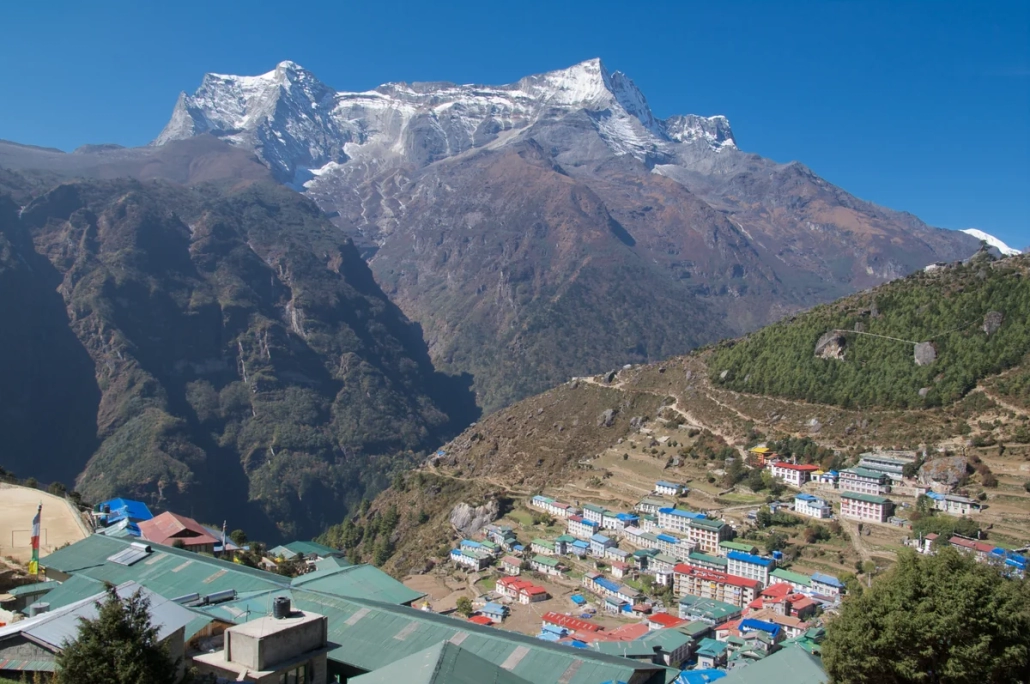
- The final steep climb to Namche is demanding but rewarded: the first views of Everest and Lhotse appear above the ridge as you approach the town, and Ama Dablam is visible for the first time to the east.
- Namche Bazaar (3,440m) is the trading hub of the Khumbu — well-stocked gear shops, bakeries, hot showers, and the last reliable Wi-Fi before the upper valley.
- Overnight: Tea-house in Namche Bazaar
- Meals: Breakfast, Lunch, Dinner
Day 4: Acclimatisation Day — Namche Bazaar (hike to ~3,880m)
- Mandatory acclimatisation day — the first of three structured rest-and-ascend days before the summit push. Pulse oximeter readings taken morning and evening; guide monitors all team members individually.
- Guided acclimatisation hike to the Everest View Hotel ridge (~3,880m) — outstanding views of Everest (8,849m), Lhotse (8,516m), Ama Dablam (6,812m), and Thamserku (6,618m). The hike takes approximately 3 hours return and serves as a fitness and altitude-response gauge before the serious gains begin.
- Afternoon rest in Namche. Explore the Sherpa Culture Museum or the Saturday market if timing permits.
- Overnight: Tea-house in Namche Bazaar
- Meals: Breakfast, Lunch, Dinner
Day 5: Trek Namche Bazaar to Tengboche (3,867m)
Trek: ~10 km | 4–5 hours
- One of the finest days of trekking in the Khumbu — a high contour above the Dudh Koshi valley with continuous views of Everest, Lhotse, Nuptse, Ama Dablam, and Thamserku, before a descent to the Imja Khola confluence and climb to the Tengboche ridge.
- Tengboche Monastery (3,867m) is the largest Buddhist monastery in the Khumbu — the iconic setting with Ama Dablam rising directly behind it is among the most photographed views in Nepal. The evening prayer ceremony is worth attending; your guide will arrange it.
- Overnight: Tea-house at Tengboche
- Meals: Breakfast, Lunch, Dinner
Day 6: Trek Tengboche to Dingboche (4,410m)
Trek: ~10 km | 5–6 hours
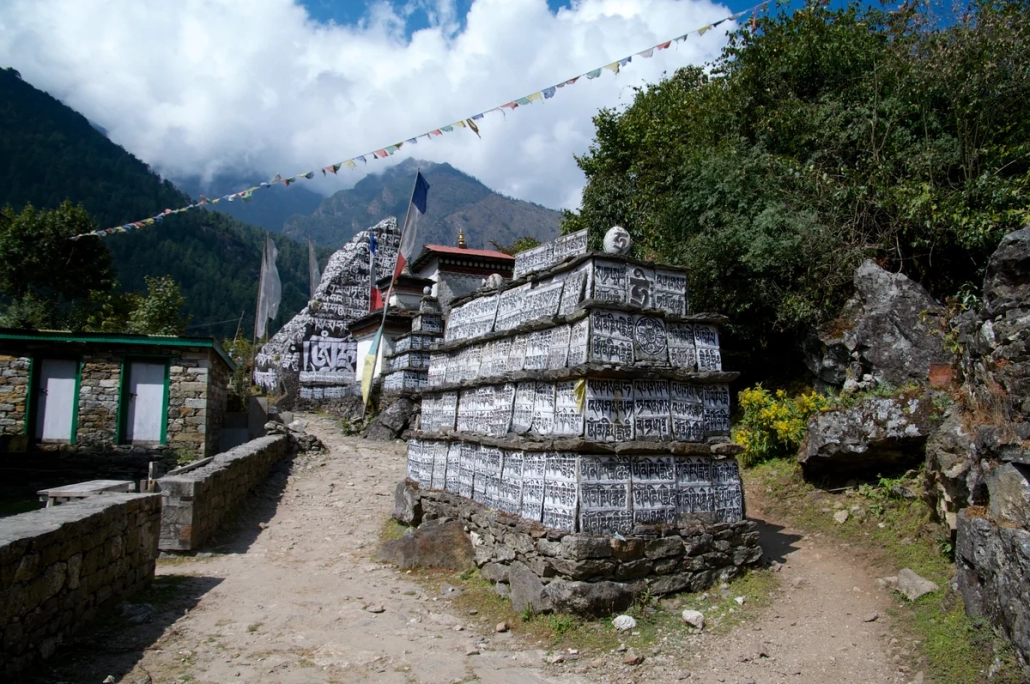
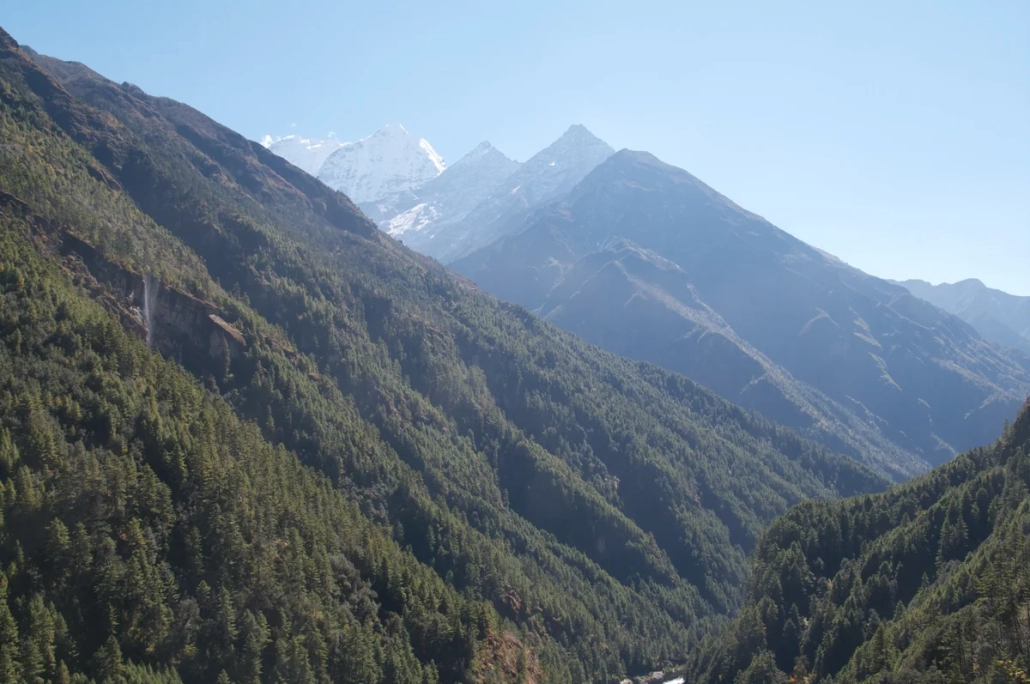
- Descend to Pangboche and follow the Imja Khola upstream as the valley opens progressively into high alpine terrain. The trail passes yak pastures and stone-walled fields characteristic of the upper Khumbu.
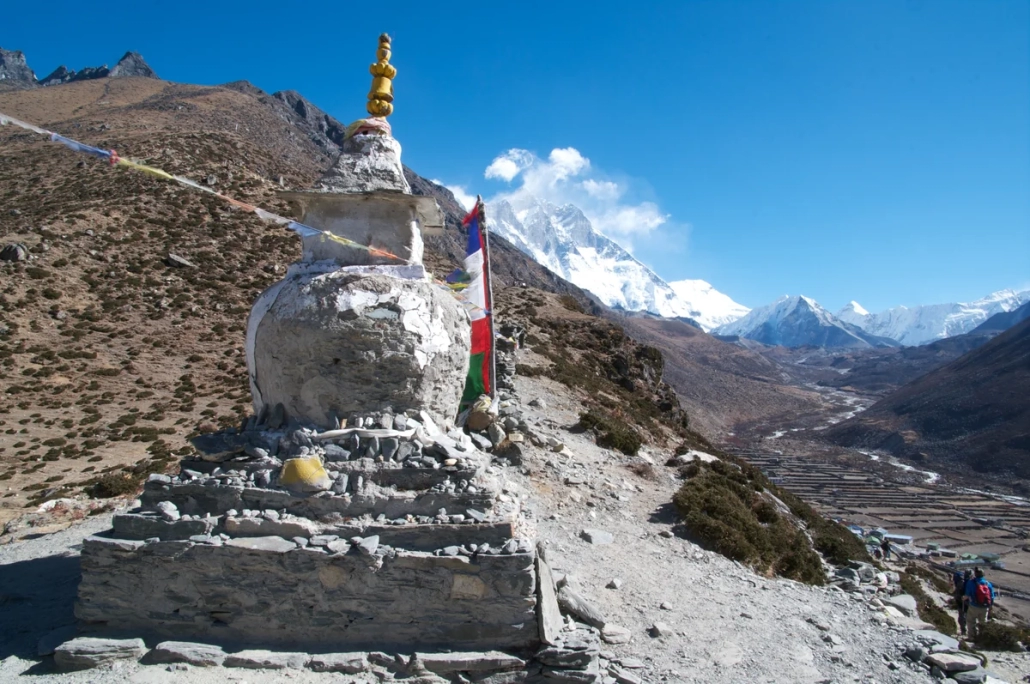
- At Shomare the trail forks: the left fork heads to Pheriche on the main EBC route; the right fork climbs to Dingboche (4,410m) in the Imja Valley — the correct route for Island Peak. Take the right fork.
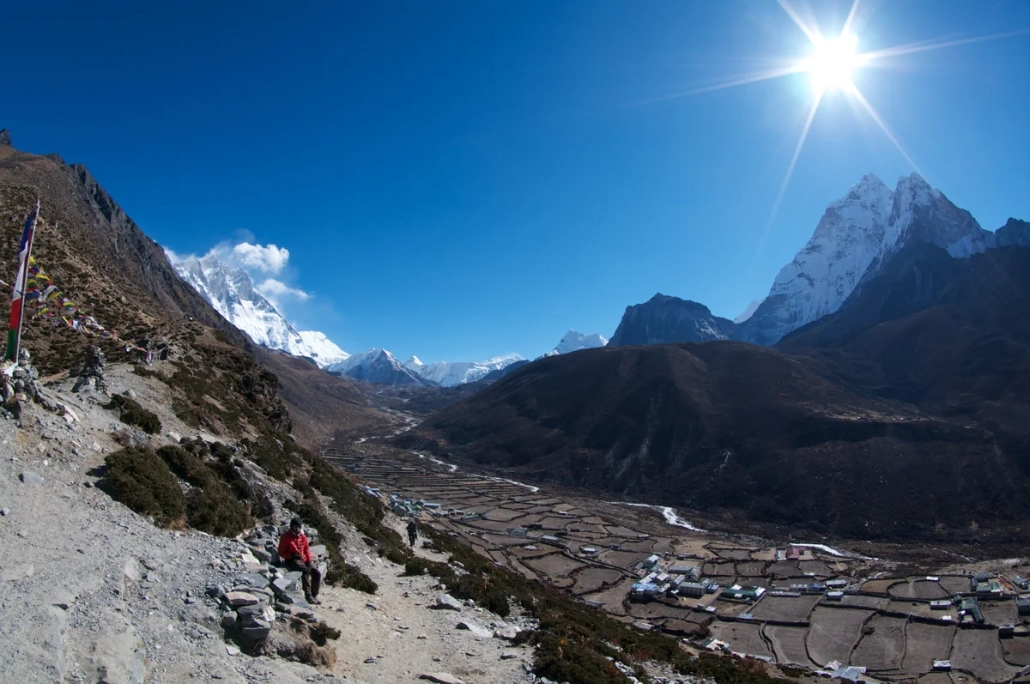
- Dingboche sits in a wide, sun-facing bowl with views of Lhotse, Island Peak, Ama Dablam, and Makalu. It will be your home for two nights.
- Overnight: Tea-house at Dingboche
- Meals: Breakfast, Lunch, Dinner
Day 7: Acclimatisation Day — Dingboche (hike to Nangkartshang Peak, ~5,083m)
- Second full acclimatisation day. Rest morning with pulse oximeter monitoring. This day is essential before the route pushes above 5,000m.
- Afternoon guided hike to the summit of Nangkartshang Peak (~5,083m) — a steep but non-technical ascent with an exceptional 360° panorama of Lhotse, Island Peak, Makalu, Baruntse, Ama Dablam, and Cholatse. The altitude gain and return here provides critical acclimatisation for the days above 5,500m.
- Early dinner and rest — energy conservation begins here in earnest.
- Overnight: Tea-house at Dingboche
- Meals: Breakfast, Lunch, Dinner
Day 8: Trek Dingboche to Chhukung (4,730m)
Trek: ~5 km | 2–3 hours
- A short but important altitude gain — the trail follows the Imja Khola upstream through increasingly barren glacially-carved terrain to Chhukung (4,730m), the last permanently inhabited settlement before Island Peak Base Camp.
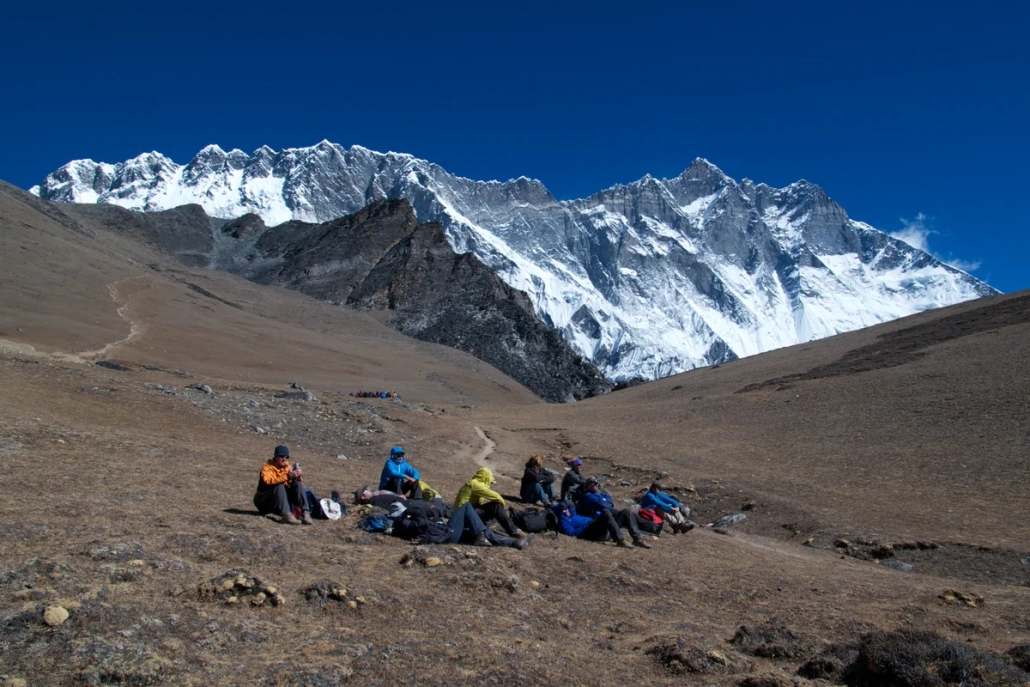
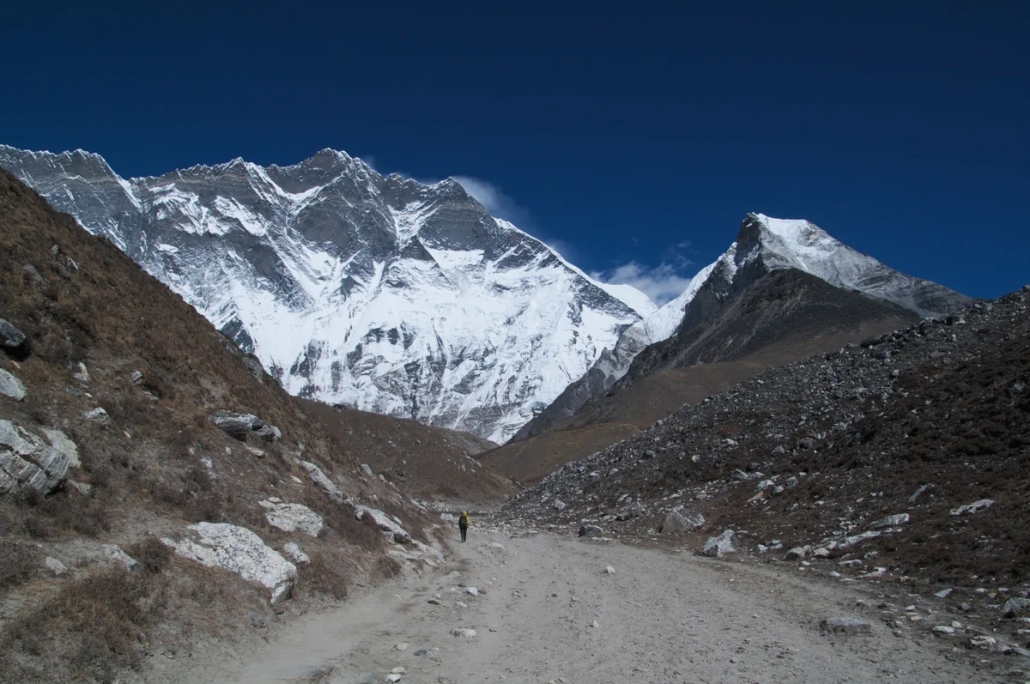
- Chhukung sits directly beneath the south faces of Lhotse and Island Peak. The summit objective is visible clearly above the valley from here for the first time — a focused reminder of what lies ahead.
- Afternoon rest, final personal gear check, and summit day clothing review with your guide.
- Overnight: Tea-house at Chhukung
- Meals: Breakfast, Lunch, Dinner
Day 9: Acclimatisation — Hike to Chhukung Ri (5,546m)
- Third and final structured acclimatisation day — a full-day ascent of Chhukung Ri (5,546m), the ridge directly above the valley. This hike to 5,546m is the single most important acclimatisation day on the entire itinerary. Do not skip or shorten it.
- The summit delivers one of the finest high-altitude panoramas in the Khumbu: Lhotse (8,516m), Makalu (8,485m), Baruntse (7,129m), Ama Dablam (6,812m), and the turquoise Imja Tso glacial lake far below. The scale of the Himalayan frontier visible from this ridge is extraordinary.
- Return to Chhukung by early afternoon. Early dinner and maximum rest — the move to base camp is tomorrow.
- Overnight: Tea-house at Chhukung
- Meals: Breakfast, Lunch, Dinner
Day 10: Trek Chhukung to Island Peak Base Camp (5,100m)
Trek: ~5 km | 3–4 hours
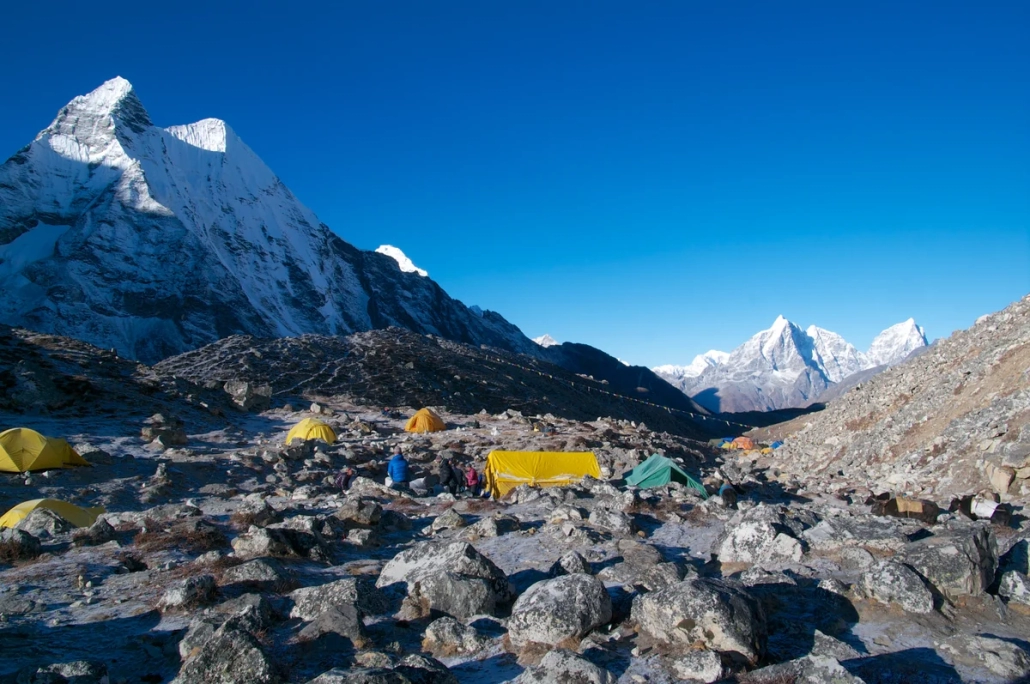
- Leave Chhukung and climb over moraine ridges to Island Peak Base Camp (5,100m) — a rocky, sheltered site on the lateral moraine of the Lhotse Glacier with direct views of the summit headwall above. Expedition tents are pitched here by the support team.
- Arrive by early afternoon. Rest, acclimatise, and settle into camp. The guide reviews the full summit route, headwall technique, and rope team protocols in preparation for the Day 11 training session.
- Overnight: Expedition tents at Island Peak Base Camp (5,100m)
- Meals: Breakfast, Lunch, Dinner
Day 11: Pre-Climb Technical Training & Rest — Base Camp (5,100m)
- Full acclimatisation and mandatory training day at base camp. Rest morning.
- Afternoon practical technical training session on the glacier above camp, covering: crampon movement on steep ice, ice axe self-arrest and French technique, fixed-line clipping and ascending, jumar ascender use, roped glacier travel, and crevasse crossing protocol. This session is fully guided by your Summit Routes lead — no prior experience is required, but full engagement is mandatory.
- Early dinner at 5:00 PM. Sleep by 7:00 PM. Wake call at midnight for the move to high camp.
- Overnight: Expedition tents at Island Peak Base Camp (5,100m)
- Meals: Breakfast, Lunch, Dinner
Day 12: Move to Island Peak High Camp (5,600m)
Distance: ~3 km | 3–4 hours
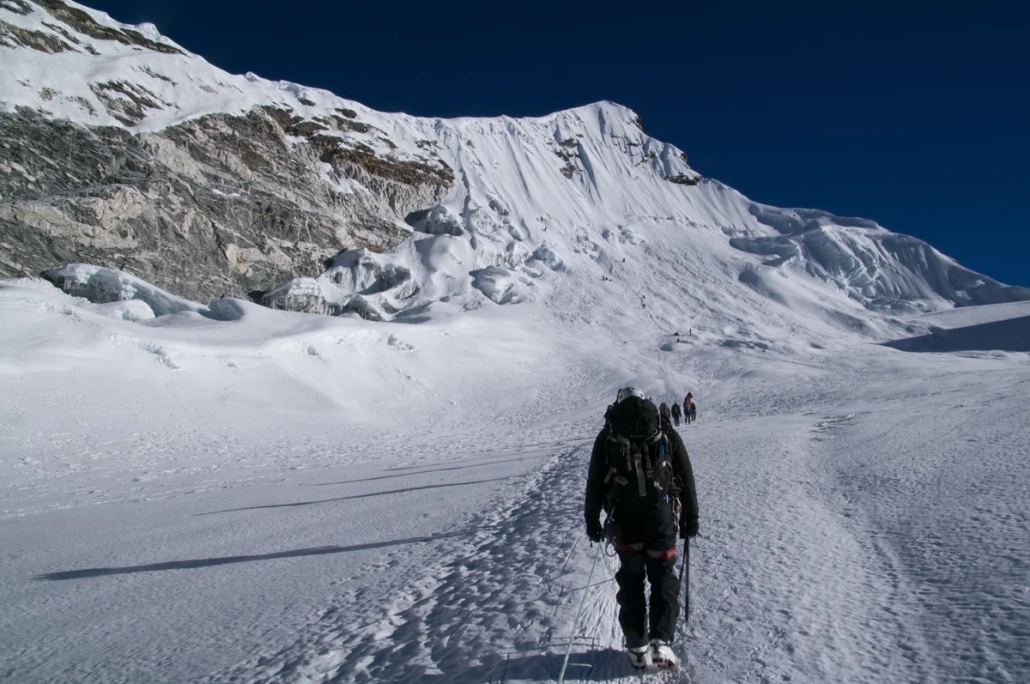
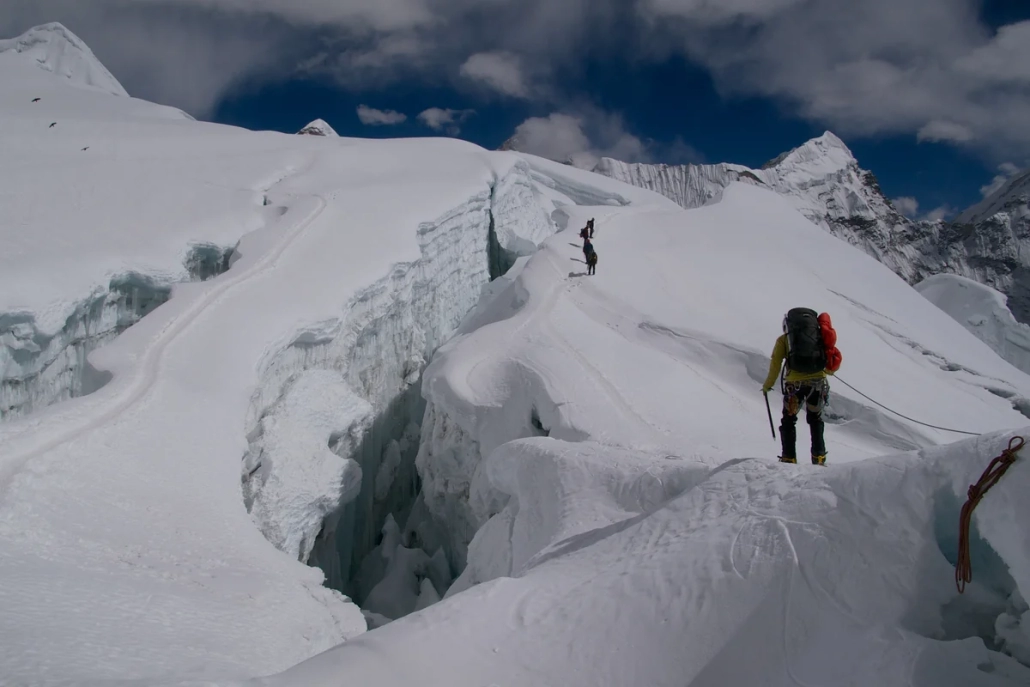
- Depart base camp and ascend the Lhotse Glacier to High Camp (5,600m) — glacier terrain from the outset. Crampons are required immediately above base camp. The route crosses the lower glacier, navigating around crevasse zones, to reach the tent platform on the upper glacier.
- The summit headwall is visible directly above high camp — conditions assessment is conducted by the guide on arrival. Weather forecast reviewed. Summit departure time confirmed.
- Dinner at 5:00 PM. Sleep by 6:30 PM. Wake call at 11:30 PM–midnight for summit push.
- Overnight: Expedition tents at Island Peak High Camp (5,600m)
- Meals: Breakfast, Lunch, Dinner
Day 13: Summit Day — Island Peak / Imja Tse (6,189m) — Descend to Chhukung (4,730m)
Ascent: ~3 km | 4–6 hours to summit • Total day: 10–12 hours
- Alpine start at midnight–1:00 AM by headlamp. Cross the upper glacier, navigate a short crevassed section, and arrive at the base of the 200-metre summit headwall — the crux of the route and the defining physical challenge of the expedition.
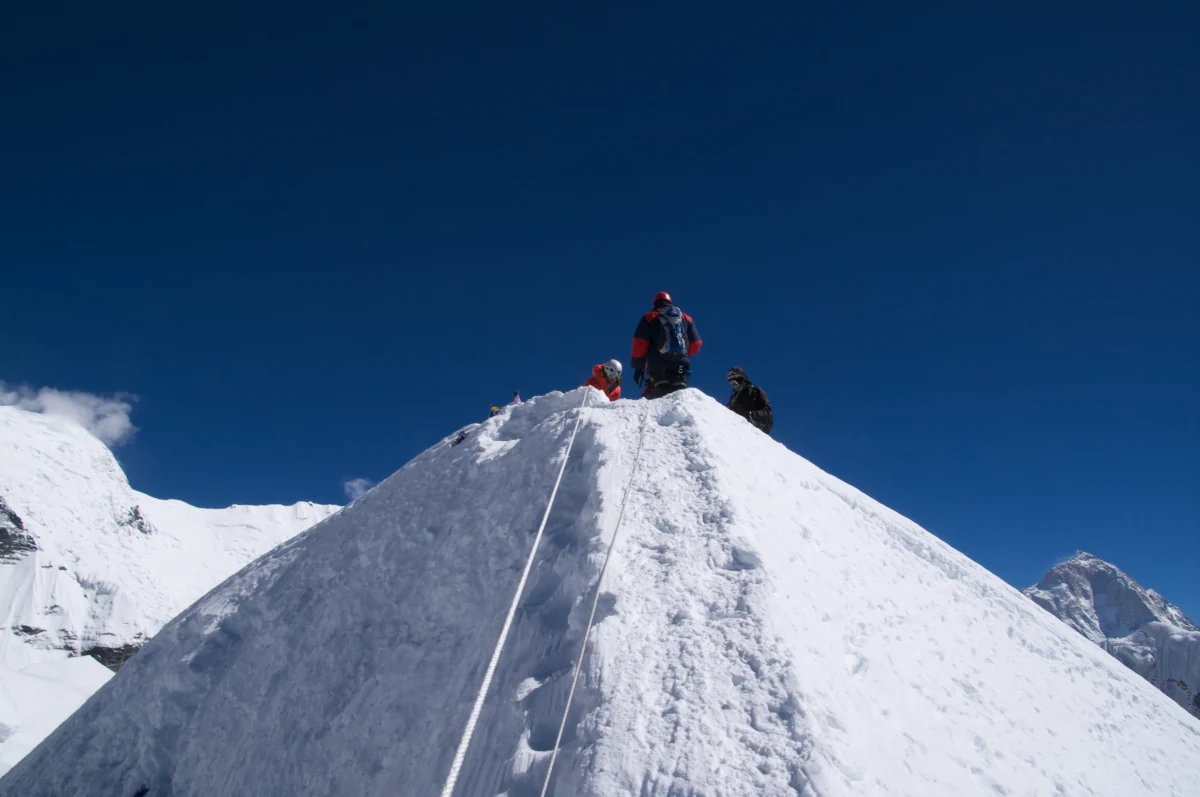
- The headwall ascends at 40–50° on fixed ropes using jumars or French crampon technique with ice axe. It is strenuous, sustained, and fully guided. A short snow ridge above the headwall leads to the summit cornice and the top.
- Summit of Island Peak / Imja Tse (6,189m): Lhotse's colossal south face dominates the northern horizon at close range. Makalu (8,485m), Baruntse (7,129m), Ama Dablam (6,812m), and Nuptse (7,861m) complete a panorama that rewards every metre of the climb. Allow time here.
- Descend the headwall on fixed ropes, return to high camp to collect tents, and continue down fully to Chhukung by mid-to-late afternoon. The 1,459m descent in a single day is demanding but the altitude loss accelerates recovery significantly.
- Overnight: Tea-house at Chhukung
- Meals: Breakfast, Lunch, Dinner
Day 14: Buffer / Rest Day — Chhukung (Weather Contingency)
- This day is built into the itinerary as a weather contingency for the summit push. If the summit was completed on Day 13, this is a full rest and recovery day at Chhukung — bodies are tired, and the 4,730m altitude still requires careful recovery before the long descent.
- If summit was not possible on Day 13 due to weather or conditions, this becomes the reserve summit attempt day: move to high camp on Day 13 evening, summit attempt Day 14 — following the same schedule as above.
- Overnight: Tea-house at Chhukung
- Meals: Breakfast, Lunch, Dinner
Day 15: Trek Chhukung to Namche Bazaar (3,440m)
Trek: ~15 km | 6–7 hours
- A long but rewarding descent back through Dingboche and down the Imja Valley, rejoining the main EBC trail at Shomare and continuing via Tengboche before the final descent to Namche Bazaar.
- The altitude drop from 4,730m to 3,440m brings a rapid return of energy and appetite. The guide team celebration dinner in Namche marks the successful completion of the expedition's climbing phase.
- Overnight: Tea-house in Namche Bazaar
- Meals: Breakfast, Lunch, Dinner
Day 16: Trek Namche Bazaar to Lukla (2,860m)
Trek: ~19 km | 6–7 hours
- Final full trek day — retrace the approach route down through Monjo, across the Hillary Suspension Bridge, and along the Dudh Koshi valley back to Lukla.
- Farewell dinner in Lukla. The mountain is behind you. Tips for the guide and porter team are customary and appreciated.
- Overnight: Tea-house in Lukla
- Meals: Breakfast, Lunch, Dinner
Day 17: Fly Lukla to Kathmandu — Departure
Flight: ~35 minutes
- Early transfer to Lukla Airport for the return flight to Kathmandu. Flights depart early — be at the airport by 6:00 AM. Weather cancellations are possible; do not book non-refundable onward departures within 48 hours of this flight.
- Arrive Kathmandu and transfer to hotel. Free time for rest or sightseeing — Boudhanath Stupa, Pashupatinath Temple, or Thamel.
- Transfer to Tribhuvan International Airport (KTM) for onward travel.
- Overnight: Hotel Amaryllis or similar if departing next day, or direct airport transfer
- Meals: Breakfast
NP-33 – Island Peak / Imja Tse Expedition Nepal (17 Days)
Starting from USD 2,795 per person
(Based on 2 climbers, private certified guide & porter support)
👉 Request Custom Itinerary & QuoteIncludes domestic flights, certified high-altitude guide, complete technical equipment, permits & full expedition logistics — no hidden costs.
INCLUDED
- All private transportation throughout the programme (airport transfers Kathmandu)
- 16 nights accommodation:
- 1 night hotel in Kathmandu (twin sharing, attached bathroom)
- 10 nights in tea-houses throughout the trek (twin sharing) — Phakding, Namche (×2), Tengboche, Dingboche (×2), Chhukung (×2), Namche, Lukla
- 2 nights in expedition tents at Island Peak Base Camp (5,100m)
- 1 night in expedition tents at Island Peak High Camp (5,600m)
- 1 night tea-house Chhukung (post-summit rest / buffer)
- 1 night hotel in Kathmandu on return (if overnight before departure)
- Domestic flight tickets: Kathmandu–Lukla–Kathmandu (both ways)
- All required permits: Island Peak (Imja Tse) climbing permit (Nepal Mountaineering Association), Sagarmatha National Park entry permit, TIMS card
- Certified high-altitude guide (Nepal Tourism Board licensed) throughout the full 17 days
- Porter support (1 porter per 2 climbers) for all trail days
- All technical climbing equipment: crampons, harness, ice axe, helmet, fixed lines, carabiners, jumar ascenders
- Base camp and high camp expedition tents and cooking equipment
- All meals as specified in the day-to-day itinerary
- Pulse oximeter monitoring throughout all high-altitude days
- Pre-climb technical training session at Base Camp (Day 11)
- All entrance fees, government taxes, and service charges
NOT INCLUDED
- International flights to/from Kathmandu
- Nepal visa fees
- Travel insurance (mandatory — must cover technical mountaineering above 6,500m and helicopter evacuation)
- Personal climbing clothing and mountaineering boots (boot and gear hire available in Kathmandu or Namche Bazaar — ask on enquiry)
- Summit day supplemental oxygen (available on request — ask on enquiry for pricing)
- Personal expenses (hot showers, extra snacks, beverages, charging fees above Namche, etc.)
- Tips for guide and porter
- Anything not mentioned under "Included"
Group Pricing (indicative per person)
| Group Size | Price (USD) per Person |
|---|---|
| 2 climbers | 2,795 |
| 3–4 climbers | 2,495 |
| 5–8 climbers | 2,250 |
| 9+ climbers | On request |
Accommodation
Kathmandu (1 Night Arrival + 1 Night Return)
Accommodation in Kathmandu is arranged at Hotel Amaryllis or a similar centrally located hotel in the Thamel area. Rooms are twin sharing with attached bathroom, hot shower, electricity, and Wi-Fi. The arrival night is used for briefing, equipment checks, and permit verification. The return night (Day 17, if departing the following day) provides time for recovery and a final Kathmandu evening before onward travel.
Trek — Tea-Houses (10 Nights)
Tea-house accommodation throughout the lower approach at Phakding, Namche Bazaar (two nights), Tengboche, Dingboche (two nights), Chhukung (two nights), and Namche Bazaar and Lukla on the return. Rooms are twin sharing; attached bathrooms are available at most tea-houses below Namche and become less common above Dingboche.
A few practical notes: Namche has the best facilities on the route — hot showers, reliable Wi-Fi, and a good range of food options. Tengboche is quieter and more atmospheric. Dingboche is comfortable for its altitude and has solar-heated water. Chhukung is basic but adequate — a simple, functional base before the route leaves the tea-house system entirely. Hot shower charges above Namche are not included in the package price; budget a small amount of cash for these on the approach.
Island Peak Base Camp (2 Nights) & High Camp (1 Night)
From Day 10 onward, accommodation is in high-quality expedition tents provided and erected by Summit Routes at both Island Peak Base Camp (5,100m) and High Camp (5,600m). A separate dining tent and kitchen tent are set up at Base Camp. High Camp is a small, wind-sheltered tent platform on the glacier — spartan by necessity, with the focus entirely on rest, hydration, and preparation for the pre-dawn summit departure. A warm sleeping bag rated to -15°C or colder is essential from Base Camp onward.
What to Pack — Island Peak / Imja Tse Expedition
Island Peak spans 1,400m in Kathmandu to 6,189m at the summit across 17 days. Pack for the full range: warm valley days on the Khumbu approach, cold nights above Dingboche, and pre-dawn summit conditions at High Camp (5,600m) where wind chill routinely reaches -20°C or below in October. All technical climbing equipment — crampons, harness, ice axe, helmet, fixed lines, jumars — is provided by Summit Routes. Your porter carries the main duffel bag between tea-houses on the approach; you carry your personal daypack on trail. At Base Camp and above, the support team handles camp logistics.
Clothing & Layers
- Heavy down jacket rated to -15°C to -20°C — for nights at Base Camp, High Camp, and the pre-dawn summit start. A standard trekking puffer is insufficient above 5,000m on this expedition.
- Waterproof hardshell jacket — for summit conditions and afternoon weather changes above 4,000m. Mountain weather in the Khumbu changes rapidly in both spring and autumn.
- Insulating fleece mid-layer × 2
- Moisture-wicking base layers (top and bottom) × 3 — merino wool preferred over synthetic for multi-day temperature management and odour control.
- Waterproof hardshell trousers — essential on the summit headwall and upper glacier. Not just rain cover — these are your outer shell on the technical sections.
- Trekking trousers × 2 — lightweight and fast-drying for the lower approach days.
- Thermal leggings × 2 — for nights at Dingboche, Chhukung, Base Camp, and High Camp.
- Balaclava — non-negotiable for the midnight–1:00 AM High Camp departure and the headwall ascent. The glacier funnels wind significantly.
- Warm hat and wide-brimmed sun hat — both. UV intensity at 5,000–6,189m is severe; glacier reflection amplifies it further.
- Mountaineering gloves — a lightweight liner pair and a heavy insulated outer pair. Metal climbing equipment at -15°C causes rapid skin damage on bare hands; touching fixed lines or jumars without gloves at summit altitude is dangerous.
- Heavyweight trekking socks × 4–5 pairs — merino wool for the long approach days; dedicated warm climbing socks for Base Camp nights and summit day.
- Camp shoes or down booties — for rest time at Base Camp and tea-houses. Give your mountaineering boots a break in the evenings.
Footwear
- Double-layer mountaineering boots or stiff B3-rated trekking boots compatible with step-in crampons — fully broken in before arrival. This is the single most critical gear decision on the entire expedition. Standard trekking boots cannot safely accept technical crampons on 40–50° headwall terrain. Boots are available to hire in Kathmandu or Namche — ask on enquiry if you need guidance on boot requirements before travel.
- Crampons — provided by Summit Routes, fitted to your boots at Base Camp on Day 11.
- Trekking poles × 2 — for the approach from Lukla to Chhukung and the long descents on Days 15–16. Not used on the technical sections above Base Camp.
- Gaiters — for the glacier approach above Base Camp and any snow on the lower approach.
Personal Health & Safety
- Altitude medication — consult your doctor about Diamox well before departure. The itinerary arrives at 4,410m on Day 6, reaches 5,546m on the Day 9 acclimatisation hike, and pushes to 6,189m on Day 13. Read our guide to altitude sickness in the Himalaya.
- Personal first aid kit — blister plasters, ibuprofen, paracetamol, antihistamines, rehydration sachets, anti-diarrhoeal tablets. No pharmacies above Namche.
- Glacier sunglasses or goggles — Category 4 UV protection — non-negotiable on the Island Peak glacier. Standard sunglasses cause snow blindness at this altitude and reflectivity. Wrap-around frames essential; goggles recommended for summit day if wind is expected.
- High-SPF sunscreen (50+) — applied to all exposed skin including under the chin (glacier reflection). Carry enough for the full 17 days.
- Lip balm with SPF — glacier UV and cold air together cause severe lip damage rapidly.
- Hand sanitiser and wet wipes — water at Base Camp and High Camp is from snowmelt only.
- Personal prescription medicines — carry at least double your required quantity.
Gear & Equipment
- Sleeping bag rated to -15°C or colder — nights at Dingboche, Chhukung, Base Camp, and High Camp can drop to -10°C or below even in October. A 4-season bag is strongly recommended. This is the single most important piece of personal gear you bring.
- Sleeping bag liner — adds warmth and keeps your bag clean over 16 nights.
- Trekking daypack (30–40L) — carries personal essentials on trail and all summit-day kit from High Camp. The porter carries the main duffel on approach days.
- Main duffel bag (60–70L, soft-sided, no hard frame) — for porter loading on the approach. Hard-framed luggage cannot be safely carried on mountain trails.
- Headlamp + spare lithium batteries — the midnight High Camp departure makes this mission-critical. Cold drains alkaline batteries within an hour above 5,000m. Store all spare batteries inside your sleeping bag the night before summit day.
- Insulated water bottles × 2 (1L each) — standard plastic bottles freeze solid at High Camp overnight. Vacuum-flask or insulated Nalgene essential. Store your water bottles inside your sleeping bag overnight before summit day.
- Water purification tablets — for stream and snowmelt water above Chhukung.
- Power bank — no electricity from Day 10 (Base Camp) onward. Charge fully in Chhukung and bring enough capacity for camera and phone through summit day. Chhukung has solar-powered charging (for a fee); above that, nothing.
- Dry bag or waterproof pack cover — for wet days on the lower approach trail.
- Hand warmers — chemical or reusable; useful for the midnight High Camp departure and summit headwall.
Documents & Money
- Passport — valid 6+ months beyond your travel date.
- Nepal visa — available on arrival at Kathmandu airport. Bring USD cash and a passport photo.
- Permit documentation — Summit Routes arranges all permits; carry printed copies for checkpoint verification at Monjo, Namche, and the NMA Island Peak permit check at base camp.
- Travel insurance documents — must cover technical mountaineering above 6,500m and emergency helicopter evacuation. Verify this specifically with your insurer before travel. This is mandatory for participation.
- Cash in Nepali Rupees — ATMs available in Kathmandu and Namche. No ATMs above Namche. Carry sufficient rupees for all personal expenses (hot showers, snacks, charging, tips) from Namche to Lukla — approximately 13 days.
Optional but Useful
- Camera with multiple spare batteries — cold kills batteries within an hour above 5,500m. Keep all spares in an inner pocket against your body overnight before summit day.
- Lightweight down trousers — for evenings at Base Camp and High Camp.
- High-energy summit day snacks — energy gels, bars, nuts, electrolyte tablets. Bring from home; nothing is available above Chhukung.
- Small padlock for duffel bag at Kathmandu hotels.
- Earplugs — tea-houses on the Khumbu approach are busy in peak season.
For a complete Himalayan packing guide with brand recommendations and a printable checklist, see our Himalayan Trekking Gear List →
Boot and crampon compatibility is the most common equipment issue on this expedition. If you are unsure whether your boots accept step-in crampons, contact us before travel — boots are available to rent in Kathmandu or Namche and we can advise based on your specific footwear.
Safety & Emergency Protocols — Island Peak / Imja Tse Expedition
Your safety is the absolute priority on every Summit Routes expedition. Island Peak involves genuine high-altitude technical terrain — a 200m fixed-rope headwall at 40–50°, glacier travel with crevasse zones, sustained effort above 5,000m for multiple days, and summit conditions that can reach -20°C wind chill in October. Below is a full account of the safety protocols, emergency procedures, and equipment standards maintained on every Island Peak departure.
First Aid & Medical Equipment
- Comprehensive expedition first aid kit carried by the lead guide at all times throughout the 17-day route
- Pulse oximeter for daily blood-oxygen monitoring from Namche onward — readings taken every morning and logged against individual baseline values
- Emergency supplemental oxygen at Base Camp and on summit day — available for any climber showing severe AMS symptoms above 5,000m
- Basic medications including Diamox, Dexamethasone, Nifedipine, analgesics, rehydration salts, and full wound and blister care supplies
- Daily health check-ins at every campsite above 4,000m — appetite, sleep quality, headache, and blood-oxygen levels all assessed and documented
- Access to the Himalayan Rescue Association (HRA) clinic in Namche Bazaar on Day 4 — and the Pheriche clinic nearby for any trekker requiring assessment on the approach days
Evacuation Procedure
Below Namche Bazaar:
- Assisted descent on foot to Lukla followed by flight to Kathmandu — the standard non-helicopter evacuation route from the lower Khumbu
- Helicopter landing zone at Namche Bazaar helipad — most frequently used emergency evacuation point for the Khumbu
Namche to Chhukung (Dingboche section):
- Helicopter evacuation from Namche, Tengboche, or Dingboche helipads is standard for serious AMS cases — all three have established helicopter landing zones
- Cases directed to Kunde Hospital (Namche area) for stabilisation, then onward to Kathmandu referral hospitals
Chhukung, Base Camp, and High Camp:
- Helicopter evacuation is the only rapid route for serious cases from above 4,730m. Chhukung has a recognised landing zone used regularly for Khumbu expeditions. Helicopter response from Kathmandu typically takes 1–3 hours in good weather.
- For less urgent cases from Base Camp or High Camp, assisted descent to Chhukung on foot takes 2–4 hours, where helicopter coordination becomes available
- On the summit headwall and upper glacier, any climber unable to self-rescue is lowered on fixed ropes by the guide team to High Camp before evacuation is called — the guide is trained and equipped for this procedure
Guide Training & Certifications
- All expedition leaders are licensed by the Nepal Tourism Board with a valid Trekking and Mountaineering Guide licence
- Wilderness First Responder (WFR) training or equivalent high-altitude medical certification
- Minimum of three prior Island Peak summit completions required for every lead guide — direct knowledge of current glacier conditions, crevasse locations, fixed-line placement, and specific AMS presentation patterns at this altitude is not available from training alone
- Trained in rope management, crevasse rescue, fixed-line installation, glacier travel, and assisted descent on technical terrain
- Guides continuously assess weather, snow conditions, and individual climber fitness and may turn the team around at any point — no summit is worth a life, and the guide's safety call cannot be overridden by the client
Travel Insurance — Mandatory Requirement
Valid travel insurance is a non-negotiable condition of participation on this expedition.
- Must cover technical mountaineering above 6,500 metres — standard trekking policies typically cap at 5,500m or 6,000m. Verify your specific policy covers Island Peak at 6,189m before travel.
- Must include emergency helicopter evacuation with minimum coverage of USD 100,000 — helicopter rescue from Chhukung or Base Camp to Kathmandu is expensive and must be pre-authorised by your insurer before Summit Routes activates the evacuation
- Must cover medical hospitalisation, emergency repatriation, and trip cancellation including Lukla flight weather delays
- The insurance policy must be shared with Summit Routes before departure
- Climbers without valid, verified insurance cannot join this expedition — no exceptions
Not sure which policy covers technical mountaineering at 6,189m? See our Insurance & Permits FAQ.
Emergency Contact Protocol During the Expedition
For Family / Next of Kin
A dedicated emergency contact number is provided to all clients before departure. Our Kathmandu coordinator monitors every active Island Peak departure and will contact your nominated next-of-kin within 2 hours of any serious incident.
On the Mountain
Mobile signal (NTC and Ncell) is available in Namche Bazaar, Tengboche, and Dingboche. Signal is intermittent at Chhukung and absent at Base Camp and High Camp. Our guides are familiar with the specific locations on the approach where signal is available and use these to relay regular updates to our Kathmandu operations team.
Rescue Coordination
Summit Routes maintains coordination with TAAN Rescue, the Nepal Army Air Wing, and private helicopter operators including Fishtail Air and Simrik Air — the primary helicopter rescue operators for the Khumbu and Imja Valley. All operators have established landing zones and procedures for the Chhukung and Island Peak Base Camp area.
Summit Day — Turnaround Policy
The Island Peak summit push involves a midnight departure and sustained technical terrain in darkness and cold. Our guide team manages summit day as follows:
- Turnaround time is set by the guide at briefing — typically a hard turnaround at the summit ridge no later than 9:00–10:00 AM to ensure safe descent before afternoon deterioration. This is non-negotiable.
- If any climber shows AMS symptoms, exhaustion beyond safe management, or gear failure at High Camp, they will not proceed to the summit — the guide makes this call the night before or at departure. The reserve day (Day 14) exists as a second window if conditions allow.
- If conditions on the headwall deteriorate (wind, ice quality, visibility), the guide can call a retreat from any point on the ascent — the decision is final.
- Guides place and check fixed lines on the headwall before the client team ascends — no client moves onto the headwall until the guide is satisfied with line security.
Altitude Sickness (AMS) — Our Policy
AMS is a real risk above 3,000m and requires careful management on this itinerary. Read our complete altitude sickness guide before joining the expedition.
Any climber showing signs of High-Altitude Cerebral Oedema (HACE) or High-Altitude Pulmonary Oedema (HAPE) will be descended immediately. This decision is non-negotiable and cannot be overridden by the climber under any circumstances.
The acclimatisation schedule built into this itinerary:
- Day 1: Kathmandu — 1,400m
- Day 2: Phakding — 2,610m
- Day 3: Namche Bazaar — 3,440m
- Day 4: Namche — full acclimatisation day + hike to 3,880m
- Day 5: Tengboche — 3,867m
- Day 6: Dingboche — 4,410m
- Day 7: Dingboche — full acclimatisation day + hike to Nangkartshang (5,083m)
- Day 8: Chhukung — 4,730m
- Day 9: Chhukung — full acclimatisation hike to Chhukung Ri (5,546m)
- Day 10: Island Peak Base Camp — 5,100m
- Day 11: Base Camp — rest + training day
- Day 12: High Camp — 5,600m
- Day 13: Summit — 6,189m
All three acclimatisation days (Days 4, 7, and 9) are non-negotiable. The Chhukung Ri hike on Day 9 is the most critical single acclimatisation element before the summit push — its altitude of 5,546m is close to the summit, and the physiological preparation it provides is the difference between a manageable headwall ascent and an overwhelming one.
Have a safety question before booking?
Contact our team on WhatsApp (+91 96222 44022) or email info@summitroutes.com. We are happy to discuss Island Peak safety considerations in detail before you commit.
Island Peak is a serious technical climb rated strenuous-to-demanding. The approach is a well-established high-altitude trek, but the upper mountain features a crevassed glacier and a sustained 200m fixed-rope headwall at 40–50°. No prior mountaineering experience is required, but you must be fit, comfortable at altitude, and prepared to follow guide instruction precisely on the headwall.
Prior mountaineering experience is not required, but you should have completed multi-day trekking at altitude — ideally above 4,000m — before attempting Island Peak. A good base fitness level is essential. We include a full pre-climb technical training session at base camp covering crampon technique, ice axe use, fixed-line ascending, and jumar operation.
Island Peak has two reliable seasons: spring (late March–May) and autumn (late September–November). October is the single best month — stable weather windows, settled jet stream, and exceptional visibility on the summit. Spring is also excellent and popular with climbers combining the peak with an Everest Base Camp approach. Monsoon (June–August) and winter (December–February) are not recommended.
Yes — we arrange everything. Required permits are the Island Peak climbing permit (issued by the Nepal Mountaineering Association), Sagarmatha National Park entry permit, and TIMS card. All are included in your expedition price and handled by Summit Routes before departure. You do not need to arrange any permits independently.
The price includes domestic flights (Kathmandu–Lukla–Kathmandu), hotel in Kathmandu, all tea house accommodation on trek, expedition tents at base camp and high camp, all meals as per itinerary, certified high-altitude guide, porter support, all technical climbing equipment (crampons, harness, ice axe, helmet, fixed lines, jumar ascenders, carabiners), all permits, pulse oximeter monitoring, and pre-climb technical training. International flights, Nepal visa, travel insurance, personal clothing, and tips are not included.
The expedition starts and ends in Kathmandu. From Kathmandu you fly to Lukla (35 minutes) on Day 2 — domestic flight tickets are included in your price. We handle all airport transfers and flight bookings. Lukla flights operate in the early morning and are subject to weather; our itinerary includes contingency time for delays.
In Kathmandu: twin-sharing hotel (Hotel Amaryllis or similar). On trek from Lukla to Chhukung: twin-sharing tea house rooms. Tea house quality is good in Namche and Dingboche; facilities are more basic at Chhukung. At Island Peak Base Camp (5,100m) and High Camp (5,600m): expedition tents provided by Summit Routes. A sleeping bag rated to -15°C is essential from Dingboche upwards.
Tea houses serve a varied menu — dal bhat, pasta, noodles, soup, eggs, porridge, and local Sherpa dishes. Food quality is reliable as far as Dingboche; above that, menus simplify. At base camp and high camp our cook team prepares hot meals and drinks. We can accommodate vegetarian, vegan, and gluten-free requirements — please advise us at booking so we can confirm arrangements with tea house owners in advance.
Key items: insulated mountaineering boots (compatible with crampons), crampons (provided), harness (provided), ice axe (provided), helmet (provided), -15°C sleeping bag, down jacket, waterproof shell jacket and trousers, mid-layer fleece, moisture-wicking base layers, trekking poles, headlamp with spare batteries, UV-protective sunglasses and glacier goggles, sunscreen (SPF 50+), personal first aid kit, and water purification tablets or filter. A full detailed packing list is provided on booking.
Yes. Solo travellers are welcome and join small guided groups. The price listed is based on 2 climbers sharing; a solo supplement applies for single room and private guide allocation — contact us for the current solo rate.
We run small groups — typically 2 to 8 climbers. This is a deliberate policy: smaller teams mean better guide-to-climber ratios on the headwall, more personalised acclimatisation monitoring, and faster, safer movement on summit day. We do not operate large commercial groups on this route.
Yes — travel insurance is mandatory and non-negotiable. Your policy must explicitly cover technical mountaineering above 6,000m and helicopter evacuation from altitude. Standard travel insurance is not sufficient. We recommend checking policies from specialist providers before booking and can suggest suitable options on enquiry. Proof of adequate coverage is required before the expedition begins.
The maximum altitude on this expedition is the summit of Island Peak / Imja Tse at 6,189m. High Camp sits at 5,600m and Chhukung Ri — reached on the acclimatisation day — reaches 5,546m. Three structured acclimatisation days are built into the itinerary specifically to prepare your body for summit altitude.
All meals listed in the day-by-day itinerary are included. On trek, breakfast and dinner are served at the tea house where you are staying; lunches are taken at a tea house en route. At base camp and high camp, hot meals and drinks are prepared by our camp cook. Calorie-dense snacks for summit day are provided. Safe drinking water — via boiling, treatment tablets, or filter — is available throughout; we strongly advise against buying single-use plastic bottles.
Your guide monitors every team member daily using a pulse oximeter and assesses symptoms throughout. If you show signs of Acute Mountain Sickness (AMS) that do not resolve with rest and hydration, the protocol is immediate descent — this is non-negotiable. We carry a Gamow bag and supplemental oxygen for emergency use. In serious cases, helicopter evacuation from the Chhukung area is possible — this is why comprehensive insurance including helicopter evacuation is mandatory on this expedition.
NTC (Nepal Telecom) and Ncell mobile networks provide coverage in Namche Bazaar and Dingboche. Signal becomes intermittent above Dingboche and is unreliable at Chhukung and above. Base camp and high camp should be treated as off-grid. WiFi is available (for a small charge) at most Namche tea houses. We recommend informing family or contacts that communication will be limited above Dingboche.
Tea houses from Lukla to Chhukung have basic toilet facilities — squat toilets are standard; Western-style toilets exist in some Namche establishments. At Island Peak Base Camp and High Camp, expedition toilet tents with portable facilities are provided by Summit Routes. Trekking poles are useful on steep descent sections where toilet stops require leaving the trail.
Yes. All Summit Routes guides hold a Nepal Tourism Board (NTB) trekking guide licence and Nepal Mountaineering Association (NMA) climbing certification. Our lead guides have extensive verified summit experience on Island Peak specifically and are trained in wilderness first aid and high-altitude rescue protocols. You will be briefed on your guide's qualifications at the Day 1 expedition meeting in Kathmandu.
Yes — and it's one of the most popular combinations in the Khumbu. The Island Peak approach shares the EBC trail as far as Dingboche, making it straightforward to extend the itinerary to include Gorak Shep, Everest Base Camp (5,364m), and Kala Patthar (5,545m) before or after the climb. Contact us to discuss a combined itinerary — we build these on request and the additional days add significant value to the overall expedition.
No reviews yet.
📅 2026 Departures — Island Peak Expedition (17 Days)
Click a departure to enquire instantly on WhatsApp
⚡ Small groups · Certified high-altitude guides · All permits & technical gear included
Arrive & Depart: Kathmandu (KTM), Nepal
Similar Expeditions
EVEREST BASE CAMP
Level: Challenging | Duration: 14 Days | Best Time: Mar–May & Sep–Nov | Price: From $1795
ANNAPURNA CIRCUIT TREK
Level: Challenging | Duration: 18 Days | Best Time: Mar–May & Sep–Nov | Price: From $1895