Goecha La & Dzongri Trek

Goecha La & Dzongri Trek — Overview
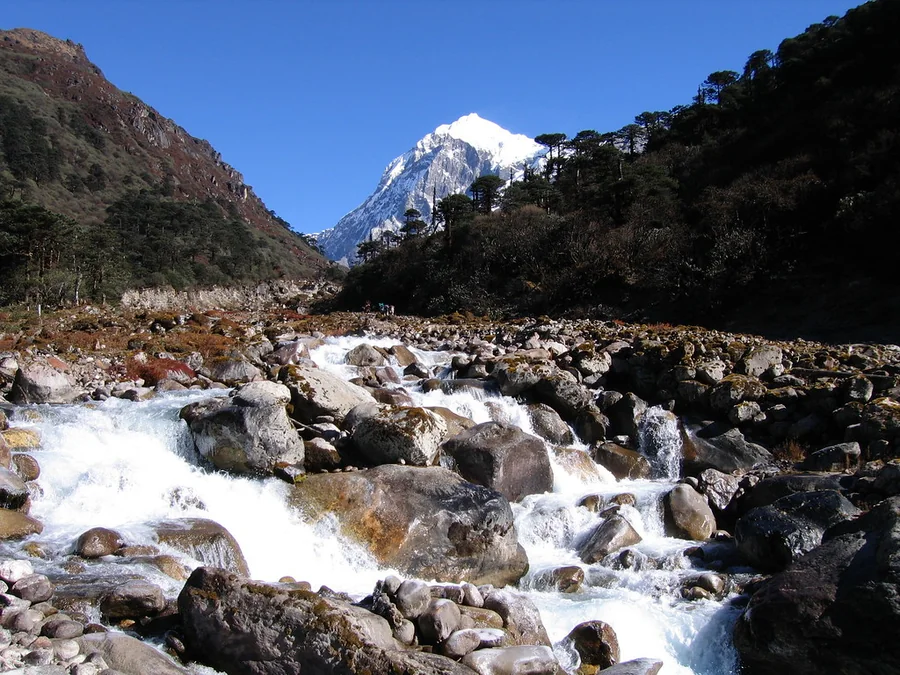
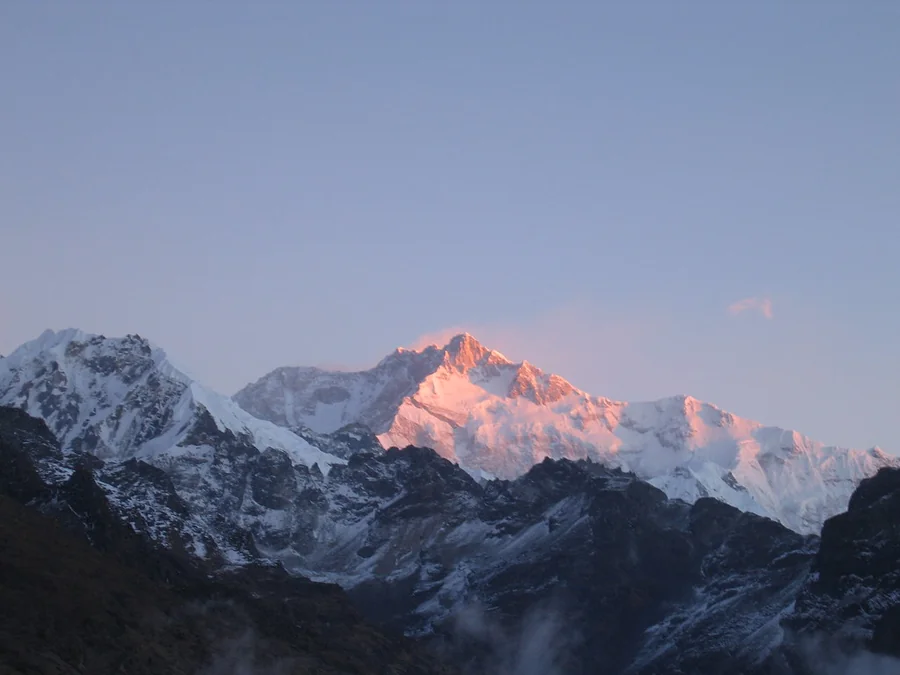
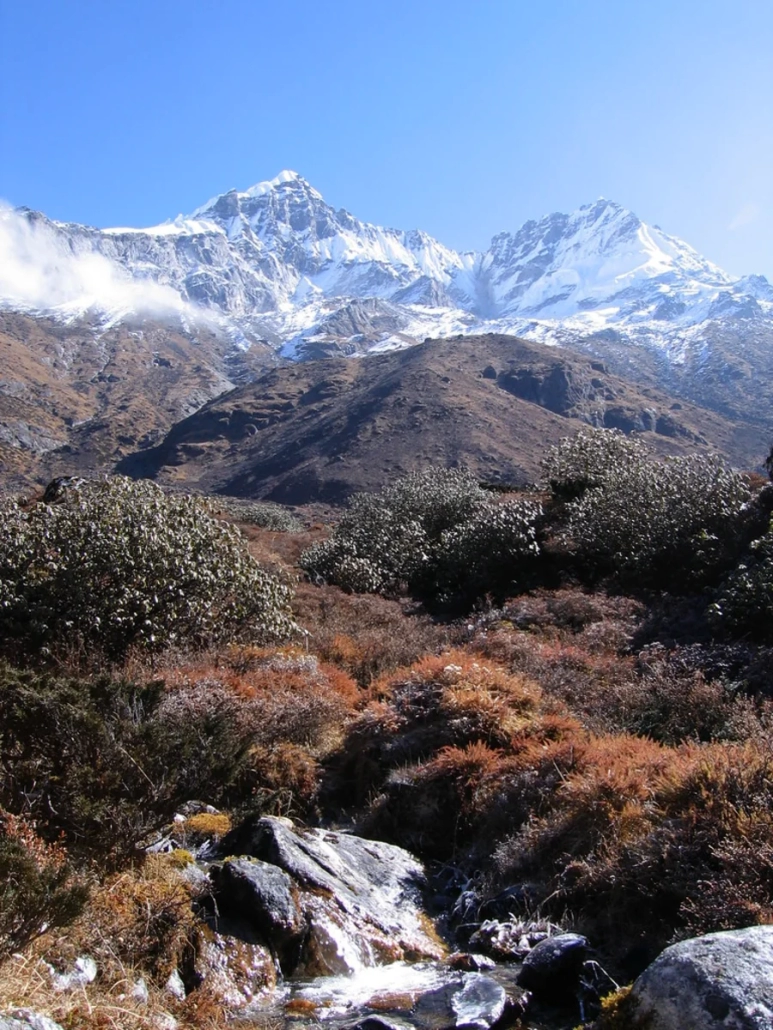
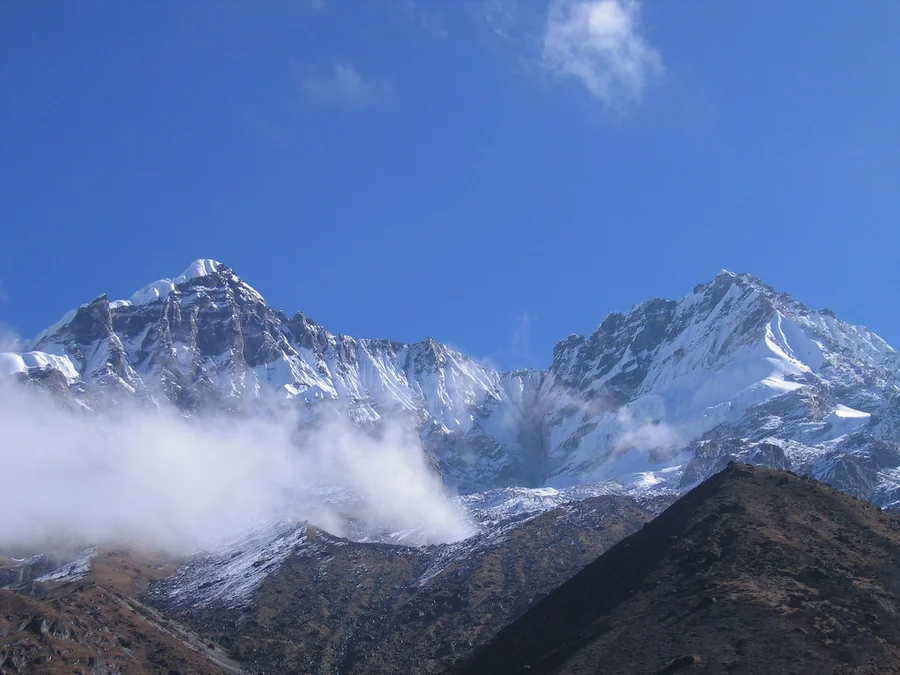
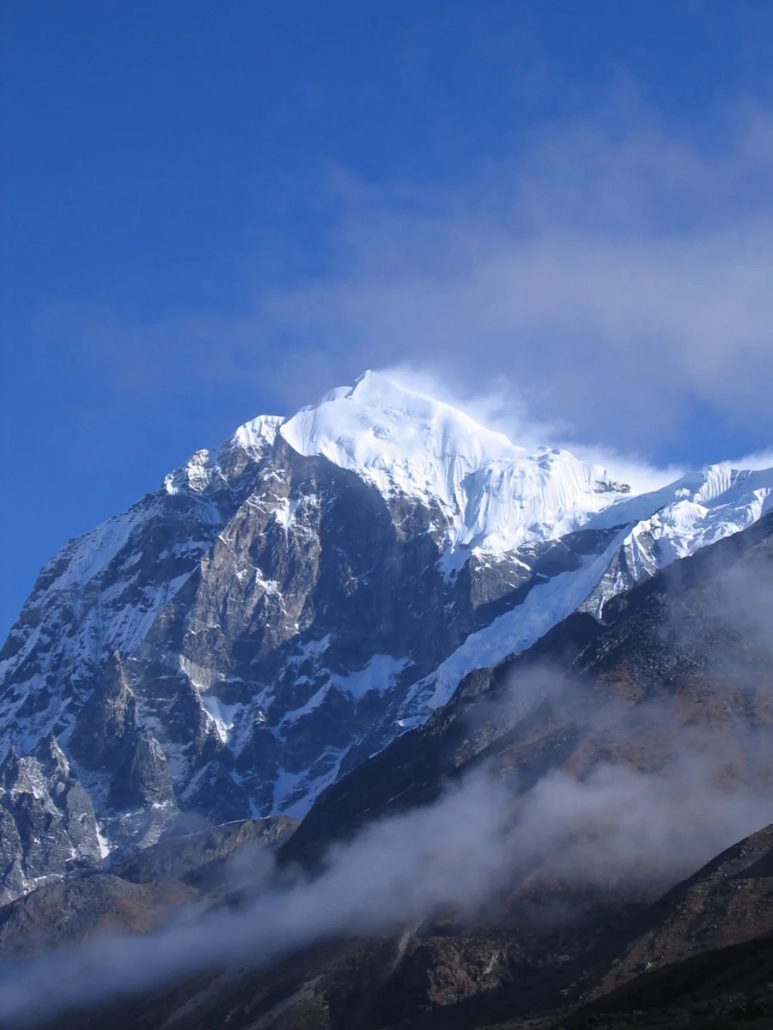
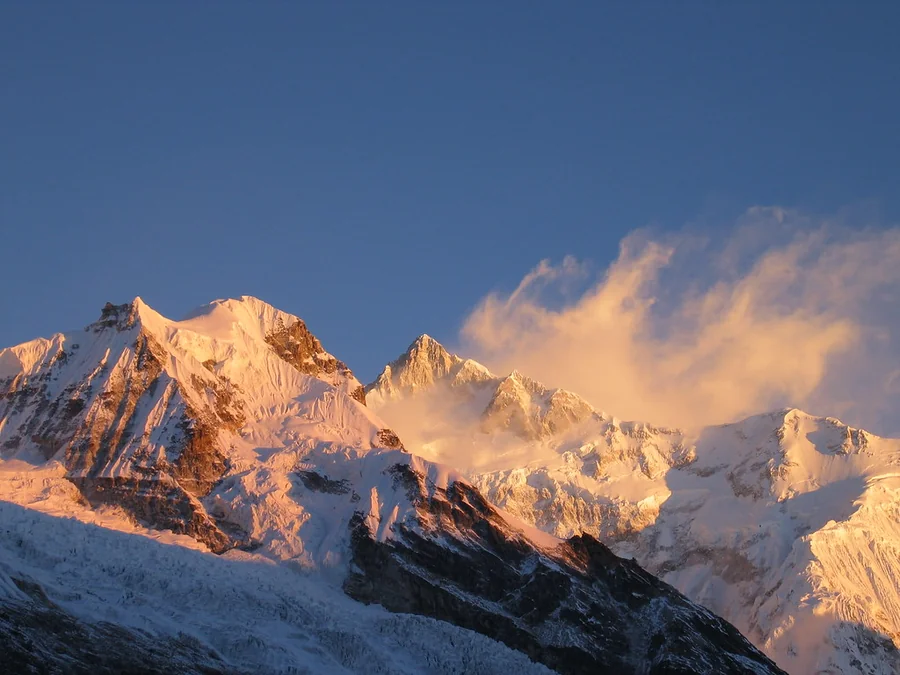
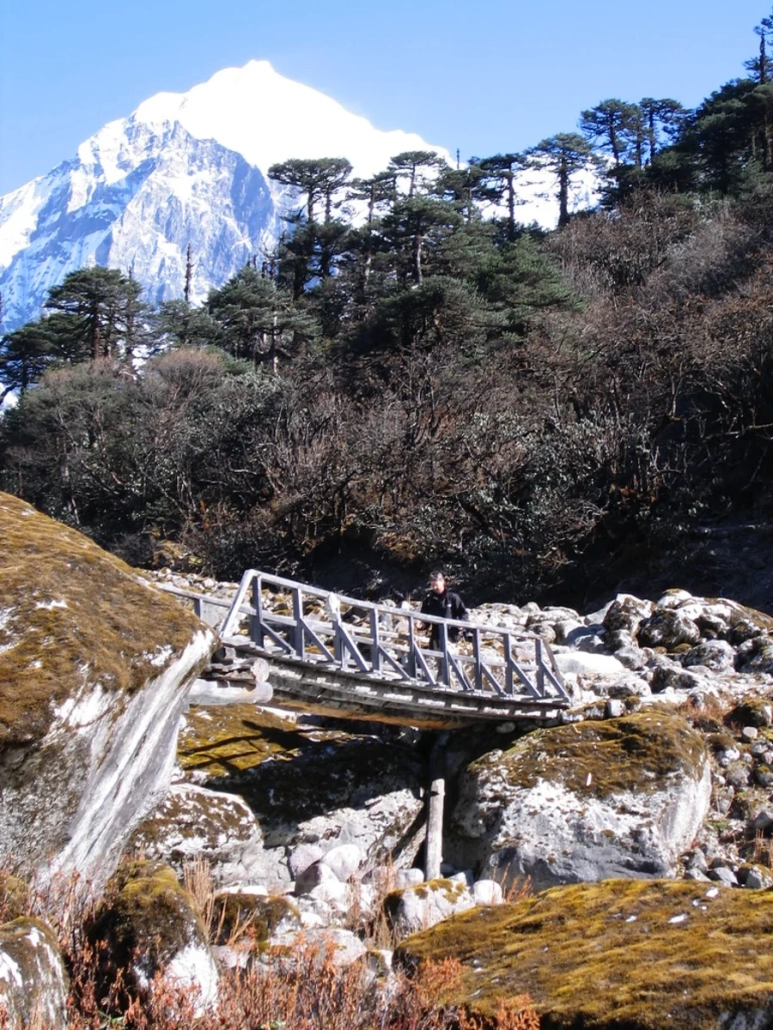
The Goecha La & Dzongri Trek is the finest high-altitude trek in Sikkim and one of the most rewarding Himalayan journeys in India — a 12-day route through the heart of the Khangchendzonga National Park that brings you closer to the south face of Kanchenjunga (8,586m), the world’s third-highest mountain, than any other trail accessible to non-technical trekkers. The culmination of the route is Goecha La Viewpoint 1 (4,940m) — a high ridge above the Zemathang Glacier from which Kanchenjunga’s immense south face fills the northern horizon alongside the flanking summits of Pandim (6,691m), Kabru (7,338m), and Rathong (6,678m). It is among the most concentrated high-Himalayan panoramas visible from any trekking route in India.
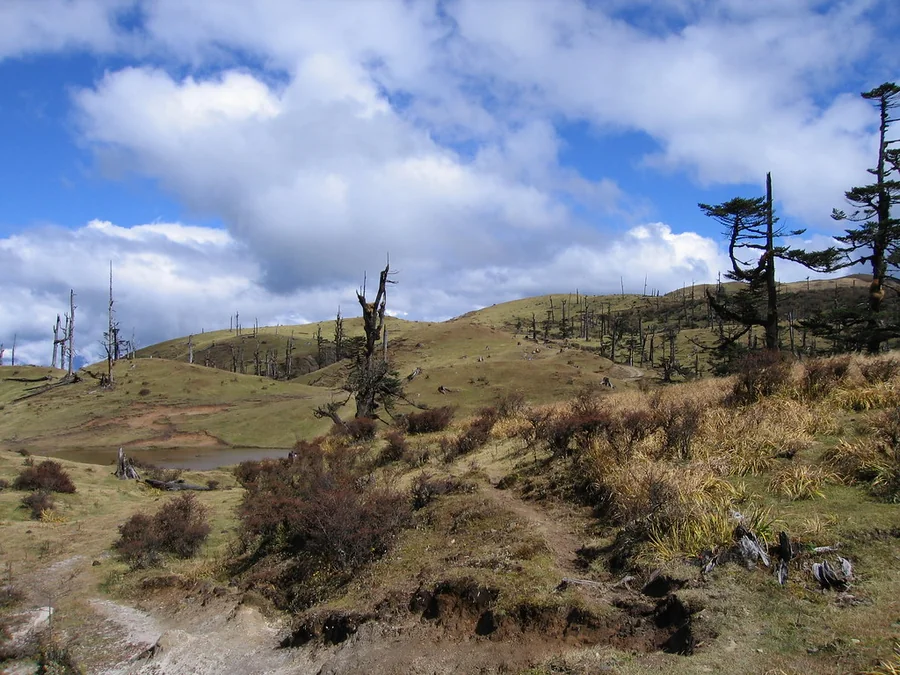
The route begins at Yuksom (1,780m) — the historic site of the first coronation of a Sikkimese king and home to the ancient Dubdi Monastery, the oldest in Sikkim — and ascends steadily through a succession of landscapes that represent the full altitudinal range of the eastern Himalaya: dense oak and rhododendron forest in the lower valleys (the rhododendron bloom in March–April is one of the great spectacles of the Indian Himalaya), open alpine meadows at Dzongri (4,020m), the glacial moraines and high tundra above Lamuney (4,200m), and finally the pre-dawn push to the Goecha La viewpoint above the glacier. The acclimatisation day at Dzongri includes a sunrise hike to Dzongri Top (4,200m) — a 360° panorama that alone justifies the trek, even before the main event.
The trek passes through living Sikkimese communities and active Buddhist monastery circuits. The combination of high-altitude wilderness, cultural depth, and extraordinary mountain scenery makes the Goecha La & Dzongri one of the most complete Himalayan trekking experiences available anywhere in India.
Important Notes
- Best Seasons: March–May (spring) and September–November (autumn). Spring is the rhododendron season — the forests between Tshoka and Dzongri are in full bloom from late March through April, making the approach an extraordinary visual experience. Autumn provides the most stable weather and the clearest mountain views from Goecha La.
- Difficulty Level: Moderate to Challenging — the daily distances and cumulative altitude gain (Yuksom at 1,780m to Goecha La VP1 at 4,940m, a gain of 3,160m over five days) demand good fitness and proper acclimatisation. The acclimatisation day at Dzongri is mandatory. Read our guide to altitude sickness in the Himalaya before departure.
- Highest Point: Goecha La Viewpoint 1 at 4,940m on Day 9 — a pre-dawn out-and-back from Lamuney camp. The highest camp is Lamuney at 4,200m; the highest regular viewpoint is Dzongri Top at 4,200m on Day 6.
- Permits: Two permits are required: the Sikkim Inner Line Permit and the Khangchendzonga National Park (KGNP) entry permit. Both are arranged by Summit Routes on your behalf. Foreign nationals require an additional Restricted Area Permit (RAP) for this route. See our permits guide for full details.
- Camping: Seven nights of the trek are in tented camps. Summit Routes provides all camping infrastructure — sleeping tents, dining tent, kitchen tent, and toilet tent — with a dedicated cook and horse/mule team managing equipment logistics. You need only bring a sleeping bag and personal kit.
- Fitness Standard: Must be comfortable trekking 7–15 km daily for multiple consecutive days with sustained elevation gain, including Day 5 (Tshoka to Dzongri, +1,070m in 10 km) and Day 9 (the Goecha La pre-dawn push). Prior multi-day trekking experience is strongly recommended.
- Sleeping Bag: A sleeping bag rated to -10°C is essential. Nights at Dzongri, Lamuney, and Thansing can drop below -5°C even in October. A lightweight 3-season bag is insufficient for the high camp nights on this route.
- Cultural Note: The Goecha La route passes through an active Buddhist cultural landscape — Dubdi Monastery in Yuksom is the oldest gompa in Sikkim, and the trail traverses sacred terrain within the Khangchendzonga National Park. Trekkers are expected to behave respectfully at all religious sites and follow guide instructions within the national park boundaries.
Brief Itinerary
| Day 1 | Arrive Bagdogra / NJP — Drive to Gangtok (1,650m) |
| Day 2 | Drive Gangtok to Yuksom (1,780m) |
| Day 3 | Trek Yuksom to Sachen (2,200m) | ~8 km |
| Day 4 | Trek Sachen to Tshoka (2,950m) | ~7 km |
| Day 5 | Trek Tshoka to Dzongri (4,020m) | ~10 km |
| Day 6 | Acclimatisation Day — Dzongri Top Sunrise (4,200m) |
| Day 7 | Trek Dzongri to Thansing (3,930m) | ~9 km |
| Day 8 | Trek Thansing to Lamuney (4,200m) | ~4 km |
| Day 9 | Goecha La Viewpoint 1 (4,940m) — Return to Thansing | ~12 km |
| Day 10 | Trek Thansing to Tshoka | ~15 km |
| Day 11 | Trek Tshoka to Yuksom | ~15 km |
| Day 12 | Drive Yuksom to Gangtok or Siliguri — Departure |
Altitude Profile
Goecha La & Dzongri Trek — 12-Day Itinerary
Route: Bagdogra / NJP — Gangtok — Yuksom — Sachen — Tshoka — Dzongri — Thansing — Lamuney — Goecha La VP1 — Thansing — Tshoka — Yuksom — Gangtok / Siliguri
Day 1: Arrive Bagdogra / NJP — Drive to Gangtok (1,650m)
Drive: ~125 km | 4–5 hours from Bagdogra (IXB) or NJP Railway Station
- Arrive at Bagdogra Airport (IXB) or New Jalpaiguri (NJP) Railway Station. Your Summit Routes representative meets you and transfers you to Gangtok by private vehicle.
- The drive rises steadily from the Terai plains into the Himalayan foothills, passing through the town of Siliguri and climbing into Sikkim through a series of switchbacks. The first views of the eastern Himalaya appear above the cloud line on clear afternoons.
- Afternoon reserved for permit arrangement (Sikkim Inner Line Permit and KGNP entry) and trek briefing.
- Overnight: Hotel Heritage, Gangtok
- Meals: Dinner
Day 2: Drive Gangtok to Yuksom (1,780m)
Drive: ~123 km | 6–7 hours
- A long but scenic drive west through the hills of West Sikkim to Yuksom — the historic first capital of Sikkim, where the first Chogyal (king) was coronated in 1642 AD beneath the sacred Kathok Lake beside the town.
- Afternoon visit to Dubdi Monastery — the oldest monastery in Sikkim (also known as Yuksom Monastery), perched on a hilltop above the town with views over the surrounding forest. This is the cultural starting point of the Khangchendzonga pilgrimage route.
- Equipment check and final preparation for the trekking section beginning tomorrow.
- Overnight: Ejam Residency, Yuksom
- Meals: Breakfast, Dinner
Day 3: Trek Yuksom to Sachen (2,200m)
Trek: ~8 km | 5–6 hours | Altitude gain: +420m
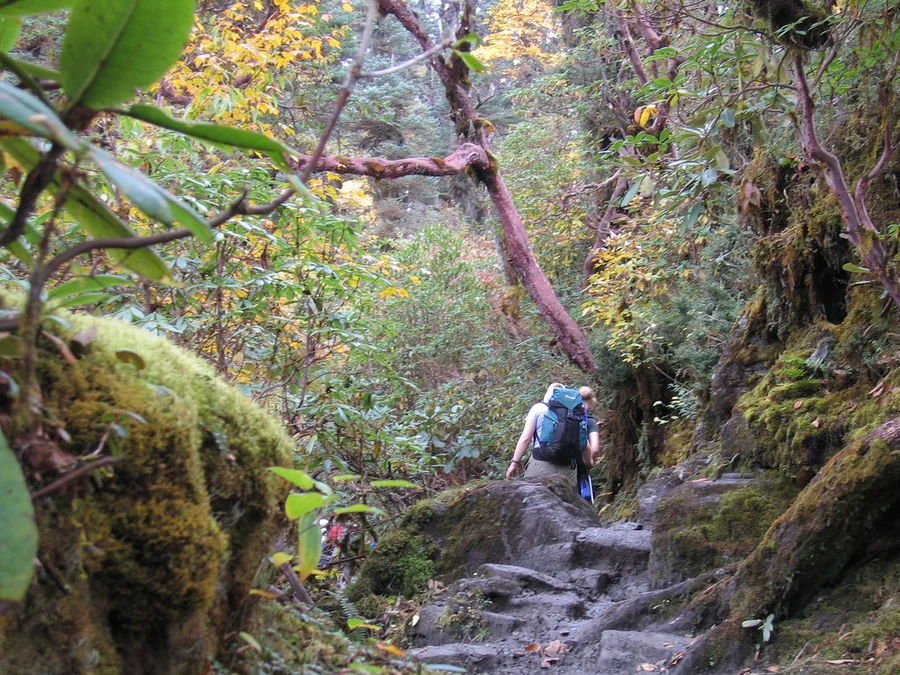
- The trek begins in the forest above Yuksom on a well-defined trail that climbs steadily through oak, chestnut, and rhododendron forest. The vegetation is dense, dripping in spring, and a constant backdrop of birdcall marks the route through the lower forest.
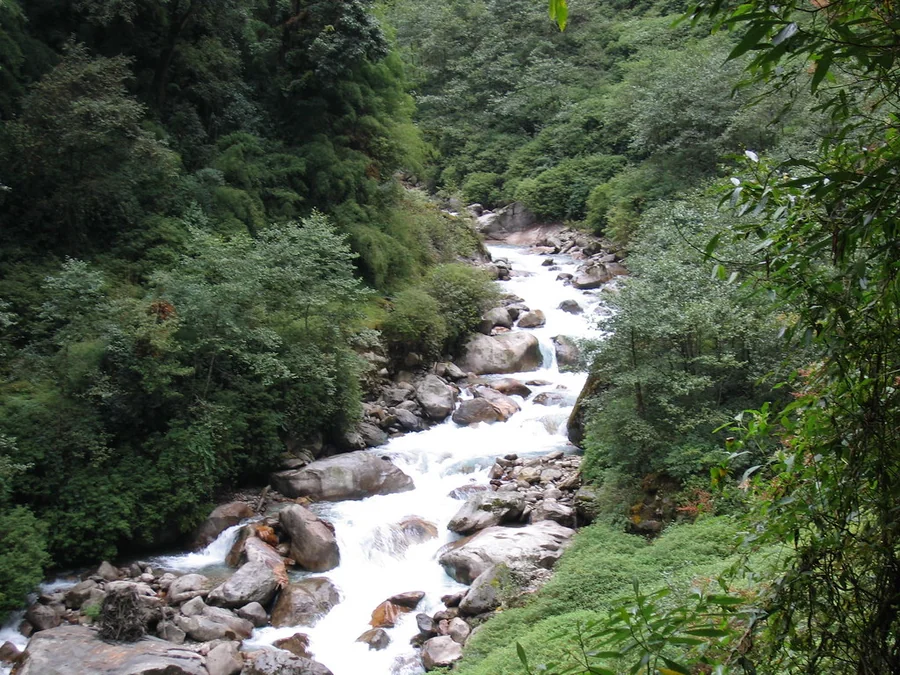
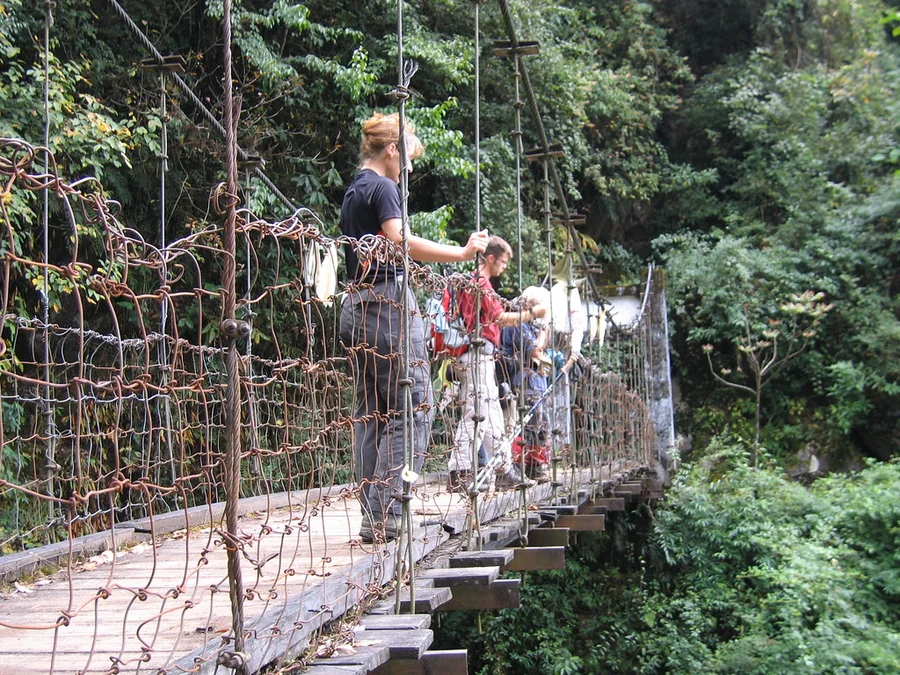
- The trail crosses several suspension bridges over the Rathong Chu river and passes through areas of dense bamboo before reaching the campsite at Sachen (2,200m) — a forest clearing beside the river.
- Overnight: Campsite at Sachen
- Meals: Breakfast, Lunch, Dinner
Day 4: Trek Sachen to Tshoka (2,950m)
Trek: ~7 km | 4–5 hours | Altitude gain: +750m
- A steep ascent through increasingly dense rhododendron forest — in March and April, the trail to Tshoka is lined with bloom, the canopy shifting from red to pink to white as altitude increases. Prayer flags appear at intervals on the approach, marking the transition into the high mountain zone.
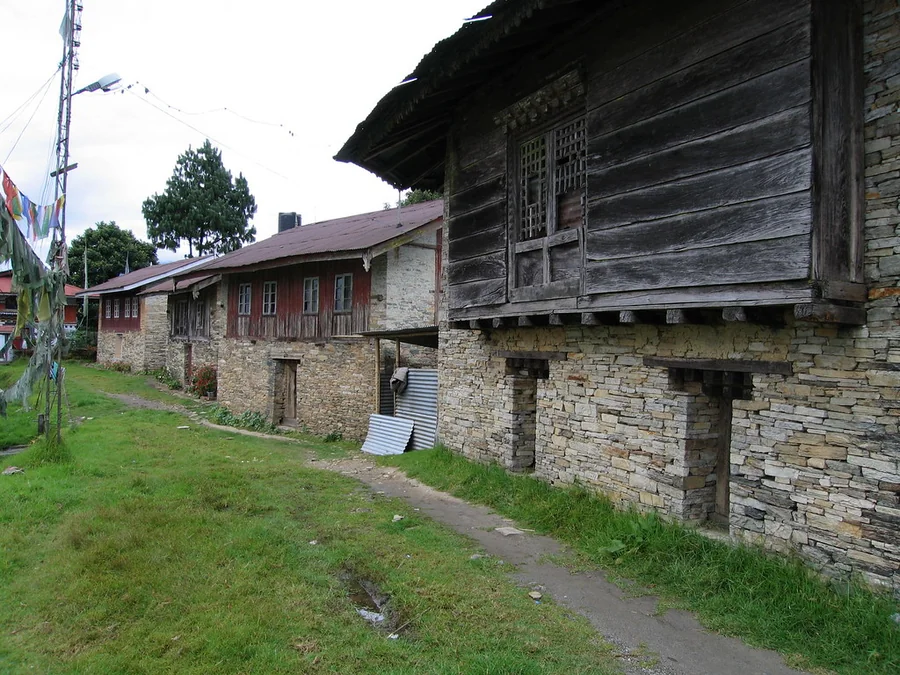
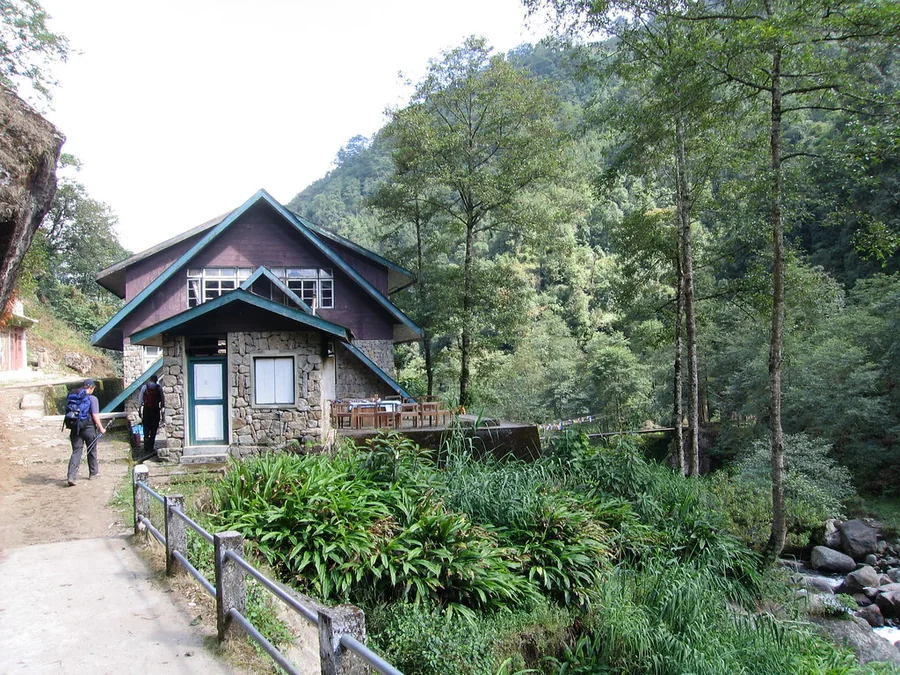
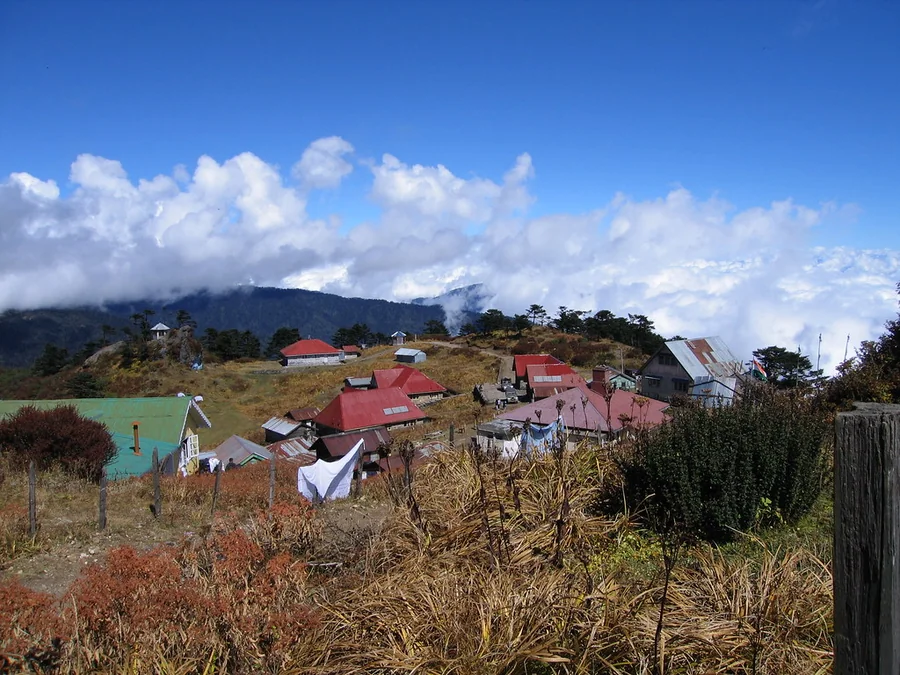
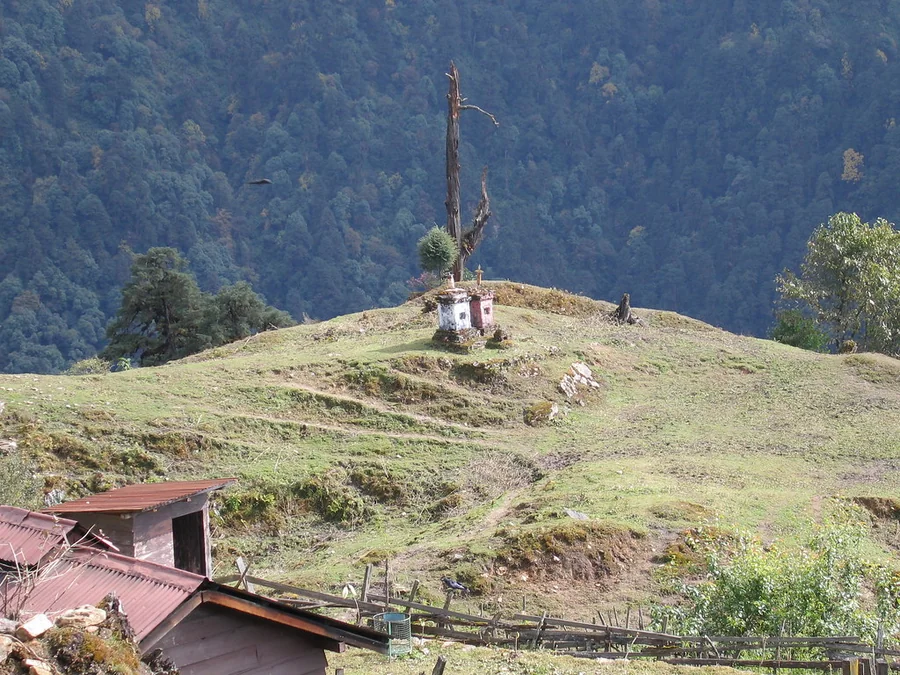
- Tshoka (2,950m) is a small permanent settlement with a community of yak herders, a small monastery, and a basic lodge. It is the last point with permanent inhabitants on the trek and the natural staging point before the serious altitude gain to Dzongri begins.
- Overnight: Lodge or campsite at Tshoka
- Meals: Breakfast, Lunch, Dinner
Day 5: Trek Tshoka to Dzongri (4,020m)
Trek: ~10 km | 6–7 hours | Altitude gain: +1,070m
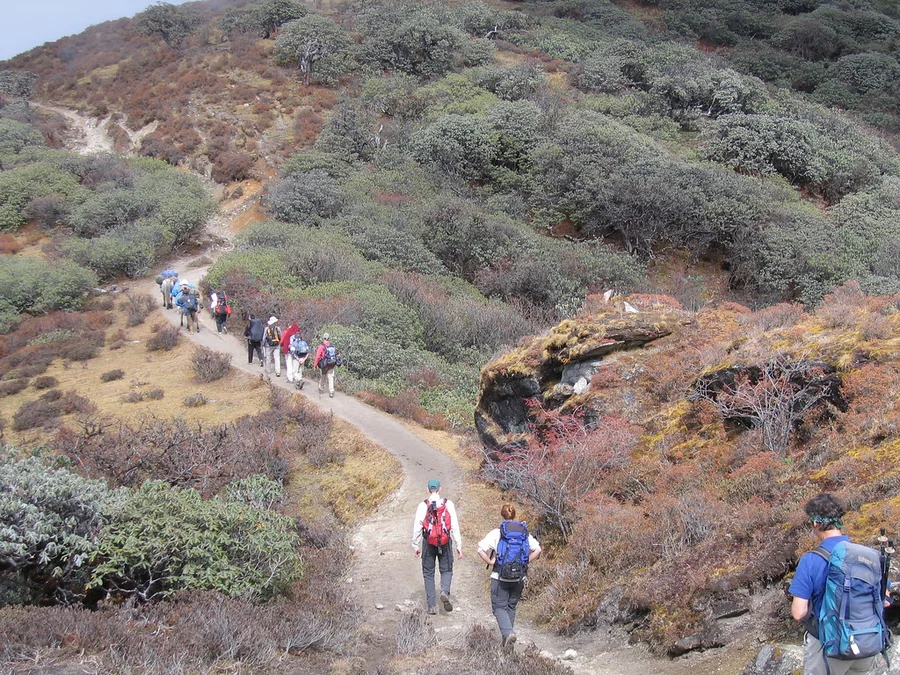
- The most demanding ascent day of the trek. The trail climbs steeply out of Tshoka through the upper rhododendron forest before emerging onto the open ridge above the treeline. Altitude becomes a real presence on this section — pace conservatively and drink water throughout.
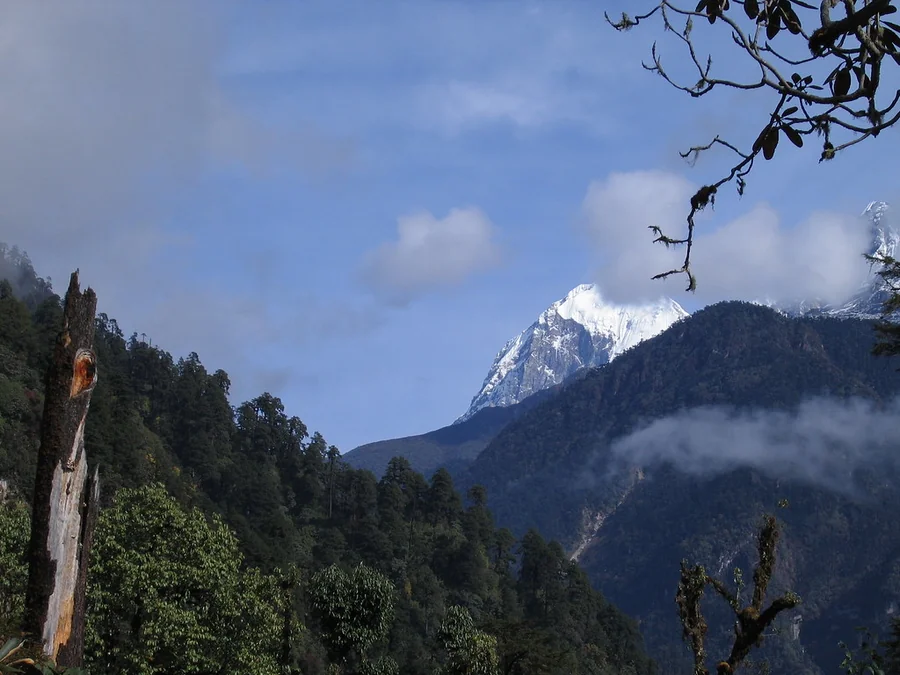
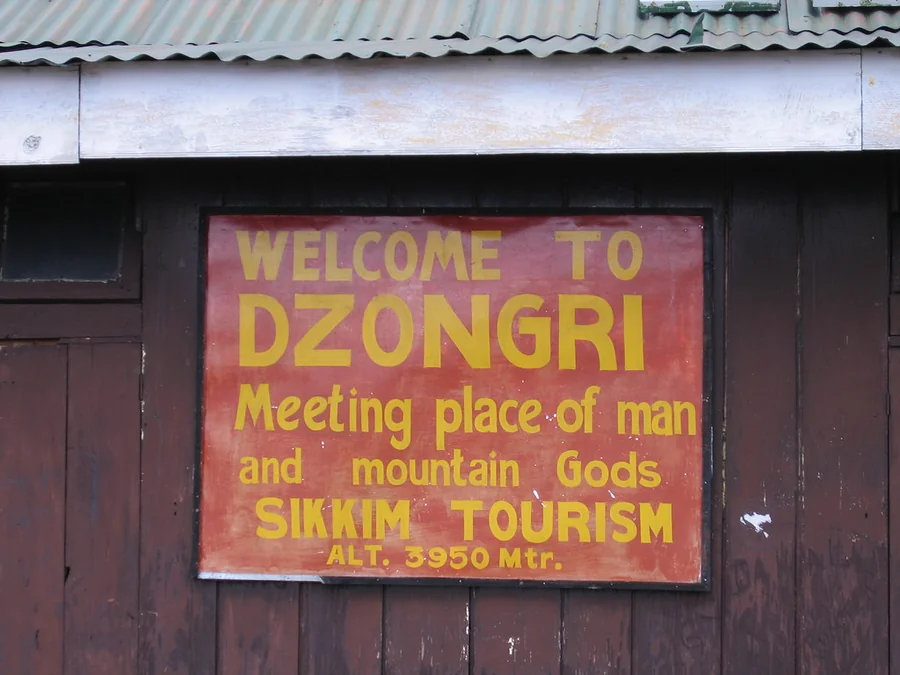
- The first full views of Kanchenjunga (8,586m) and Pandim (6,691m) appear as the trail crests into the alpine zone. The arrival at Dzongri (4,020m) — a high, exposed ridge with sweeping mountain panoramas on three sides — is one of the defining moments of the trek.
- Overnight: Campsite at Dzongri
- Meals: Breakfast, Lunch, Dinner
Day 6: Acclimatisation Day — Dzongri Top Sunrise (4,200m)
- A mandatory full acclimatisation day at Dzongri before the route pushes above 4,000m continuously. The guide assesses blood-oxygen levels and individual fitness before confirming the onward schedule.
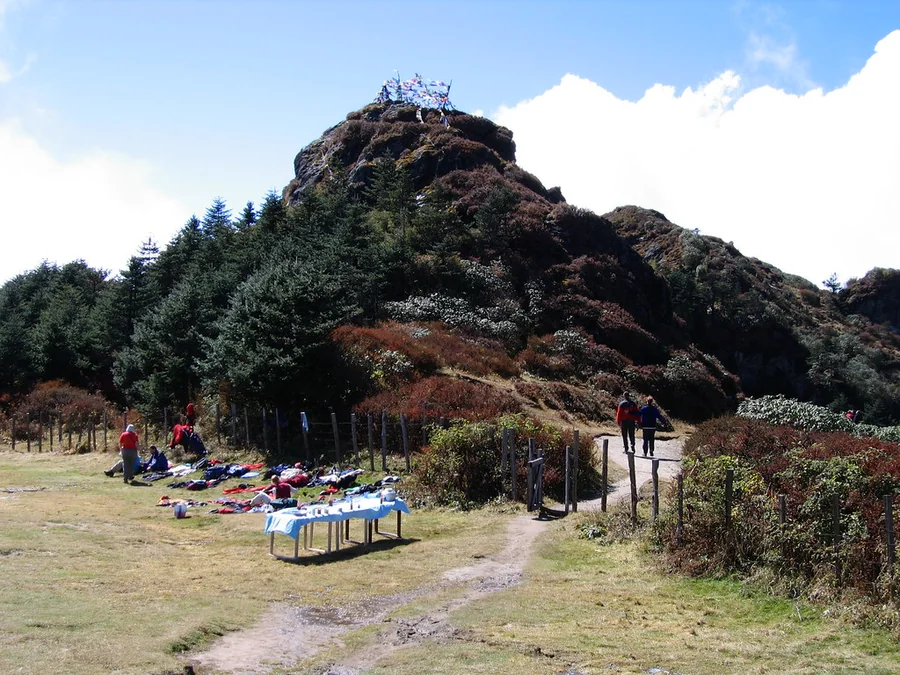
- Pre-dawn hike to Dzongri Top (4,200m) for sunrise — an extraordinary 360° panorama of Kanchenjunga, Kabru, Rathong, Pandim, Tenzingkhang, and the full sweep of the Sikkim Himalaya. Many trekkers consider this viewpoint alone worth the entire journey.
- Return to camp for breakfast. Rest and hydration for the remainder of the day. Short acclimatisation walk in the afternoon if the guide recommends it.
- Overnight: Campsite at Dzongri
- Meals: Breakfast, Lunch, Dinner
Day 7: Trek Dzongri to Thansing (3,930m)
Trek: ~9 km | 4–5 hours | Altitude change: -90m net (descent to Kokchurung then ascent to Thansing)
- From Dzongri the trail descends to the confluence of the Prek Chu river at Kokchurung, passes through a section of dense fir and juniper forest, and then climbs again to the wide alpine meadows of Thansing (3,930m).
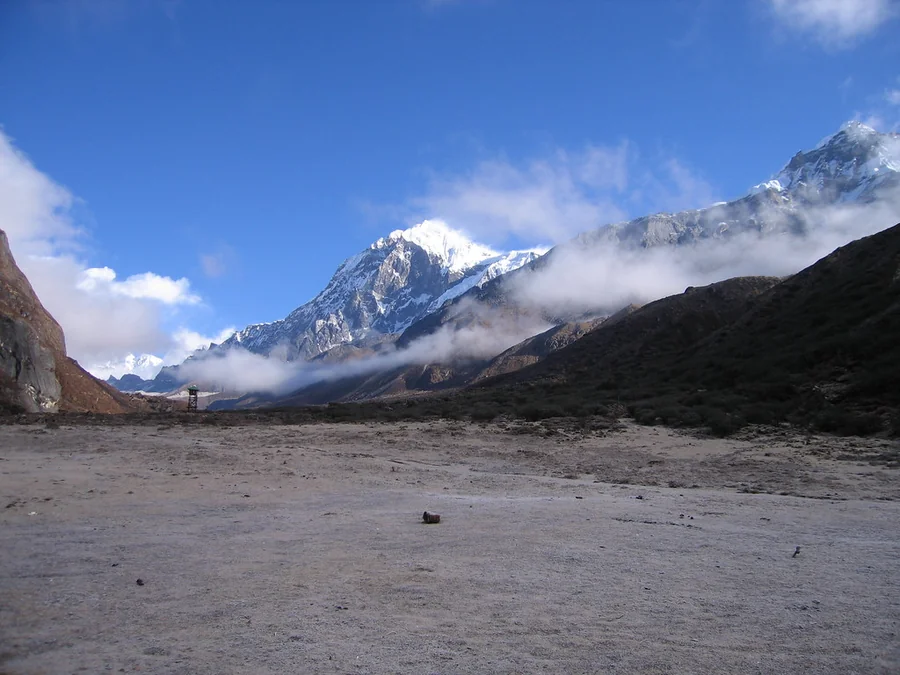
- Thansing is an open, relatively sheltered meadow camp with direct views of Pandim (6,691m) rising sharply to the north. The camp here has a different character from Dzongri — quieter, more intimate, and with the sense of the glacier country immediately ahead.
- Overnight: Campsite at Thansing
- Meals: Breakfast, Lunch, Dinner
Day 8: Trek Thansing to Lamuney (4,200m)
Trek: ~4 km | 2–3 hours | Altitude gain: +270m
- A short but important day — the gradual ascent through open meadow to Lamuney (4,200m) is the final staging camp before the Goecha La push. The brevity is intentional: arriving early allows maximum rest before the pre-dawn departure tomorrow.
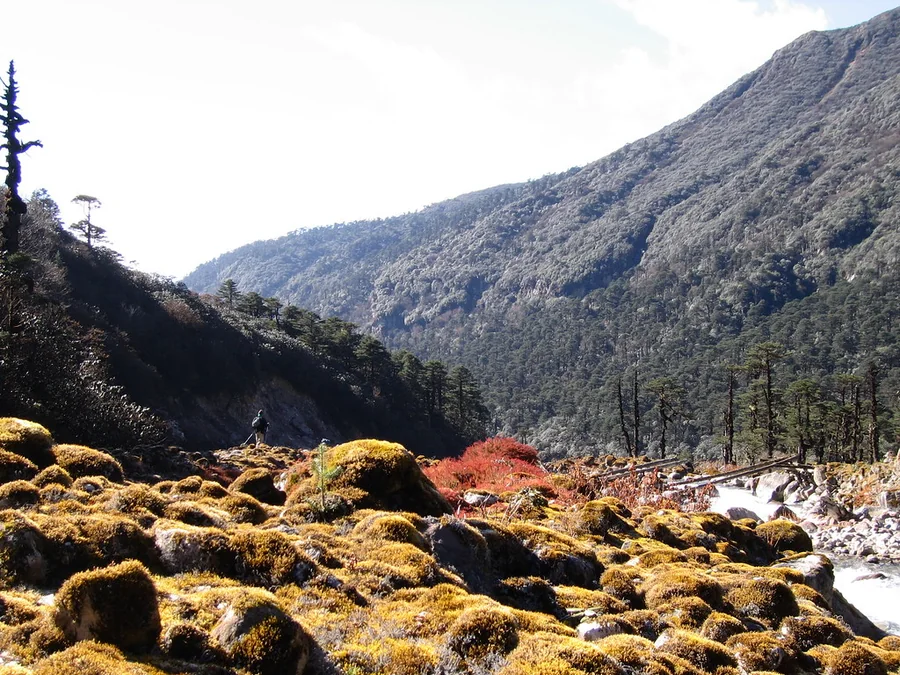
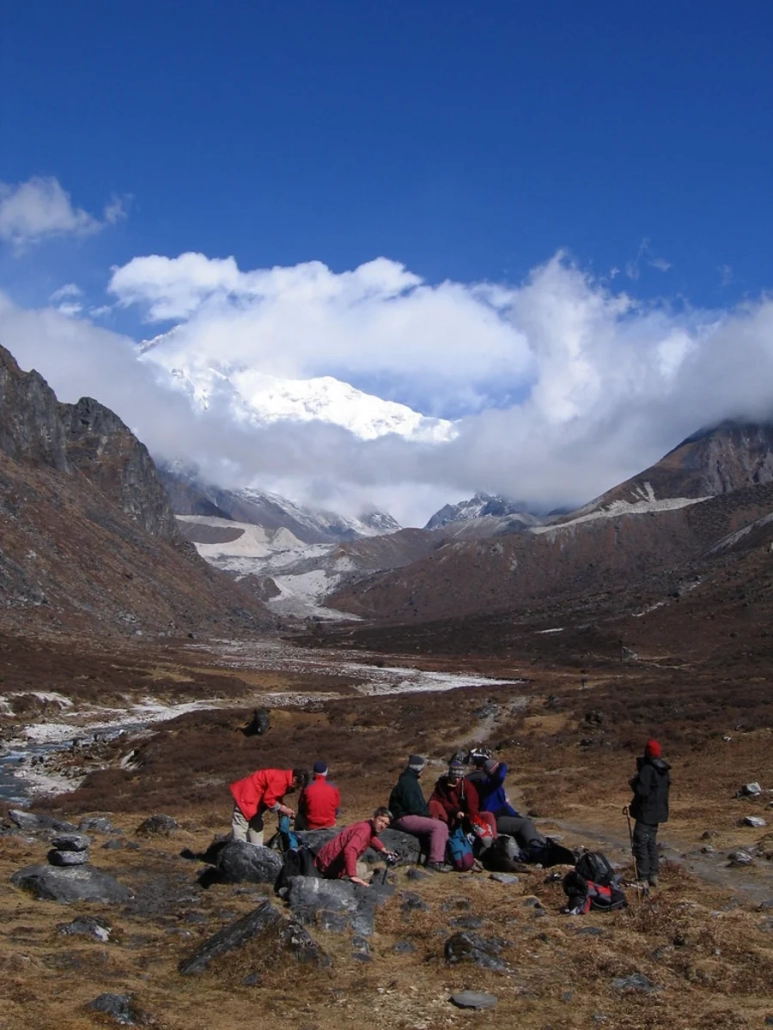
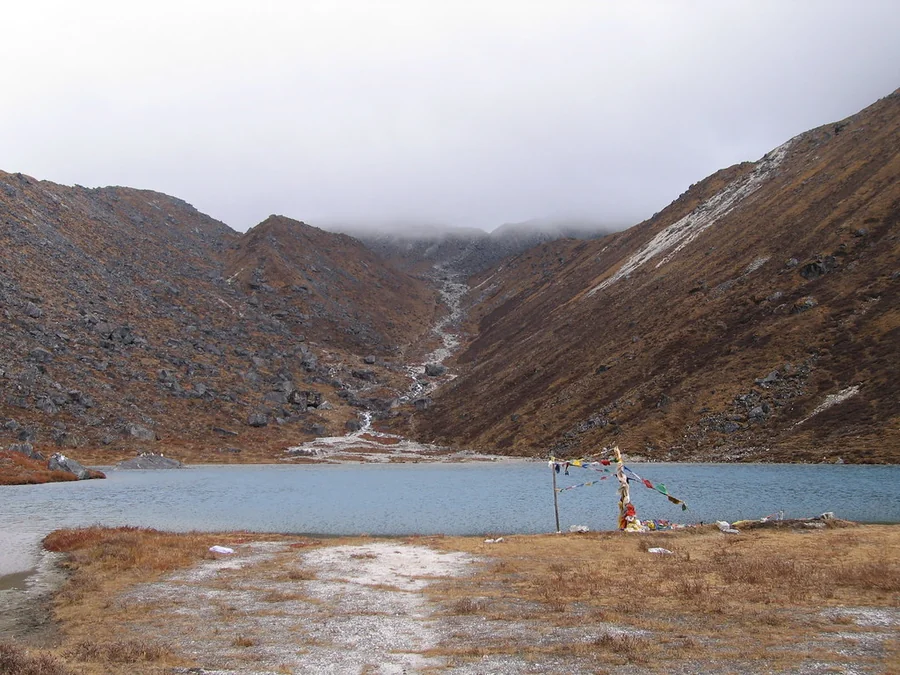
- The Zemathang Glacier is visible from the camp, and the moraine ridges above frame the approach to the viewpoint. Kanchenjunga's south face now dominates the entire northern horizon.
- Early dinner at 5:00 PM. Sleep by 7:00–8:00 PM. Wake call at 3:30 AM.
- Overnight: Campsite at Lamuney
- Meals: Breakfast, Lunch, Dinner
Day 9: Goecha La Viewpoint 1 (4,940m) — Return to Thansing
~12 km round trip from Lamuney | 8–10 hours total
- Pre-dawn departure at 3:30–4:00 AM by headlamp. The trail crosses the lateral moraine of the Zemathang Glacier in darkness, gaining altitude steadily on rocky terrain before the first light of dawn begins to define the peaks above.
- Goecha La Viewpoint 1 (4,940m) is reached at sunrise or shortly after. The view is the defining moment of the entire trek: Kanchenjunga's south face fills the sky ahead, the mountain so close and so massive that it seems to occupy the entire field of vision. Pandim, Kabru, and Rathong flank it on either side. This is as close as any non-technical trek in India comes to one of the world's great mountains.
- Return to Lamuney to collect camp, then continue down to Thansing for overnight.
- Overnight: Campsite at Thansing
- Meals: Breakfast, Lunch, Dinner
Day 10: Trek Thansing to Tshoka
Trek: ~15 km | 7–8 hours | Altitude loss: -980m
- A long return day through Kokchurung and the forest sections below Dzongri. The body is tired from the Goecha La effort but the altitude loss brings a steady return of energy. The rhododendron forest re-appears below Dzongri as the route descends.
- Overnight: Lodge or campsite at Tshoka
- Meals: Breakfast, Lunch, Dinner
Day 11: Trek Tshoka to Yuksom (1,780m)
Trek: ~15 km | 6–7 hours | Altitude loss: -1,170m
- The final trek day — descending through the full forest system back to Yuksom, crossing the suspension bridges over the Rathong Chu and retracing the Day 3 approach route in reverse. The contrast of the dense, warm, humid lower forest after a week above the treeline is striking.
- Celebration dinner in Yuksom.
- Overnight: Ejam Residency, Yuksom
- Meals: Breakfast, Lunch, Dinner
Day 12: Drive Yuksom to Gangtok or Siliguri — Departure
Drive: ~123 km to Gangtok | 6–7 hours • or ~230 km to Siliguri | 8–10 hours
- After breakfast, private vehicle transfer to Gangtok (for onward travel within Sikkim or to Bagdogra via Gangtok) or direct to Siliguri / Bagdogra Airport (IXB) for departing flights.
- Meals: Breakfast
IN-25 – Goecha La & Dzongri Trek, Sikkim (12 Days)
Starting from USD 1,380 per person
(Based on 2 trekkers, twin sharing)
👉 Request Custom Itinerary & QuoteIncludes Sikkim trekking permits, licensed local guide, full camping support, meals & logistics — no hidden costs.
INCLUDED
- All private transportation throughout the programme (Bagdogra/NJP–Gangtok, Gangtok–Yuksom, Yuksom–Gangtok/Siliguri)
- 11 nights accommodation:
- 2 nights hotel in Gangtok — Hotel Heritage (twin sharing, attached bathroom) — Days 1 and 12
- 2 nights guesthouse in Yuksom — Ejam Residency (twin sharing) — Days 2 and 11
- 7 nights in tented camps (twin sharing) — Sachen, Tshoka (×2), Dzongri (×2), Thansing (×2), Lamuney
- All required permits: Sikkim Inner Line Permit, Khangchendzonga National Park (KGNP) entry permit, and Restricted Area Permit (RAP) for foreign nationals
- English-speaking licensed local Sikkim guide
- Camp cook and support team
- Horse/mule support for all camping equipment between camps
- All meals as specified in the day-to-day itinerary
- Full camping gear: sleeping tent, dining tent, kitchen tent, toilet tent
- All entrance fees, national park fees, government taxes, and service charges
NOT INCLUDED
- International or domestic flights to/from Bagdogra (IXB)
- Travel insurance (mandatory — must cover trekking above 5,000m and helicopter evacuation)
- Personal expenses (snacks, beverages, hot showers at Tshoka/Yuksom, etc.)
- Tips for guide, cook, and horse handlers
- Anything not mentioned under "Included"
Group Pricing (indicative per person)
| Group Size | Price (USD) per Person |
|---|---|
| 2 persons | 1,380 |
| 3–4 persons | 1,200 |
| 5–8 persons | 1,050 |
| 9+ persons | On request |
Accommodation
Gangtok (2 Nights — Arrival & Return)
Accommodation in Gangtok is arranged at Hotel Heritage (twin sharing, attached bathroom, hot shower, and Wi-Fi). The arrival night provides time for permit processing, equipment checks, and the trek briefing. The return night (Day 12) follows the long drive back from Yuksom — a warm bed, a hot shower, and a proper Sikkimese dinner to close the trek. Hotel Heritage is centrally located in Gangtok with easy access to the city's market road and viewpoints.
Yuksom (2 Nights)
Accommodation in Yuksom is arranged at Ejam Residency (twin sharing). Yuksom is a quiet town — the Ejam Residency provides comfortable rooms with attached bathrooms and the basic amenities needed before and after a high-altitude camping trek. The return night (Day 11) after the long descent from Tshoka is the first proper bed in seven nights of camping; the contrast is significant and welcome. Dubdi Monastery is within walking distance of the residency.
Tshoka Lodge (Days 4 & 10 — 2 Nights)
Tshoka has a basic lodge with dormitory or private room options alongside campsite facilities. Summit Routes uses the lodge when available for the Tshoka nights, providing a covered room and basic dining — a meaningful comfort at the end of the steep ascent from Sachen. On the return (Day 10), the lodge functions as a recovery point before the final descent to Yuksom.
Tented Camps — Sachen to Lamuney (7 Nights)
Seven nights across the main trekking section are in expedition tents at the following camps: Sachen (2,200m), Dzongri (4,020m — two nights), Thansing (3,930m — two nights), and Lamuney (4,200m). A separate dining tent and kitchen tent are erected at each camp by the support team. Pack horses carry all camping infrastructure between sites.
The camp at Dzongri is the most visited and has some permanent infrastructure; the views from above camp at Dzongri Top are the finest on the entire route for the range of peaks visible. Lamuney (4,200m) is the highest and most exposed camp — cold nights, limited wind shelter, and the pre-dawn Goecha La departure make this a functional rather than comfortable overnight. A sleeping bag rated to -10°C is the minimum for Lamuney and the Thansing high-altitude camps.
What to Pack — Goecha La & Dzongri Trek
The Goecha La Trek spans 1,650m in Gangtok to 4,940m at Goecha La Viewpoint 1 over 12 days — the greatest altitude range of any Summit Routes India trek. Pack for the full range: warm and humid lower forest on the Yuksom approach, cold and dry nights above Dzongri, and pre-dawn conditions at Lamuney where temperatures drop well below freezing in October. All camping infrastructure is provided — tents, dining tent, kitchen tent, and pack horses carry the loads between camps. You bring only a sleeping bag and personal kit.
Clothing & Layers
- Heavy down jacket rated to -10°C or colder — for nights at Dzongri, Lamuney, and the pre-dawn Goecha La departure. Nights at 4,000–4,200m in autumn are severely cold; a lightweight puffer is insufficient.
- Waterproof hardshell jacket — Sikkim is one of the wettest parts of the Himalaya. Even in the post-monsoon trekking season, afternoon cloud and rain are possible above Tshoka. A hardshell is essential.
- Fleece mid-layer × 2
- Moisture-wicking base layers (top and bottom) × 3 — merino wool handles the temperature range from humid lower forest to cold alpine camps better than synthetic.
- Trekking trousers × 2 — lightweight and fast-drying. Not cotton.
- Waterproof over-trousers — for rain on the forest sections and cold wind above Dzongri.
- Thermal leggings × 2 — for nights at Dzongri and above.
- Balaclava — for the 3:30 AM Goecha La departure from Lamuney. Non-negotiable in October.
- Warm hat and wide-brimmed sun hat — both. UV on open alpine terrain above 4,000m is significant even under light cloud.
- Trekking gloves — a lightweight pair for daytime and a heavier insulated pair for the Goecha La pre-dawn ascent.
- Heavyweight trekking socks × 4–5 pairs
- Camp shoes or sandals — for rest time at the tented camps and Tshoka lodge evenings.
Footwear
- Waterproof trekking boots — fully broken in before arrival. The trail from Yuksom involves river crossings, steep wet forest terrain, and rocky moraine above Thansing. Waterproofing and ankle support are critical on all sections.
- Trekking poles × 2 — strongly recommended for the steep ascents on Days 4–5 (Tshoka to Dzongri, +1,070m) and the long descents on Days 10–11 (nearly 1,000m per day). Two poles significantly reduce cumulative knee stress over 12 days.
- Gaiters — useful for wet grass and snow on the approach to Goecha La VP1 in spring and October.
Personal Health & Safety
- Altitude medication — consult your doctor about Diamox before departure. The route gains 3,160m from Yuksom to Goecha La VP1. Read our guide to altitude sickness in the Himalaya.
- Personal first aid kit — blister plasters, ibuprofen, paracetamol, antihistamines, rehydration sachets, anti-diarrhoeal tablets. Yuksom has limited pharmacies; above it there are none.
- UV-protective sunglasses — Category 3 — UV on open ridgelines above 4,000m is significant. Wrap-around frames preferred above Dzongri.
- High-SPF sunscreen (50+) — carry enough for 12 days.
- Insect repellent — essential on the lower forest sections between Yuksom and Tshoka, particularly in spring and summer.
- Hand sanitiser and wet wipes — camp water is from streams; hand hygiene is important.
- Personal prescription medicines — carry double your required quantity.
Gear & Equipment
- Sleeping bag rated to -10°C — nights at Dzongri (4,020m), Lamuney (4,200m), and Thansing can drop to -5°C or below. A lightweight 3-season bag is insufficient for the high camp nights. This is the single most important piece of personal gear on this trek.
- Sleeping bag liner — adds warmth and keeps your bag clean over 7 camping nights.
- Trekking daypack (25–35L) — carries personal items on trail. The horse team carries your main duffel between camps.
- Main duffel bag (60–70L, soft-sided) — for horse loading. Hard-framed luggage is impractical on mountain trails.
- Headlamp + spare lithium batteries — the 3:30 AM Goecha La departure makes this essential. Cold drains alkaline batteries rapidly; use lithium for the high-altitude nights.
- Insulated water bottle (1L) — standard plastic bottles freeze at Lamuney overnight. Keep your water bottle inside your sleeping bag the night before the Goecha La push.
- Water purification tablets — as backup for stream water above Tshoka.
- Power bank — no electricity from Tshoka onward (approximately Days 4–11). Charge devices fully at Yuksom (Ejam Residency has charging facilities) before departure.
- Dry bags inside your duffel — Sikkim rain is genuine and can arrive at any time on the lower forest sections.
Documents & Money
- Passport / OCI card — required for Sikkim Inner Line Permit and Restricted Area Permit processing (foreign nationals). Summit Routes arranges all permits; carry your original ID throughout the trek for checkpoint verification.
- Travel insurance documents — must cover trekking above 5,000m and emergency helicopter evacuation. Verify this with your insurer before travel. Mandatory for participation.
- Cash in Indian Rupees — ATMs are available in Gangtok and Siliguri. There are no ATMs in Yuksom or on the trail. Withdraw sufficient cash in Gangtok for all personal expenses from Yuksom onward.
Optional but Useful
- Camera with multiple spare batteries — cold drains batteries rapidly at Dzongri and Lamuney. Keep spares warm overnight.
- Lightweight down trousers — for cold evenings at Dzongri and Lamuney.
- High-energy trail snacks — energy bars, nuts, chocolate, electrolyte tablets. Bring a personal supply from Gangtok; no resupply above Yuksom.
- Small padlock for your duffel bag at Gangtok hotel.
For a complete Himalayan packing guide with brand recommendations and a printable checklist, see our Himalayan Trekking Gear List →
Not sure what to prioritise? Ask us when you book — we'll advise based on your departure month and experience level.
Safety & Emergency Protocols — Goecha La & Dzongri Trek
Your safety is the absolute priority on every Summit Routes trek. The Goecha La & Dzongri Trek reaches 4,940m at Goecha La Viewpoint 1, involves seven nights of camping above 2,200m (including two nights at 4,000m+ and one night at 4,200m), and passes through remote terrain within the Khangchendzonga National Park where road access is non-existent above Yuksom. Below is a full account of the safety protocols, emergency procedures, and standards maintained on every departure.
First Aid & Medical Equipment
- Comprehensive expedition first aid kit carried by the lead guide at all times throughout the 12-day route
- Pulse oximeter for blood-oxygen monitoring from Tshoka onward — readings taken every morning and compared against baseline and previous days
- Emergency supplemental oxygen available at Dzongri and for the Goecha La push day
- Basic medications including Diamox, Dexamethasone, analgesics, rehydration salts, and full wound and blister care supplies
- Daily health check-ins at every camp above 3,000m — appetite, sleep quality, headache, and blood-oxygen levels all assessed
Evacuation Procedure
Below Tshoka (Sachen and Yuksom):
- Assisted descent to Yuksom on foot (approximately 3–5 hours from Tshoka) followed by vehicle transfer to Gangtok or directly to Siliguri for hospital care — total evacuation time 8–10 hours
Dzongri and above (4,020m–4,940m):
- Helicopter landing is possible at the open meadow below Dzongri and at open sections near Thansing in clear weather — helicopter evacuation is the primary route for serious cases from the high camps
- For less critical cases, assisted descent to Tshoka is possible in 5–8 hours from Dzongri — the guide manages the descent and contacts the operations team from signal points on the lower trail
- All evacuation decisions are made by the lead guide and cannot be overridden by the client
Medical Facilities:
- Primary hospital: STNM Hospital (Sir Thutob Namgyal Memorial Hospital), Gangtok — Sikkim's main referral hospital for high-altitude medical emergencies
- North Bengal Medical College, Siliguri is the nearest major trauma centre for cases requiring referral beyond Gangtok
Guide Training & Certifications
- All trekking guides are licensed by the Sikkim Tourism Department and hold valid annual trekking guide permits
- Wilderness first aid training and high-altitude awareness certification
- Minimum of three prior Goecha La Trek completions required for every lead guide — direct knowledge of Dzongri weather patterns, the Goecha La approach conditions, and descent routes for emergency management is essential
- The guide's fitness assessment at Dzongri (Day 6) and Lamuney (Day 8) determines whether individual trekkers proceed to the Goecha La push — this judgement is final and cannot be overridden
Travel Insurance — Mandatory Requirement
Valid travel insurance is a non-negotiable condition of participation on this trek.
- Must cover trekking above 5,000 metres
- Must include emergency helicopter evacuation from a remote location in Sikkim — helicopter rescue from Dzongri/Thansing to Gangtok must be pre-authorised by your insurer before Summit Routes activates the evacuation
- Must cover medical hospitalisation and emergency repatriation
- The insurance policy must be shared with Summit Routes before departure
- Trekkers without valid insurance cannot join this trek — no exceptions
See our Insurance & Permits FAQ for guidance.
Emergency Contact Protocol During the Trek
For Family / Next of Kin
A dedicated emergency contact number is provided to all clients before departure. Our Gangtok base coordinator monitors every active Goecha La departure and will contact your nominated next-of-kin within 2 hours of any serious incident.
On the Trail
Mobile signal is available in Gangtok (Days 1 and 12) and at Yuksom (Days 2 and 11). Signal is absent above Tshoka from approximately Day 3 through Day 11. Our guides are familiar with the specific locations on the lower forest trail where intermittent signal is accessible for emergency use. All rescue coordination from the high camps is managed through the guide's pre-established emergency protocol with the Gangtok operations base.
Rescue Coordination
Summit Routes maintains coordination with the Sikkim Tourism Department, the Indian Army and ITBP (Indo-Tibetan Border Police) units operating in the Khangchendzonga National Park area, and STNM Hospital, Gangtok — the primary medical facility for high-altitude emergencies in Sikkim.
Altitude Sickness (AMS) — Our Policy
AMS is a real risk above 3,000m on this itinerary and must be taken seriously. Read our complete altitude sickness guide before departure.
Any trekker showing signs of High-Altitude Cerebral Oedema (HACE) or High-Altitude Pulmonary Oedema (HAPE) will be descended immediately. This decision is non-negotiable and cannot be overridden by the trekker.
The acclimatisation schedule built into the itinerary:
- Day 1: Gangtok — 1,650m
- Day 2: Yuksom — 1,780m
- Day 3: Sachen — 2,200m
- Day 4: Tshoka — 2,950m
- Day 5: Dzongri — 4,020m (large gain — pace is critical on this day)
- Day 6: Dzongri — full acclimatisation day + hike to 4,200m; non-negotiable
- Day 7: Thansing — 3,930m (slight descent aids adaptation)
- Day 8: Lamuney — 4,200m (short day intentionally)
- Day 9: Goecha La VP1 — 4,940m (pre-dawn push, same-day descent to Thansing at 3,930m)
The acclimatisation day at Dzongri is non-negotiable. Any trekker showing AMS symptoms at Dzongri will remain at camp for an additional day before the guide clears them to proceed. The Day 8 short day to Lamuney exists specifically to rest before the Goecha La push — it must not be combined with another day to save time.
Have a safety question before booking?
Contact our team on WhatsApp (+91 96222 44022) or email info@summitroutes.com.
Goecha La is a demanding high-altitude trek in the Kanchenjunga region of Sikkim. Daily walking runs 5–8 hours across steep, forested valleys and exposed alpine terrain, with the viewpoint at 4,940m as the high point. The altitude gain is significant and the final push to Goecha La is a pre-dawn start on a raw, cold ridge. Fit trekkers with prior mountain experience will find it hard and deeply rewarding in equal measure.
Prior multi-day trekking experience at altitude is strongly recommended. The route is non-technical but the altitude, the length, and the physical demands of the high camps make it unsuitable for first-time trekkers. If you have done a week or more in the hills and are in solid fitness, you are likely ready. If you are unsure, get in touch and we will give you an honest answer.
Spring (April–May) and Autumn (October–November) are the best seasons. Autumn offers the clearest skies and the most reliable views of Kanchenjunga from Goecha La and Dzongri. Spring brings rhododendrons in bloom through the lower forested sections and good visibility before the monsoon builds. We schedule our departures around both windows and will advise on timing when you enquire.
This trek requires an Inner Line Permit for Sikkim, a Kanchenjunga National Park entry permit, and a trekking permit issued through a registered operator. We arrange all permits on your behalf — you will not need to manage any of this directly.
Our packages include accommodation throughout, all meals during the trek, a licensed guide, porter support, all required permits, and transfers from the nearest airport or railhead. We will provide a clear, itemised cost breakdown when you book so there are no surprises on the ground.
The trek starts from Yuksom in West Sikkim. Most trekkers fly into Bagdogra Airport or arrive by train to New Jalpaiguri (NJP), from where we handle all ground transfers to Yuksom. The drive is scenic and we can factor in an acclimatization stop if your itinerary allows.
Accommodation is a mix of basic guesthouses and camping depending on the section of the route. Lower villages have simple lodges; higher camps including Dzongri and the approach to Goecha La are fully tented. Our crew manages all camping logistics — you arrive at camp to everything set up and ready.
Meals at lower guesthouses are simple local fare — rice, dal, vegetables, eggs, noodles. At the higher camps, our cook prepares all meals at the campsite. Food is hearty and designed to fuel long days at altitude. Vegetarian diets are easily accommodated; other dietary requirements should be flagged well in advance.
Pack for cold nights and high-altitude alpine conditions: a warm sleeping bag rated to at least -10°C, insulated down jacket, waterproof shell, trekking poles, sturdy boots, thermals, gloves, balaclava, and sun protection for the exposed upper sections. We provide a full kit list after booking and are happy to advise on anything specific.
Solo travellers are very welcome on our group departures. Goecha La is a popular route for solo trekkers who want company on the trail without arranging a private expedition. Private departures can also be organised — get in touch and we will put together a proposal.
We keep groups small, typically 4–10 trekkers. In a national park with strict visitor management rules and limited campsite capacity, small groups are not just our preference — they are the only responsible way to operate on this route.
Travel insurance is mandatory for all our treks and must cover high-altitude trekking to at least 5,000m, emergency helicopter evacuation, and trip cancellation. Helicopter evacuation from the upper sections of this route is possible but weather-dependent, so comprehensive coverage is essential. We will confirm requirements when you book.
Goecha La viewpoint sits at 4,940m and is the highest point on the trek, offering a direct face-on view of Kanchenjunga's southwest face — one of the most dramatic mountain panoramas in the Indian Himalayas. Dzongri at 4,020m is the main acclimatization camp and itself offers sweeping views of the Kanchenjunga massif at sunrise.
At lower elevations meals are served at guesthouses; from Dzongri upward everything is prepared by our camp cook at the campsite. Breakfast and dinner are at camp; lunch is eaten on the trail. The final push to Goecha La begins before dawn, so our cook has a hot breakfast and tea ready well before first light.
Proper acclimatization is built into the itinerary, including a rest day at Dzongri specifically for that purpose. Our guides monitor every trekker throughout and are trained to identify symptoms early. If descent is required, it happens immediately — there is no negotiating with altitude on this route, and our guides know that.
Mobile coverage is limited and unreliable above the lower villages. BSNL has the best reach in this region but it is still patchy at higher camps. Plan to be largely off-grid from Yuksom onwards. Our guides carry communication equipment for emergencies.
Guesthouses on the lower sections have basic toilet facilities. At the higher camps our crew sets up a dedicated toilet tent at each campsite. We follow Leave No Trace principles strictly — Kanchenjunga National Park is one of the most ecologically significant protected areas in India and we intend to keep our footprint minimal.
Our guides are registered with the relevant Sikkim trekking authorities, experienced specifically on the Goecha La route, and trained in wilderness first aid and altitude emergency response. The Kanchenjunga region has deep cultural and ecological significance — your guide brings that context to the trail in ways that make the experience far richer than the altitude gain alone.
Goecha La is technically a pass at 4,940m, but the trek stops at a viewpoint just below the pass itself — crossing the full pass is restricted to protect the sensitive glacier environment beyond. The viewpoint gives you the full face-on view of Kanchenjunga that the trek is famous for. It is one of the closest accessible viewpoints to the world's third-highest mountain, and on a clear morning it is genuinely staggering.
No reviews yet.
📅 2026 Departures — Goecha La & Dzongri Trek (12 Days)
Click a window to enquire instantly on WhatsApp
⚡ Private & group departures · Licensed Sikkim guides · All permits & camping included
Arrive & Depart: Bagdogra (IXB) / NJP, Siliguri
Similar Treks
KASHMIR GREAT LAKES TREK
Level: Moderate | Duration: 8 Days | Best Time: Jul–Sep | Price: From $620
HAMPTA PASS & CHANDRATAL
Level: Moderate | Duration: 6 Days | Best Time: Jul–Sep | Price: From $650
HAR KI DUN TREK
Level: Moderate | Duration: 8 Days | Best Time: Apr–Jun & Sep–Nov | Price: From $695
MARKHA VALLEY TREK
Level: Moderate | Duration: 9 Days | Best Time: Jun–Sep | Price: From $895