Tarsar Marsar Trek

Tarsar Marsar Trek — Overview
The Tarsar Marsar Trek is Kashmir’s finest crossover trek — a point-to-point journey that begins in the Lidder Valley at Aru and ends in the Sind Valley at Sumbal, threading through three high-altitude lakes, two mountain passes, and a landscape that consistently stops trekkers mid-stride.
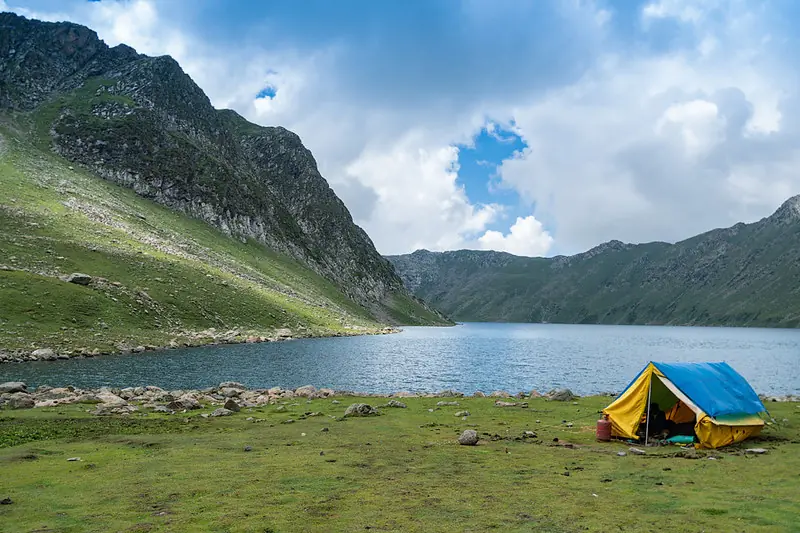
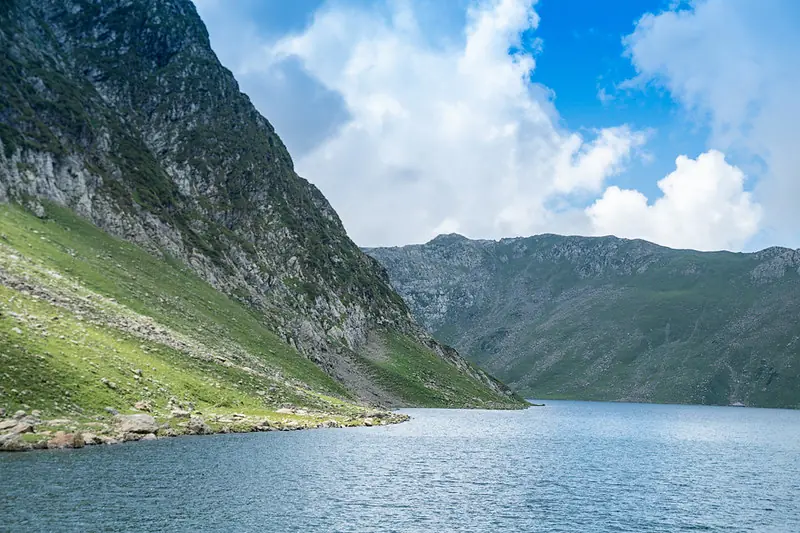
The route visits three of Kashmir’s most beautiful alpine lakes in sequence: Tarsar (3,780m) — almond-shaped and electric blue, set in a meadow bowl below the ridgeline with Kolahoi Peak (5,425m), the highest peak in Kashmir, framing the sky above; Sundarsar (3,850m) — smaller and quieter, ringed by wildflower slopes; and the formidable Marsar (4,010m) — a closed cauldron lake perched high above the surrounding valleys, rarely without a cap of cloud, with a reputation among local shepherds that has earned it the name of Tarsar’s dark twin. From Marsar, the trail crosses the Sonmasti Pass at 4,100m — the watershed between the Lidder and Sind drainages — and descends in a long sweep through the Sonamasti Valley, past cascading waterfalls and terraced shepherd meadows, to the roadhead at Surfraw.
Unlike loop treks that return to the same trailhead, the crossover format means every step is new terrain. You walk into the heart of the Overa-Aru Wildlife Sanctuary from the south, traverse its high lakes and passes, and emerge from the north into a completely different valley — the Sind corridor leading back toward Srinagar. Summit Routes is based in Srinagar and has been running this route since 2011. Our guides are Kashmiri and know every campsite, stream crossing, and weather pattern on the Tarsar Marsar corridor.
Important Notes
- Best Season: June to September. The route is typically open from late May depending on snowpack, and the peak wildflower bloom at Tarsar and Shekhwas runs from late June through mid-August. September is the clearest month for views. The route closes with the first heavy snowfall — typically early October.
- Difficulty Level: Moderate to Challenging. The trek has two demanding days: Day 5 (Tarsar Pass crossing, 300m ascent from the lake) and especially Day 6 (Marsar traverse + Sonmasti Pass at 4,100m + 600m+ descent to Sonmasti camp) — the hardest day of the trek. Prior multi-day trekking experience above 3,000m is recommended. Read our guide to altitude sickness in the Himalaya before departure.
- Trek Type: Crossover — point-to-point from Lidder Valley (Aru) to Sind Valley (Sumbal). Not a loop. You begin and end at different points; the drive back to Srinagar is arranged from Sumbal on Day 7.
- Highest Points: Sonmasti Pass at 4,100m (Day 6, the true high point) and Marsar Lake at 4,010m (Day 6 en route to the pass). The highest camp is Sundarsar at 3,850m.
- Fully Camping: All nights on trek are under canvas — there are no teahouses, lodges, or dhabas above Aru on this route. Summit Routes provides dome tents, sleeping bags (rated to -10°C), sleeping mats, dining tent, kitchen tent, toilet tent, and a dedicated cook. You need only bring personal clothing and a daypack.
- Overa-Aru Wildlife Sanctuary Permit: Entry into the sanctuary is mandatory and requires a trekking permit. Summit Routes arranges this on your behalf before departure. See our permits guide.
- Fitness Standard: Must be comfortable trekking 5–15 km daily on mountain terrain with significant elevation gain. Day 6 is a 9 km day with two passes and a 600m+ descent — physical preparation for this day specifically is important.
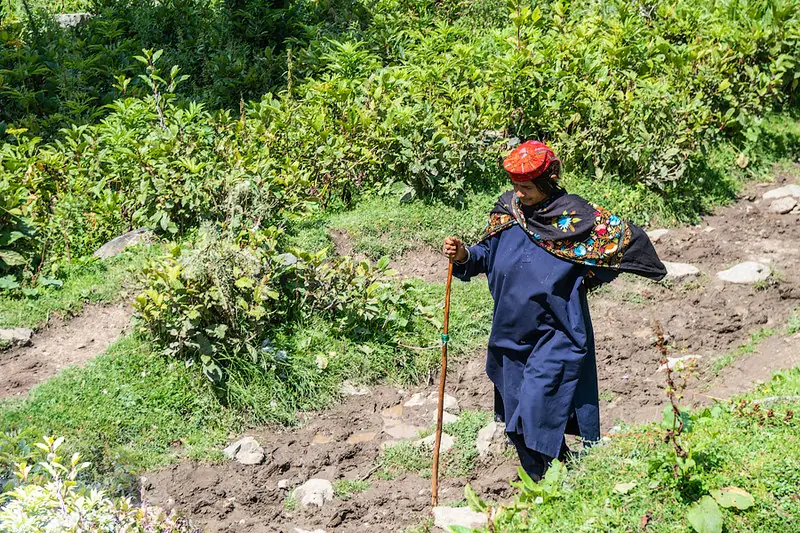
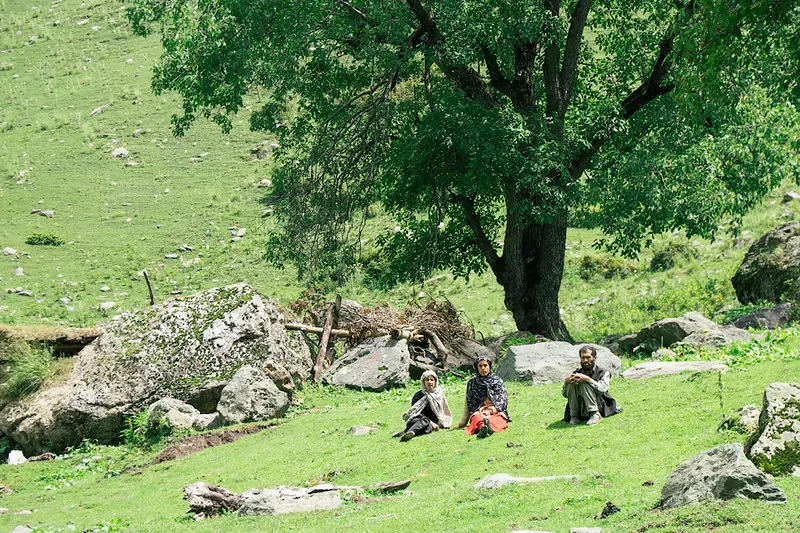
- Cultural Note: The Aru and Lidder Valley communities include Bakarwal shepherds whose seasonal migration routes cross the Tarsar Marsar corridor. The meadows at Shekhwas and Sonmasti are traditional grazing grounds. Please respect all camps, flocks, and grazing land encountered on the route.
Brief Itinerary
| Day 1 | Arrive Srinagar — Drive to Aru (2,400m) | ~95 km |
| Day 2 | Trek Aru to Lidderwat (3,175m) | ~10 km |
| Day 3 | Trek Lidderwat to Shekhwas (3,400m) | ~6 km |
| Day 4 | Trek Shekhwas to Tarsar Lake (3,780m) | ~5 km |
| Day 5 | Trek Tarsar to Sundarsar (3,850m) via Tarsar Pass | ~5 km |
| Day 6 | Trek Sundarsar via Marsar (4,010m) — Sonmasti Pass (4,100m) — Sonmasti (3,400m) | ~9 km |
| Day 7 | Trek Sonmasti to Surfraw (2,150m) — Drive to Srinagar | ~15 km |
| Day 8 | Departure from Srinagar |
Altitude Profile
Tarsar Marsar Trek — 8-Day Itinerary (Srinagar to Srinagar)
Route: Srinagar — Aru — Lidderwat — Shekhwas — Tarsar Lake — Tarsar Pass — Sundarsar — Marsar Lake — Sonmasti Pass — Sonmasti — Surfraw — Sumbal — Srinagar
Day 1: Arrive Srinagar — Drive to Aru (2,400m)
Drive: ~95 km | 3–3.5 hours via Pahalgam
- Arrive at Sheikh ul-Alam International Airport (SXR), Srinagar. Transfer to hotel or direct onward by vehicle depending on arrival time. Gear check and trek briefing with your Summit Routes guide before departure.
- Drive south through the Jhelum Valley to Pahalgam, then follow the Lidder River upstream to Aru (2,400m) — a quiet meadow village at the mouth of the Overa-Aru Wildlife Sanctuary that serves as the southern trailhead for the Tarsar Marsar crossover.
- The meadows above Aru are used seasonally by Bakarwal shepherds moving their flocks between the valley and the high summer pastures — the first indication of the pastoral culture that defines the entire route.
- Afternoon at leisure. The kitchen crew sets up camp. A short walk up the meadow above the village gives the first views of the Lidder Valley and the ridgelines ahead.
- Overnight: Tented camp at Aru
- Meals: Dinner
Day 2: Trek Aru to Lidderwat (3,175m)
Trek: ~10 km | 5–6 hours
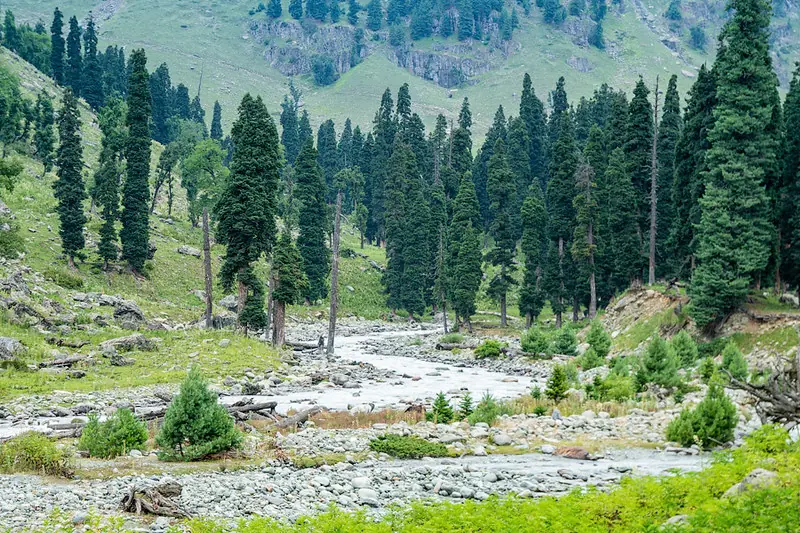
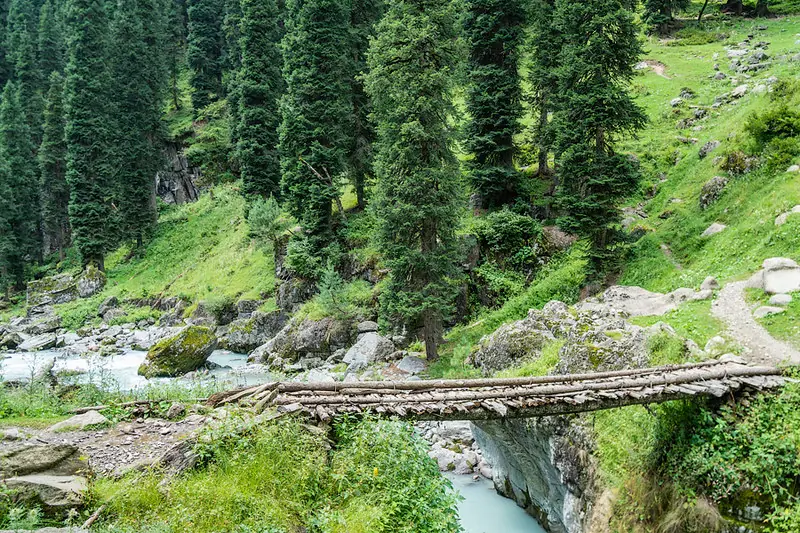
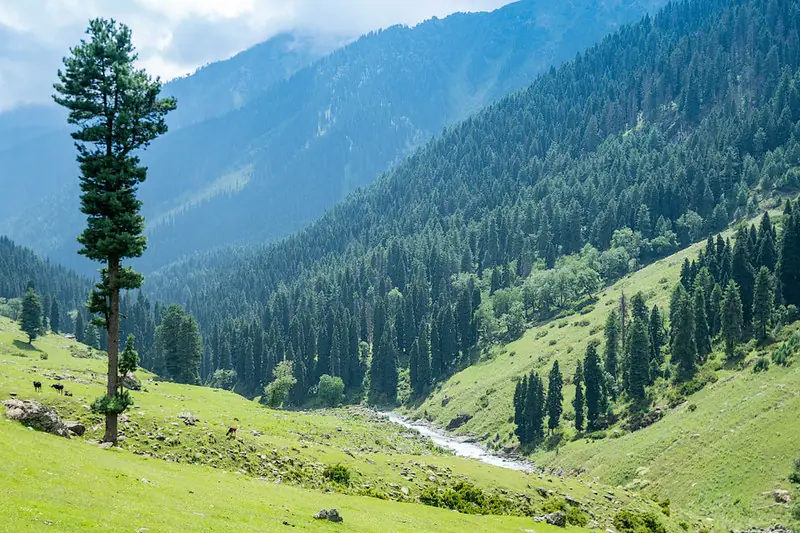
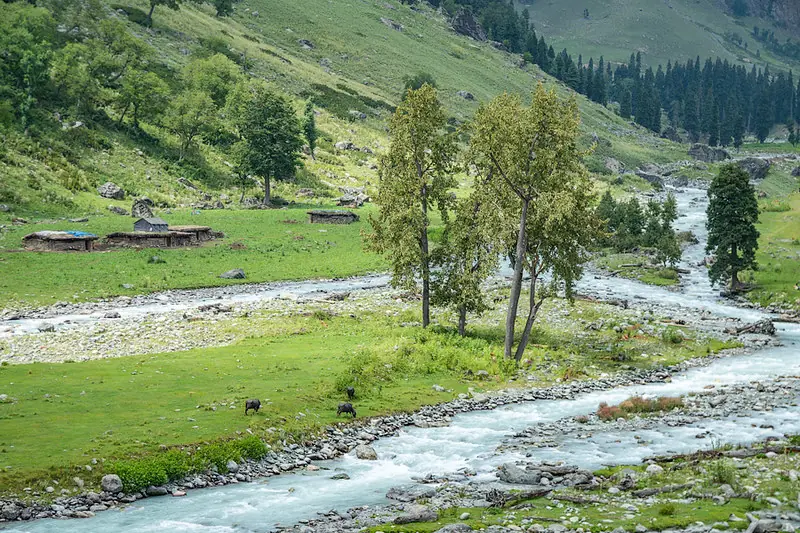
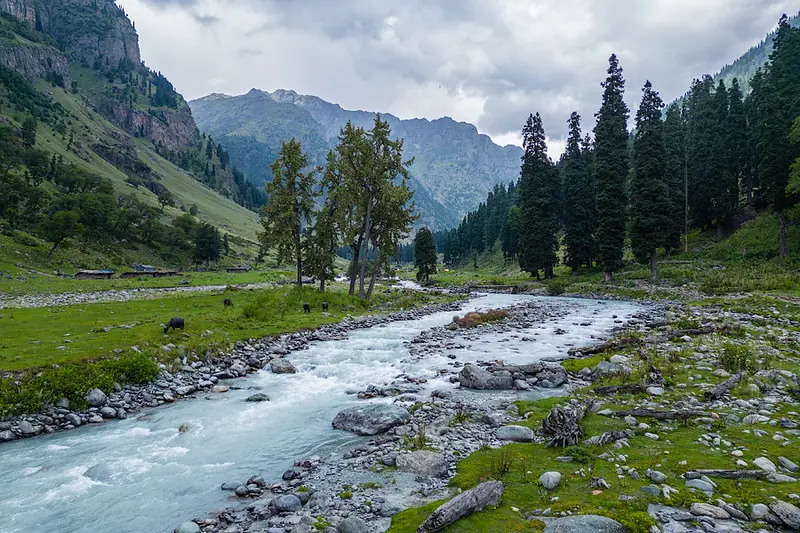
- The trek begins on a well-worn trail following the Lidder River upstream through a corridor of towering Himalayan pine and deodar. The forest is dense and cool even in the height of summer. This is an easy first day by design — the gradient is gentle, allowing the lungs to adjust without stress.
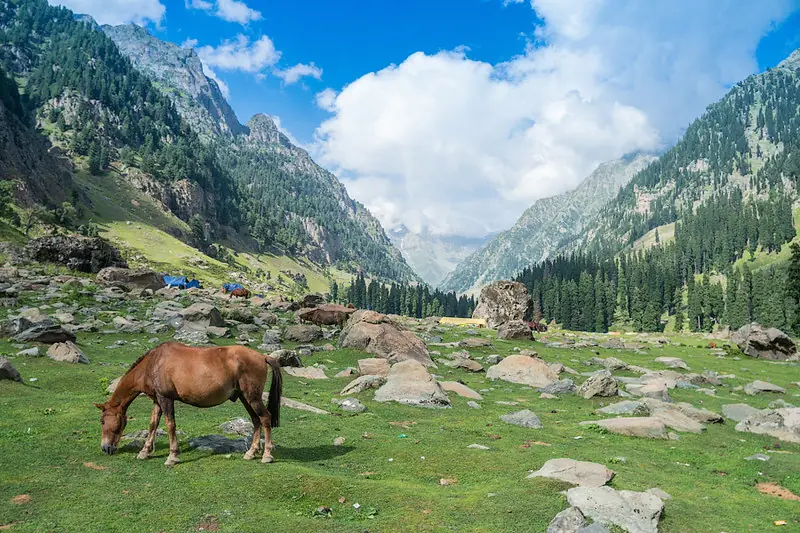
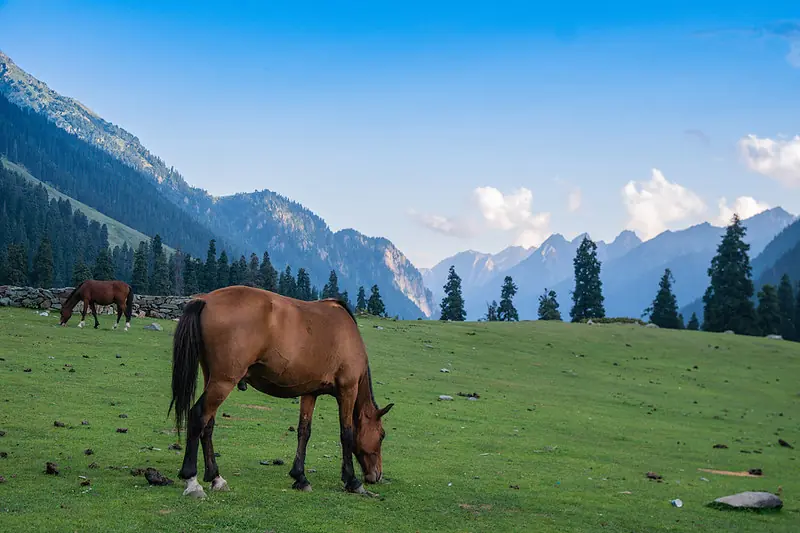
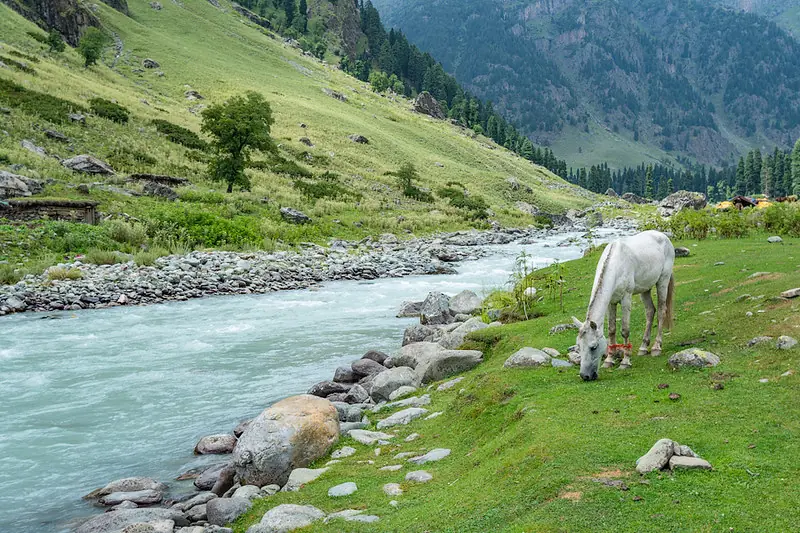
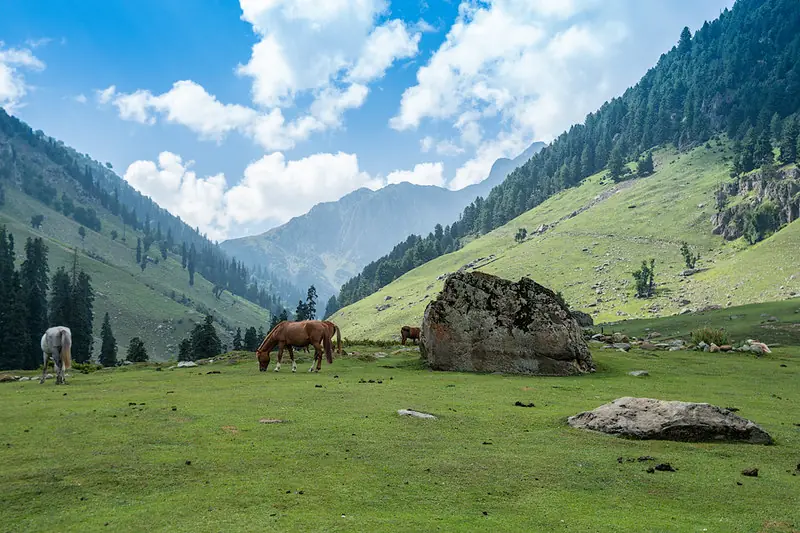
- Pass through the small seasonal settlement of Nandekai — a cluster of Gujjar and Bakarwal households, their horses and ponies grazing freely on the grassy margins of the trail. The forest becomes denser as the trail climbs slowly.
- Lidderwat (3,175m) is a broad meadow where the Lidder Valley forks: one branch leads toward Kolahoi Glacier, the other toward Shekhwas and the lakes above. Our route takes the latter tomorrow. The meadow has a Forest Rest House and the confluence of two streams — the finest camping ground of the lower trek.
- Overnight: Tented camp at Lidderwat
- Meals: Breakfast, Lunch, Dinner
Day 3: Trek Lidderwat to Shekhwas (3,400m)
Trek: ~6 km | 4–5 hours
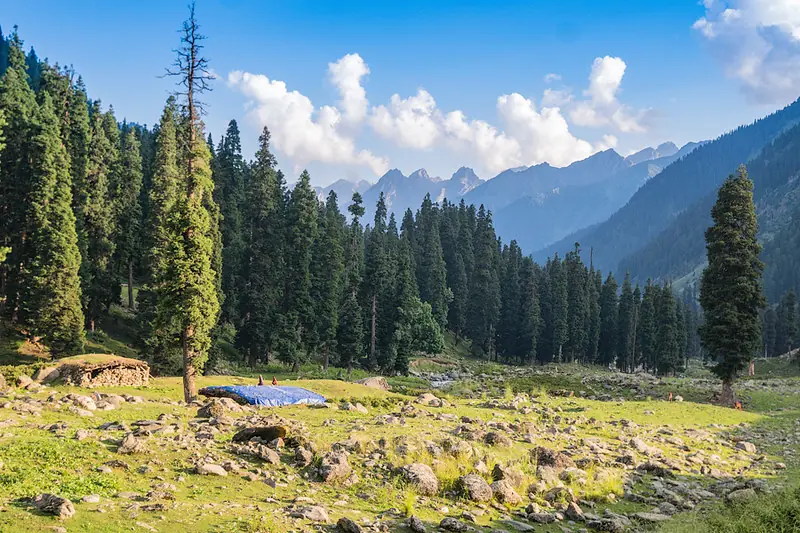
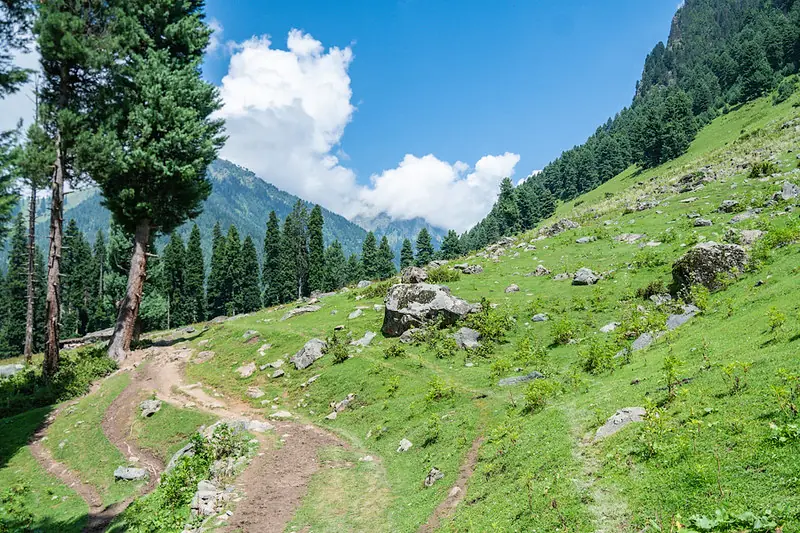
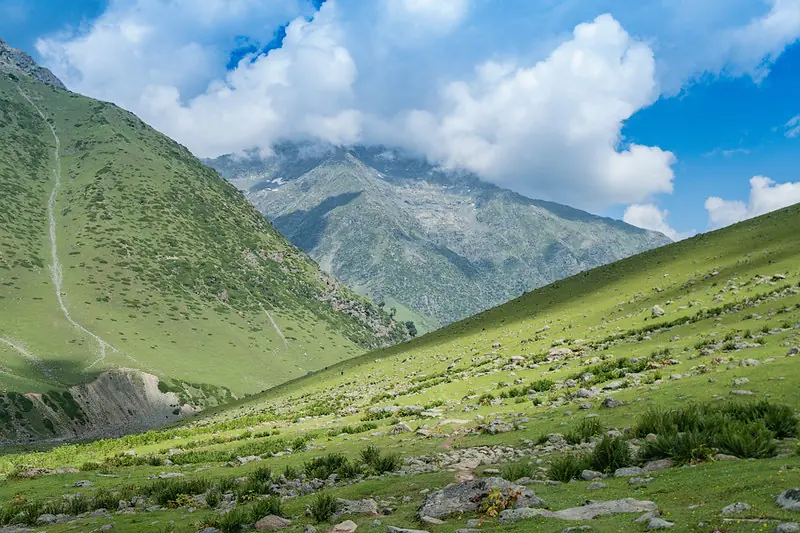
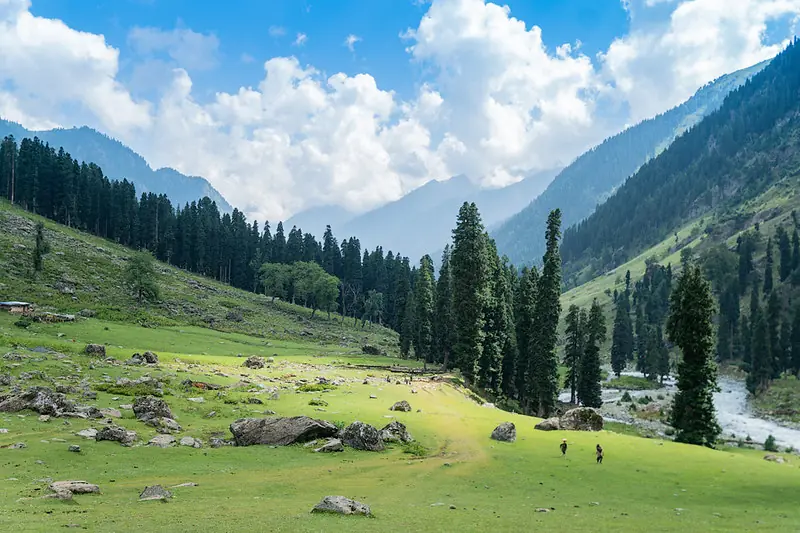
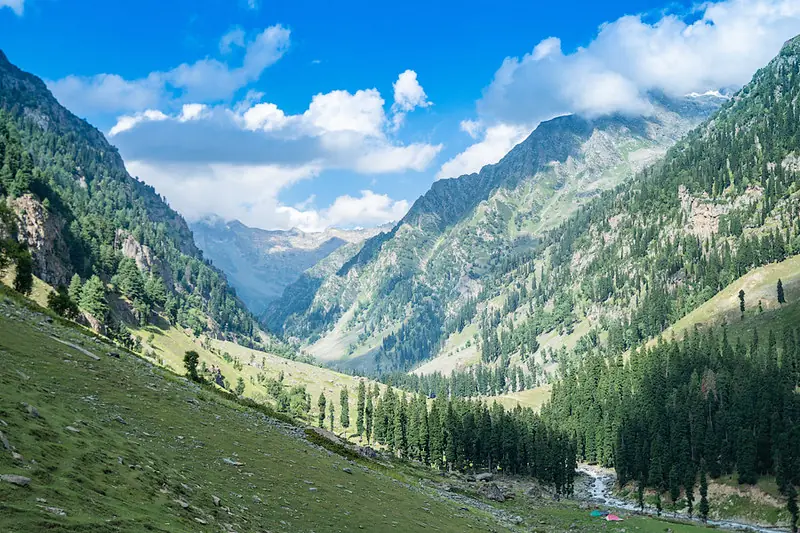
- Leave the main Lidder River and turn west up the Tarsar tributary valley. The trail climbs steadily through mixed forest before emerging onto the first of the high meadows above the treeline — wide, rolling, green in summer, swept by a cold breeze carrying the smell of glacial meltwater.
- The gradient steepens on the approach to Shekhwas. Look north for the first views of the ridgeline separating the Lidder and Sundarsar basins — the wall you will cross on Day 5.
- Shekhwas (3,400m) is a high-altitude shepherd encampment, used seasonally as a summer pasture. Wide camping platforms on the meadow floor, clean streams, and uninterrupted views of the valley below make it one of the most pleasant campsites on the route. Marmots are almost always visible on the boulder fields above camp in the mornings. Cold nights from here onward — sleeping bags mandatory.
- Overnight: Tented camp at Shekhwas
- Meals: Breakfast, Lunch, Dinner
Day 4: Trek Shekhwas to Tarsar Lake (3,780m)
Trek: ~5 km | 4–5 hours
- The trail to Tarsar gains altitude steadily from Shekhwas, crossing open ridges and grassy saddles before the final descent into the Tarsar basin. The lake remains hidden until the last ridge — and then reveals itself in one uninterrupted view as you step over the lip.
- Tarsar Lake (3,780m) is almond-shaped, roughly a kilometre long, and a shade of blue-green that shifts from turquoise to cobalt as the light changes across the day. Kolahoi Peak (5,425m) — the highest peak in Kashmir — frames the northern skyline above the lake. Wildflowers cover the meadow bowl: yellow primulas, blue gentians, and carpets of white anemone. In July and August the bloom here is among the finest in the Kashmir Himalaya.
- Arrive by midday if possible. Spend the afternoon walking the shoreline, watching the sky move over the water. This is the campsite most trekkers on this route remember longest.
- Overnight: Tented camp at Tarsar Lake
- Meals: Breakfast, Lunch, Dinner
Day 5: Trek Tarsar to Sundarsar (3,850m) via Tarsar Pass
Trek: ~5 km | 4–5 hours
- Cross the Tarsar Pass — a direct 300m ascent from the lake's eastern shore to the ridgeline above. The climb is steep and unrelenting for about an hour, but the view from the top stops all discomfort immediately: Tarsar lies below on one side, an almond of turquoise; the Sundarsar basin opens on the other, a longer, flatter meadow valley leading northward.
- The descent to Sundarsar is initially gravelly and loose, then opens into broad meadow. The contrast between the two sides of the pass is striking — the Tarsar side is green and vibrant; the Sundarsar approach is higher, more austere, and often holds snow patches into late July.
- Sundarsar Lake (3,850m) is smaller and quieter than Tarsar — a perfect oval of deep water ringed by flat meadow on its south shore and steep boulder slopes above. The sense of remoteness is total. Marsar is visible from high ground to the southwest — a dark bowl on the skyline. Tomorrow you go there.
- Overnight: Tented camp at Sundarsar
- Meals: Breakfast, Lunch, Dinner
Day 6: Sundarsar — Marsar Lake (4,010m) — Sonmasti Pass (4,100m) — Sonmasti (3,400m)
Trek: ~9 km | 6–7 hours — the hardest day of the trek
- Depart early — this is the most demanding day of the crossover and requires a full morning of clear weather for the Marsar traverse and Sonmasti Pass crossing.
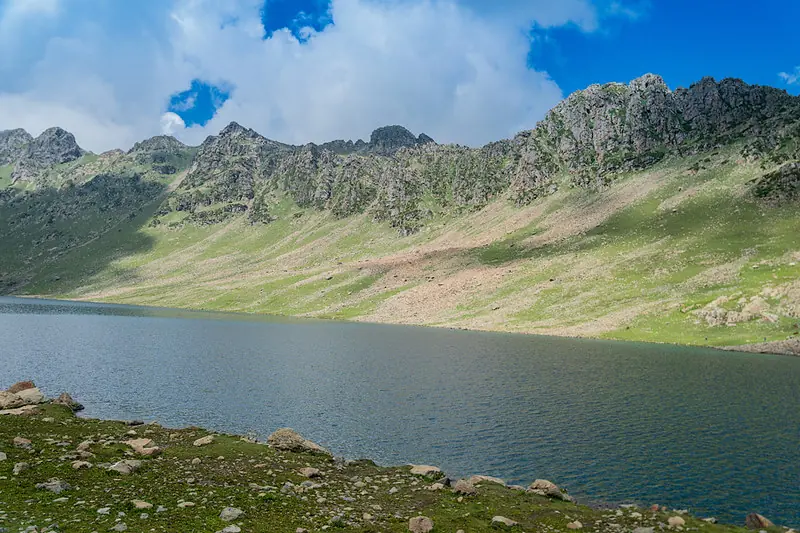
- From Sundarsar, a ridge on the southwest shore leads upward on boulders and loose rock for 45 minutes to a saddle — and then Marsar Lake (4,010m) appears below. The lake occupies a steep-sided glacial cauldron; its water a deep greenish-blue that looks cold even in August. The walls drop steeply into the water on three sides. Very few people ever stand on this ridge. Spend time here.
- From the Marsar ridge, the trail turns north toward the Sonmasti Pass (4,100m) — the highest point of the entire trek and the watershed between the Lidder and Sind drainages. The approach alternates between snow patches and exposed rock. At the summit: behind you, the Lidder system with all three lakes visible in their basins; ahead, the Sind Valley opening northward toward Srinagar.
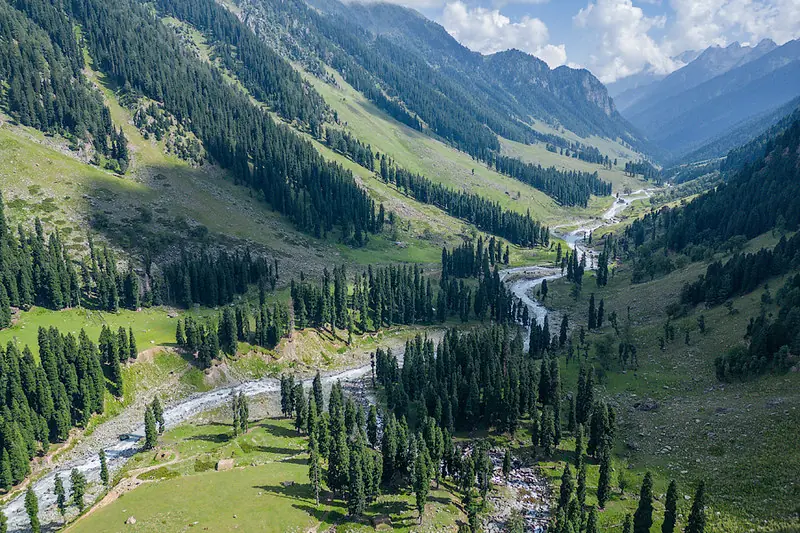
- The descent into the Sonamasti Valley is one of the most dramatic moments of the trek — the valley drops in a series of steep meadow terraces, each fed by snowmelt streams that cascade off the next ledge as waterfalls. The drop from pass to valley floor (over 600m) is accomplished in a sequence of steep descents separated by flat meadow platforms.
- Camp at Sonmasti (3,400m) — a broad valley floor in the upper Sind drainage with running water and flat ground, and an extraordinary sense of having crossed from one world into another.
- Overnight: Tented camp at Sonmasti
- Meals: Breakfast, Lunch, Dinner
Day 7: Trek Sonmasti to Surfraw (2,150m) — Drive to Srinagar
Trek: ~15 km | 5–6 hours • Drive: ~2.5 hours Sumbal to Srinagar
- The final day — a long, sustained descent through the Sind Valley. The altitude is behind you, the legs are strong, and the landscape becomes progressively more lush as height is lost. This is one of the most enjoyable days of the trek precisely because of what has already been accomplished.
- From Sonmasti, the trail follows the Sonamasti stream through a sequence of meadows and seasonal shepherd settlements. Pine forest closes in below 3,000m — the smell of resin and warm earth replacing the cold mineral scent of the high meadows.
- The trail reaches Surfraw (2,150m), the last village before the motorable road. Vehicles meet the group here. A short drive to Sumbal and then the highway runs west to Srinagar.
- Arrive Srinagar by late afternoon. Celebration dinner at the hotel.
- Overnight: Hotel Dar-Es-Salam, Boulevard, Dal Lake, or similar, Srinagar
- Meals: Breakfast, Lunch, Dinner
Day 8: Departure from Srinagar
- Private transfer to Sheikh ul-Alam International Airport (SXR) for onward travel. Direct flights connect Srinagar to Delhi (1.5 hrs), Mumbai, and several other Indian cities. Check-in at Srinagar Airport is a minimum of 2 hours before departure.
- Meals: Breakfast
IN-15 – Tarsar Marsar Trek — Crossover (8 Days)
Starting from USD 580 per person
(Based on 2 trekkers, private guide, cook, and horseman support)
👉 Request Custom Itinerary & QuoteFully supported camping trek — all meals, tents, sleeping bags, kitchen crew, and horse support included from Day 1 to Day 7.
INCLUDED
- All private road transport: airport transfers Srinagar, Srinagar–Aru (Day 1), Surfraw/Sumbal–Srinagar (Day 7)
- 7 nights accommodation:
- 1 night hotel in Srinagar (twin sharing, attached bathroom) — Hotel Dar-Es-Salam, Boulevard, Dal Lake, or similar — Day 7 return
- 6 nights in high-quality dome tents (2-person per tent) — Aru (Day 1), Lidderwat (Day 2), Shekhwas (Day 3), Tarsar Lake (Day 4), Sundarsar (Day 5), Sonmasti (Day 6)
- Sleeping bags (rated to -10°C), sleeping mats, dining tent, kitchen tent, toilet tent at every campsite
- Overa-Aru Wildlife Sanctuary trekking permit
- Experienced English-speaking Kashmiri mountain guide throughout (J&K Tourism Department licensed)
- Cook and assistant cook
- Horseman with horses for equipment and supply transport throughout
- All meals on trek: breakfast, lunch, evening tea and snacks, and dinner prepared by dedicated cook
- First aid kit and guide trained in wilderness first response
- Summit Routes trek duffel bag
- All government taxes and service charges
NOT INCLUDED
- International or domestic flights to/from Srinagar
- Travel insurance (mandatory — must cover trekking above 4,500m and helicopter evacuation)
- Personal trekking equipment (boots, trekking poles, personal clothing layers)
- Personal beverages and snacks beyond standard meals
- Tips for guide, cook, and horseman (customary and appreciated)
- Anything not specified in the Included list
Group Pricing (indicative per person)
| Group Size | Price (USD) per Person |
|---|---|
| 2 persons | 580 |
| 3–4 persons | 510 |
| 5–8 persons | 460 |
| 9+ persons | On request |
Accommodation
Srinagar (Day 7 — 1 Night)
The return night in Srinagar is at Hotel Dar-Es-Salam, Boulevard, Dal Lake, or a similar well-positioned property on the Dal Lake waterfront. Twin sharing with attached bathroom, hot shower, electricity, and Wi-Fi. After six nights of camping between 2,400m and 3,850m and a 4,100m pass crossing yesterday, this is the most earned hotel night of any Kashmir trek. A proper bed, a hot shower, dinner with a view of Dal Lake in the evening light, and the entire Tarsar Marsar corridor behind you.
Tented Camps (6 Nights)
All six trekking nights are in high-quality 2-person dome tents with sleeping bags rated to -10°C and sleeping mats. A dining tent with table and folding chairs, a fully equipped kitchen tent, and a toilet tent with privacy screen are erected at every campsite by the support team. All meals are freshly prepared by the camp cook.
- Aru (Day 1, 2,400m) — flat meadow campsite alongside the Lidder River, with village facilities nearby. Warm and relatively low — a gentle start.
- Lidderwat (Day 2, 3,175m) — broad river meadow at the valley fork, with the Forest Rest House nearby and clean running water from the stream confluence. Good facilities for the altitude.
- Shekhwas (Day 3, 3,400m) — open high meadow, somewhat exposed to wind — tent pegging is important here. Cold nights begin in earnest from Shekhwas onward.
- Tarsar Lake (Day 4, 3,780m) — flat meadow beside the lake shore. Outstanding setting; Kolahoi Peak above, wildflowers all around. Very cold nights — temperature can drop to -3°C in July–August. The finest campsite on the route. Set an alarm for the pre-dawn light on the lake.
- Sundarsar (Day 5, 3,850m) — the highest camp on the trek. Flatter and more sheltered than Tarsar. Good water source from the lake outlet stream.
- Sonmasti (Day 6, 3,400m) — valley floor camp after the pass crossing. More sheltered and warmer than the previous two nights — a well-earned descent. Good flat ground and clean running water.
Note: This is a fully equipped camping trek — there are no teahouses, dhabas, or lodges above Aru on this route. All food, water treatment, and shelter are managed entirely by the Summit Routes support team. Water on trek comes from glacial streams and snowmelt — filtered and treated by the cook team before all drinking and cooking use.
What to Pack — Tarsar Marsar Trek
The Tarsar Marsar Trek spans 1,585m in Srinagar to 4,100m at Sonmasti Pass over 8 days, with six nights of camping between 2,400m and 3,850m. All camping infrastructure is provided — 2-person dome tents, -10°C sleeping bags, sleeping mats, dining tent, kitchen tent, and a cook team. You carry only a personal daypack on trail; the horse team carries the main duffel bags between campsites.
Clothing & Layers
- Insulated jacket (down or synthetic, rated to -5°C or colder) — for evenings at Shekhwas, Tarsar, and Sundarsar, and the early-morning Sonmasti Pass start on Day 6. The highest camps (Tarsar at 3,780m and Sundarsar at 3,850m) can drop to -3°C at night in July–August.
- Waterproof hardshell jacket — afternoon thunderstorms are possible in the Lidder Valley approach (Days 2–3) and above the treeline. A hardshell is essential for the Sonmasti Pass crossing on Day 6.
- Fleece mid-layer × 2
- Moisture-wicking base layers (top and bottom) × 3 — merino wool handles the range from warm lower valley to cold lake-camp nights better than synthetic.
- Trekking trousers × 2 — lightweight, fast-drying.
- Waterproof over-trousers — for the Sonmasti Pass approach and any afternoon rain on the forest sections.
- Thermal leggings × 1 — for cold evenings at Tarsar and Sundarsar.
- Warm hat and wide-brimmed sun hat — both. UV above 3,500m on open meadow is significant, particularly at Tarsar and on the Sonmasti Pass approach.
- Buff or neck gaiter — for cold mornings on the pass days and evening camp.
- Trekking gloves — lightweight pair for approach days and the pass crossing in September.
- Trekking socks × 4–5 pairs — heavyweight wool preferred for 6 consecutive camping nights.
- Camp shoes or sandals — for evening rest time at the tented camps.
Footwear
- Waterproof trekking boots — fully broken in before arrival. The trail includes wet meadow grass above the treeline, stream crossings at Lidderwat, and rocky terrain on the Tarsar Pass and Sonmasti Pass approaches. Waterproofing and ankle support are both critical on this route.
- Trekking poles × 2 — strongly recommended for the Tarsar Pass descent (gravelly and steep), the boulder approach to Marsar, and the 600m+ descent from Sonmasti Pass to camp on Day 6. Two poles are significantly safer on this terrain.
Personal Health & Safety
- Altitude medication — the route reaches 4,100m at Sonmasti Pass. Consult your doctor about Diamox before departure. Read our guide to altitude sickness in the Himalaya.
- Personal first aid kit — blister plasters, ibuprofen, paracetamol, antihistamines, rehydration sachets. Pahalgam has a pharmacy; above it there are none.
- UV-protective sunglasses — Category 3 — essential on the open meadow sections above Shekhwas and at Tarsar, Sundarsar, and the Sonmasti Pass ridge. Standard sunglasses are inadequate above 3,500m.
- High-SPF sunscreen (50+) — carry enough for 8 days. Afternoon cloud does not eliminate UV risk above 3,000m.
- Lip balm with SPF — UV and wind at altitude combine to cause rapid lip damage.
- Insect repellent — useful on the lower forested sections below Lidderwat (Days 2–3) in summer.
- Hand sanitiser — stream water at camps is treated by the cook team; hand hygiene is important.
- Personal prescription medicines — carry double your required quantity.
Gear & Equipment
- Sleeping bag liner — Summit Routes provides -10°C sleeping bags. A liner adds warmth at Tarsar and Sundarsar where cold nights in early or late season push the bag to its rating limit.
- Trekking daypack (20–30L) — carries personal items on trail. The horse team carries your main duffel bag.
- Main duffel bag (50–70L, soft-sided) — for horse loading. No hard-framed luggage on this route.
- Headlamp + spare batteries — for navigating the tented camp after dark and for early starts on the pass days.
- Water bottle (1L minimum) — the cook team provides treated water at camps; carry a personal bottle on trail. Stream water is plentiful between campsites above Lidderwat.
- Water purification tablets — as backup for stream water on trail.
- Power bank — no electricity above Aru (Day 1) until the hotel in Srinagar on Day 7. Charge devices fully in Srinagar or Pahalgam before departure to Aru.
- Dry bag or waterproof pack cover — afternoon rain in the Lidder Valley is possible in July and August.
Documents & Money
- Original ID / Passport — required for Overa-Aru Wildlife Sanctuary permit registration. Carry throughout the trek.
- Travel insurance documents — must cover trekking above 4,500m and helicopter evacuation. Mandatory for participation.
- Cash in Indian Rupees — ATMs available in Srinagar and Pahalgam. No ATMs above Pahalgam. Withdraw sufficient cash for all personal expenses through Day 8, including tips.
Optional but Useful
- Camera with spare batteries — Tarsar Lake at dawn and Marsar from the ridge are among the finest photography opportunities on any Kashmir trek.
- High-energy trail snacks — energy bars, dry fruits, nuts. Supplement the camp meals, particularly on Day 6.
- Small padlock for duffel bag at Srinagar hotel.
For a complete Himalayan packing guide with brand recommendations and a printable checklist, see our Himalayan Trekking Gear List →
Safety & Emergency Protocols — Tarsar Marsar Trek
Your safety is the absolute priority on every Summit Routes trek. The Tarsar Marsar Trek reaches 4,100m at Sonmasti Pass, involves six nights of camping in remote terrain within the Overa-Aru Wildlife Sanctuary, and includes a Day 6 that combines two passes (Marsar at 4,010m and Sonmasti at 4,100m) with a 600m+ descent — the most demanding single day on any Summit Routes Kashmir trek. Below is a full account of the safety protocols, emergency procedures, and standards maintained on every departure.
First Aid & Medical Equipment
- Comprehensive first aid kit carried by the lead guide throughout the 8-day route
- Pulse oximeter for blood-oxygen monitoring at camps above 3,000m — readings taken on arrival and each morning above Lidderwat
- Basic medications including Diamox, Dexamethasone, analgesics, rehydration salts, and wound and blister care supplies
- Daily health check-ins at every campsite above 3,000m — appetite, sleep quality, headache, and SpO₂ assessed before the next day's stage is confirmed
Evacuation Procedure
Aru and Lidderwat (Days 1–2, lower valley):
- Assisted descent to Aru road access and vehicle transfer to Pahalgam District Hospital (~1.5 hours) or Srinagar (~3–4 hours). The fastest evacuation window on the route.
Shekhwas and Tarsar Lake (Days 3–4):
- Ground evacuation down the Tarsar tributary to Lidderwat and then to Aru road access — approximately 4–6 hours from Shekhwas and 5–7 hours from Tarsar.
- Helicopter landing is possible in the open meadows at Shekhwas and near the Tarsar shoreline in clear weather.
Sundarsar, Marsar, and Sonmasti Pass (Days 5–6):
- This is the most remote section of the route — helicopter landing at Sundarsar meadow or the Sonmasti valley floor is the primary emergency evacuation route from this section.
- For stable cases, ground descent to either the Lidder side (via Tarsar, approximately 7–9 hours) or the Sind side (via Sonmasti, approximately 5–7 hours to road access at Surfraw) depending on location and direction of travel.
- All descent decisions are made by the lead guide and cannot be overridden by the trekker.
Medical Facilities:
- District Hospital, Pahalgam — nearest facility to the Aru trailhead; 30 minutes by vehicle from Aru for initial stabilisation
- SKIMS Medical College Hospital (Soura), Srinagar — the main referral centre for trekking emergencies in the Kashmir Valley; approximately 3–4 hours from Aru by vehicle
Guide Training & Certifications
- All trekking guides are registered with the J&K Tourism Department
- Wilderness first response training and high-altitude awareness certification
- Summit Routes has operated the Tarsar Marsar route since 2011 — every lead guide holds direct multi-season knowledge of current conditions at each campsite, pass snowpack levels, weather patterns in the Overa-Aru Sanctuary, and emergency descent routes from Sundarsar and above
- The guide's Day 6 morning assessment at Sundarsar is the final fitness gate before the Marsar traverse and Sonmasti Pass commitment — any trekker whose condition does not meet the guide's threshold will rest at Sundarsar, with the pass attempt deferred or the group descended as appropriate
Travel Insurance — Mandatory Requirement
Valid travel insurance is a non-negotiable condition of participation on this trek.
- Must cover trekking above 4,500 metres
- Must include emergency helicopter evacuation from a remote location in the Overa-Aru Wildlife Sanctuary
- Must cover medical hospitalisation and emergency repatriation
- The insurance policy must be shared with Summit Routes before departure
- Trekkers without valid insurance cannot join this trek — no exceptions
See our Insurance & Permits FAQ for guidance.
Emergency Contact Protocol During the Trek
For Family / Next of Kin
A dedicated emergency contact number is provided before departure. Our Srinagar base coordinator monitors every active Tarsar Marsar departure and will contact your nominated next-of-kin within 2 hours of any serious incident.
On the Trail
Mobile signal is available in Srinagar (Days 1 and 7–8) and in Pahalgam and Aru (Day 1 approach). Signal is absent above Aru from Day 1 camp through Day 7 (Surfraw). Our guides are familiar with the limited signal points on the descent toward Aru and Surfraw that can be used for emergency communications. Rescue coordination from Sundarsar and above is managed through the guide's emergency protocol with the Srinagar operations base.
Rescue Coordination
Summit Routes maintains coordination with J&K Emergency Services, the Pahalgam District Administration, the Overa-Aru Wildlife Sanctuary forest wardens, and SKIMS Medical College Hospital, Srinagar.
Altitude Sickness (AMS) — Our Policy
AMS is a concern from Shekhwas (3,400m) onward and is the primary medical risk on Day 6 above Sundarsar (3,850m). Read our complete altitude sickness guide before departure.
Any trekker showing signs of HACE or HAPE will be descended immediately. This decision is non-negotiable and cannot be overridden by the trekker.
The gradual altitude gain of the Tarsar Marsar route provides a natural acclimatisation profile:
- Day 1: Aru — 2,400m
- Day 2: Lidderwat — 3,175m
- Day 3: Shekhwas — 3,400m
- Day 4: Tarsar Lake — 3,780m
- Day 5: Sundarsar — 3,850m
- Day 6: Marsar (4,010m) → Sonmasti Pass (4,100m) → Sonmasti (3,400m)
The guide's assessment at Sundarsar (Day 5 evening) is the critical gate before the Day 6 push to 4,100m. Any trekker not cleared will either rest at Sundarsar for an additional day or begin a descent, depending on condition. Day 6 cannot be safely shortened once the Marsar traverse is committed — the full pass crossing and descent must be completed in a single day, making the pre-Day-6 assessment the most important safety moment of the trek.
Have a safety question before booking?
Contact our team on WhatsApp (+91 96222 44022) or email info@summitroutes.com.
The Tarsar Marsar Trek is considered a moderate Himalayan trek, suitable for trekkers with good fitness. The trail involves daily walks of 5–7 hours through alpine meadows, mountain valleys, and high passes, with gradual altitude gain.
Previous trekking experience is helpful but not essential. Trekkers with good physical fitness, basic hiking experience, and the ability to walk several hours a day on uneven trails can complete the trek comfortably.
The best time to do the Tarsar Marsar Trek is from July to September. During this period the alpine meadows are lush and green, wildflowers are in bloom, and the high-altitude lakes of Tarsar and Sundarsar are fully accessible after the snow melts.
The trek requires local forest permissions and trekking registrations as the route passes through protected alpine areas of the Kashmir Himalaya. We arrange all necessary permits and logistics before the trek begins.
The trip price typically includes transportation from Srinagar to the trek starting point, experienced trek guides and support staff, all camping equipment, meals during the trek, mule or porter support for equipment, and campsite arrangements. Detailed inclusions are provided with the trip information.
The trek begins with a scenic drive from Srinagar to Aru Valley near Pahalgam, which takes approximately 3–4 hours. Aru village serves as the trailhead for the trek and the starting point for entering the alpine valleys.
Meals during the trek are freshly prepared by our dedicated trekking kitchen team. The menu typically includes nutritious and varied meals such as rice, lentils, vegetables, soups, pasta, potatoes, and hot drinks, providing balanced energy for trekking. Vegetarian meals are always available.
You should pack comfortable trekking clothing, waterproof and windproof layers, warm clothing for cold nights, sturdy trekking boots, a daypack, sun protection, personal toiletries, and basic medical items. Once your booking is confirmed, we will send you a complete and detailed packing list to help you prepare properly.
Yes, solo travellers are welcome. You can join one of our scheduled group departures or arrange a private guided trek, depending on your travel plans and preferred dates.
Our trekking groups are usually small, typically between 6 and 12 participants, allowing for better safety, personalized attention from guides, and a more enjoyable trekking experience in the mountains.
The highest point reached during the trek is approximately 4,000 m (13,120 ft) at the passes between Sundarsar and Marsar Lake, offering wide views of the surrounding Kashmir Himalayan ranges.
Since this is a fully supported camping trek, a portable toilet tent is set up at campsites to provide privacy and basic sanitation in remote locations.
No reviews yet.
📅 2026 Departures — Tarsar Marsar Trek (8 Days)
Click a departure to enquire instantly on WhatsApp
⚡ Small groups · Kashmiri guides · Full camping support · All meals included
Arrive & Depart: Srinagar (SXR), Kashmir
Similar Trips
KASHMIR GREAT LAKES TREK
Level: Moderate | Duration: 8 Days | Best Time: Jul–Sep | Price: From $620
GANGABAL TWIN LAKES TREK
Level: Moderate | Duration: 7 Days | Best Time: Jun–Sep | Price: From $495
WARWAN VALLEY TREK
Level: Challenging | Duration: 11 Days | Best Time: Jul–Sep | Price: From $1550
HAMPTA PASS & CHANDRATAL
Level: Moderate | Duration: 6 Days | Best Time: Jul–Sep | Price: From $650