
Spiti Valley Cultural Tour India

Spiti Valley Cultural Tour — Overview
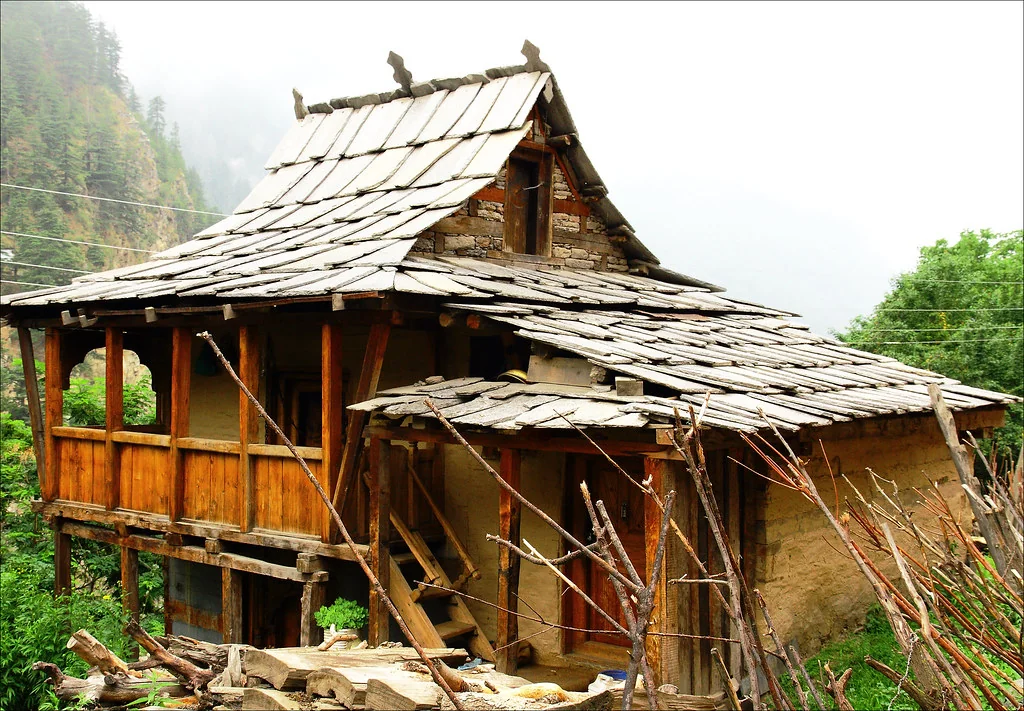
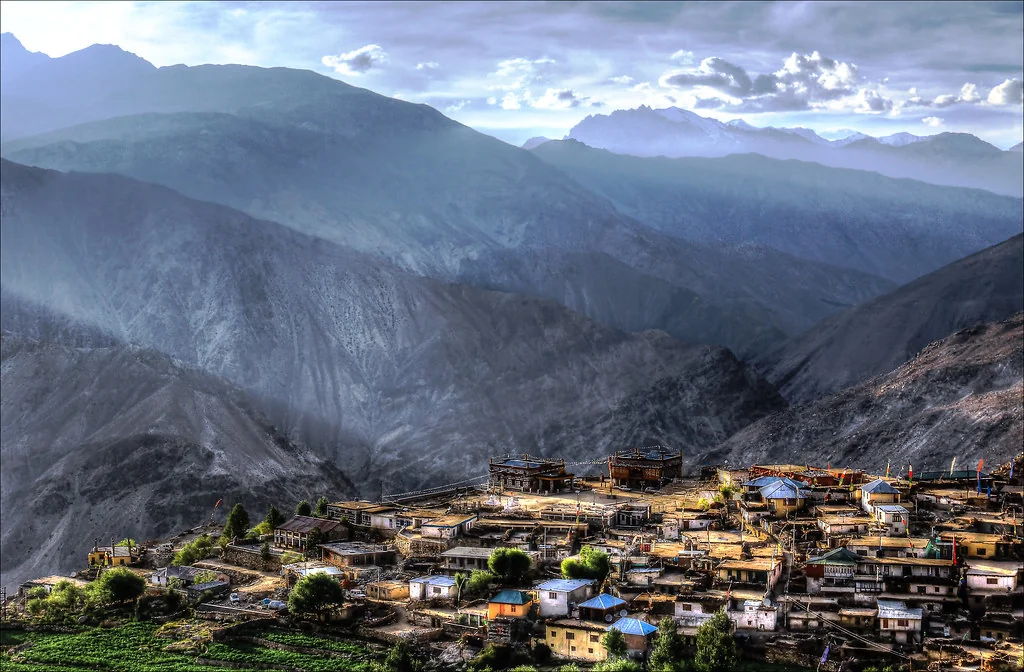
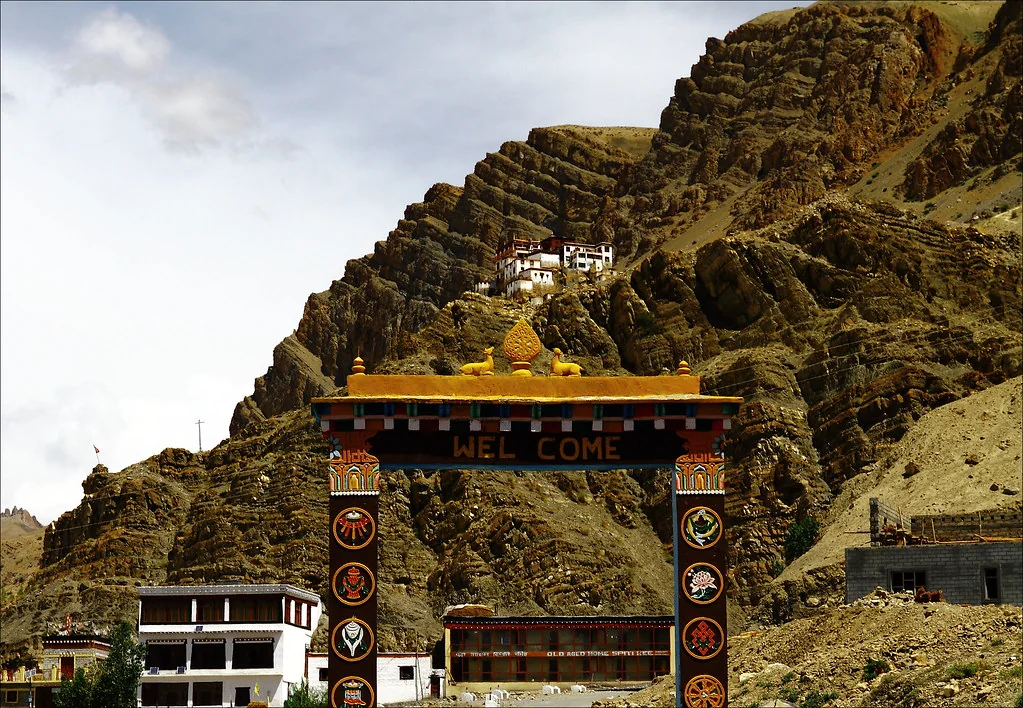
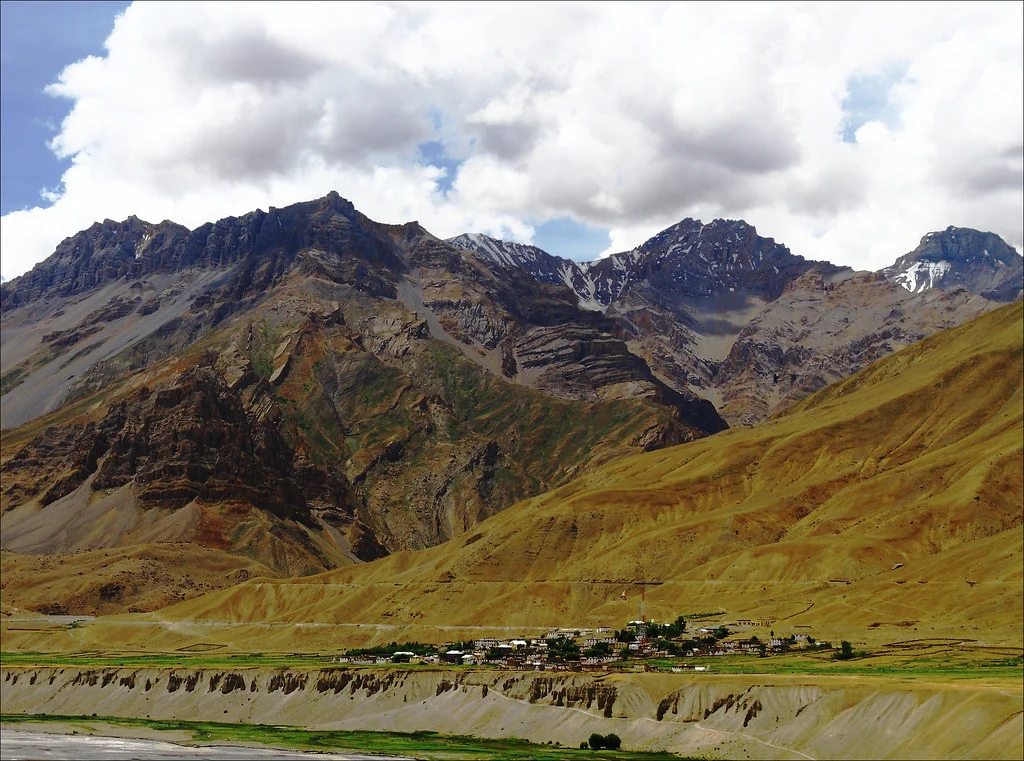
Spiti sits at the northern tip of Himachal Pradesh, wedged between Ladakh and Tibet at an average altitude of 3,800m. It is one of the coldest and most sparsely inhabited regions on earth — a high-altitude cold desert of ochre cliffs, ice-blue rivers, whitewashed monasteries, and villages that have barely changed in five centuries. The name means Middle Land: neither fully Indian nor Tibetan, it is something entirely its own.
The 10-day Summit Routes Spiti Valley Cultural Tour enters through Kinnaur — the forested river valley that forms Spiti’s most gradual and rewarding approach — before climbing to the Spiti River valley proper via the ancient monastery town of Tabo. From there the route traces the valley north through Dhankar, Kaza, and the extraordinary cluster of high-altitude villages above the valley floor: Kibber, Langza, Komic, and Hikkim. The circuit exits over Kunzum Pass (4,551m) to Chandratal Lake before dropping to Manali. This is not adventure trekking — it is slow, purposeful travel through one of the most visually and culturally arresting landscapes in the Himalaya. The route is a point-to-point circuit: Shimla to Manali via the Middle Land.
Tour Highlights
- Tabo Monastery (996 AD) — The Ajanta of the Himalayas
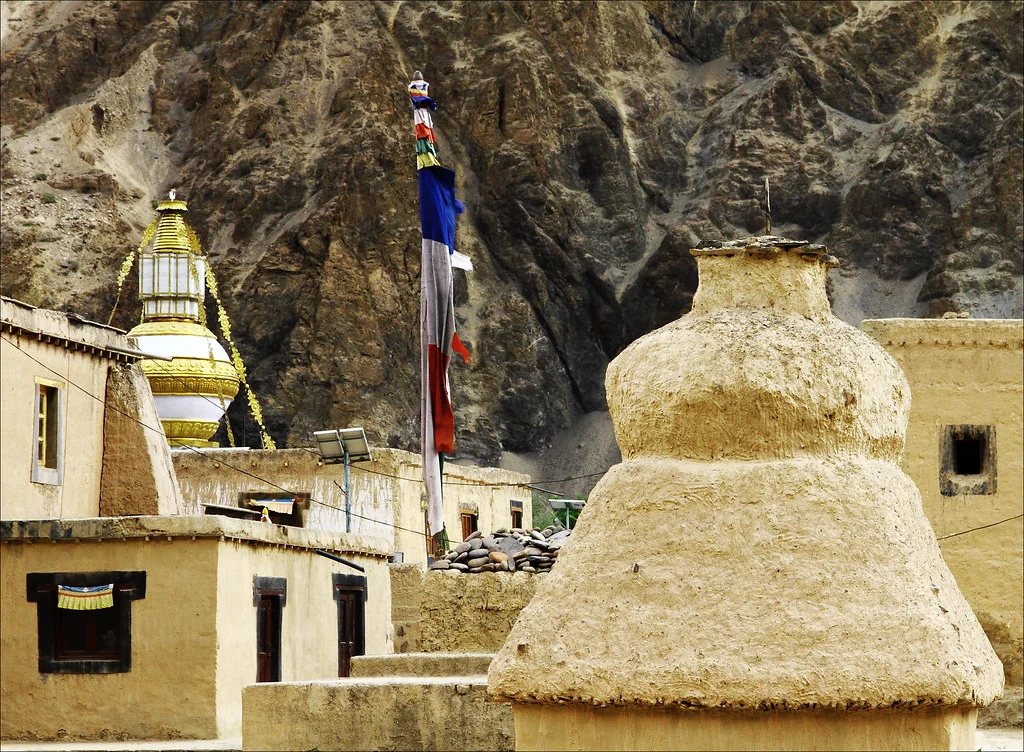
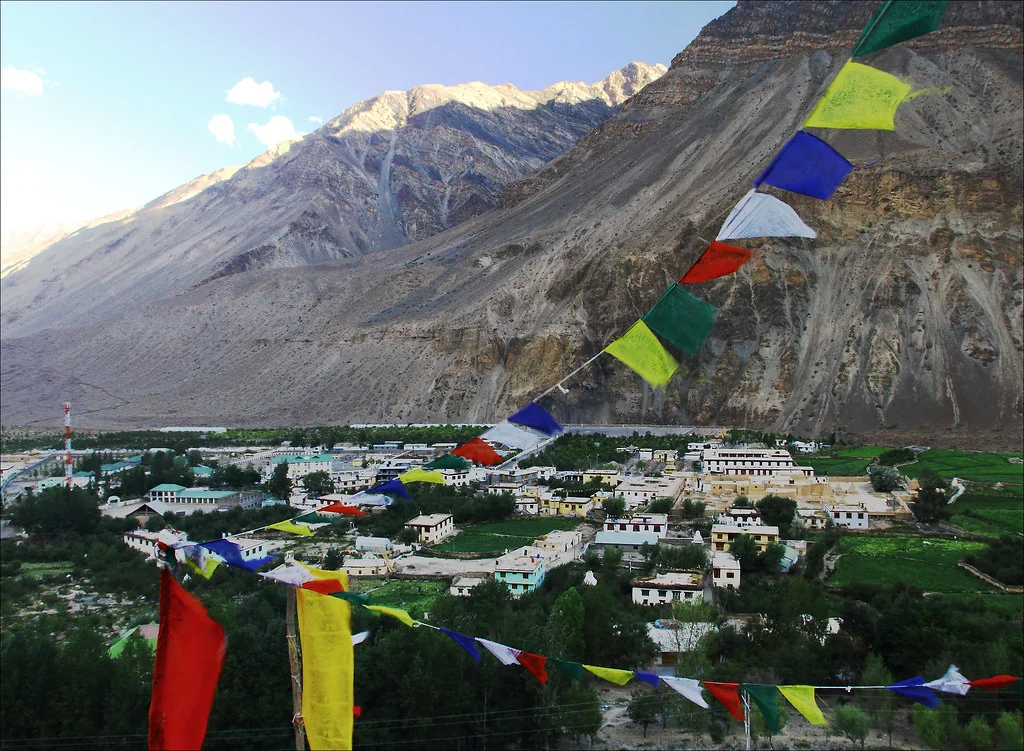
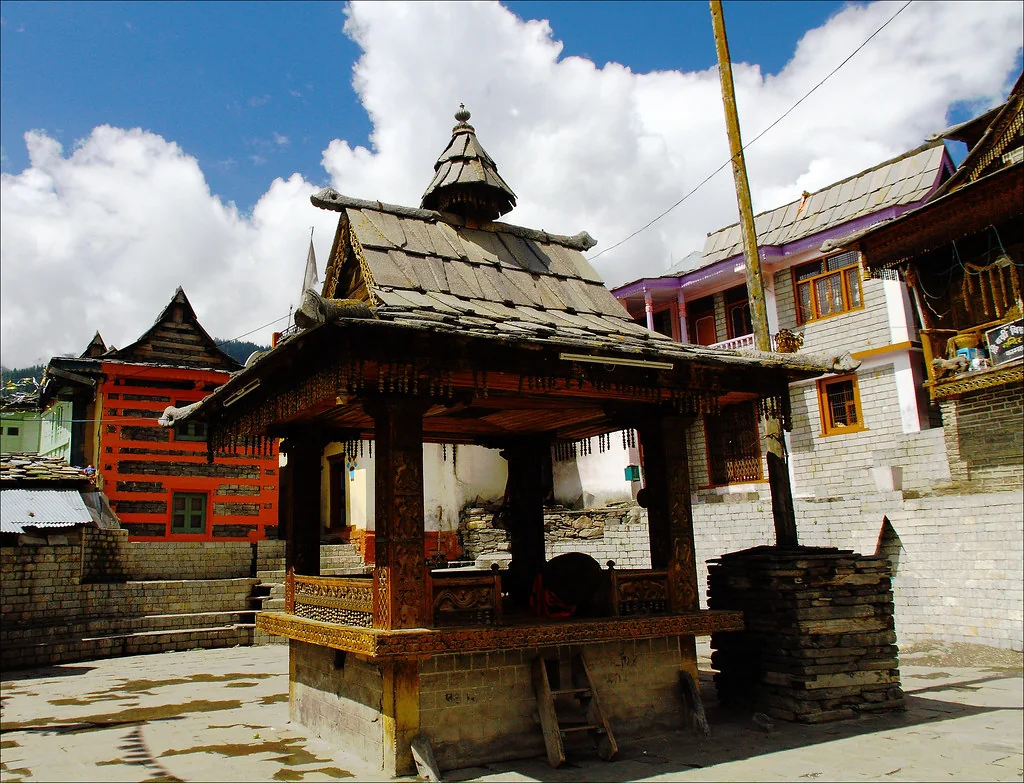
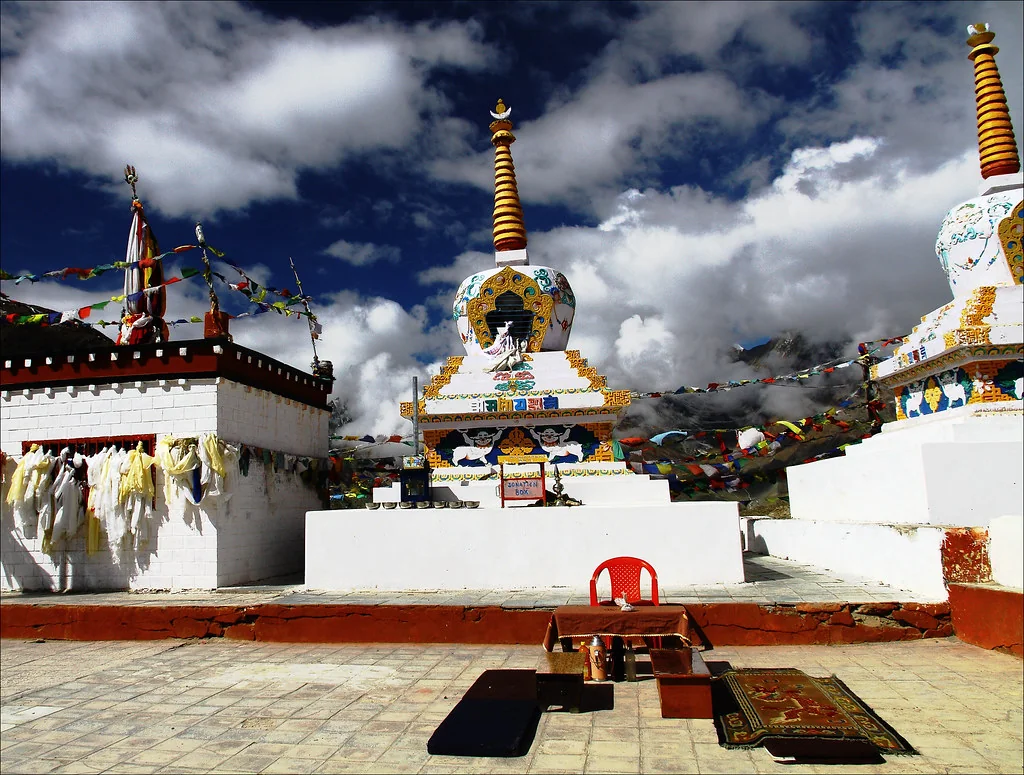
Founded in 996 AD, Tabo is one of the oldest continuously functioning Buddhist monasteries in the world. Its mud-walled assembly halls contain 10th-century clay sculptures and painted murals of extraordinary refinement, surviving a thousand years of Himalayan winters in near-complete condition. A UNESCO World Heritage candidate. - Key Monastery & the Spiti Valley
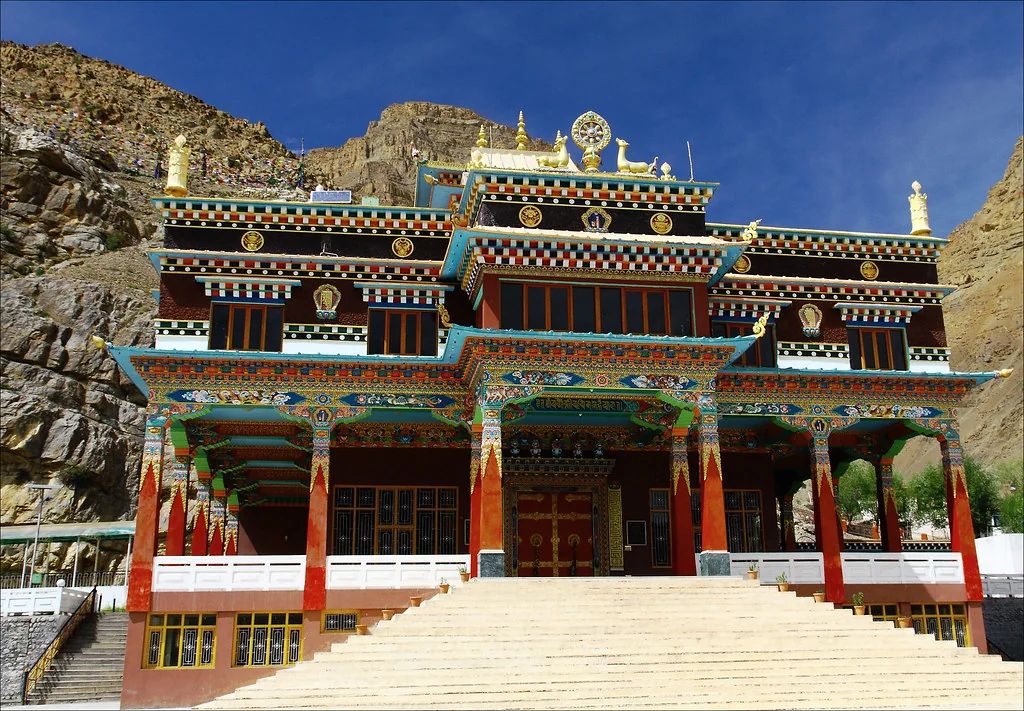
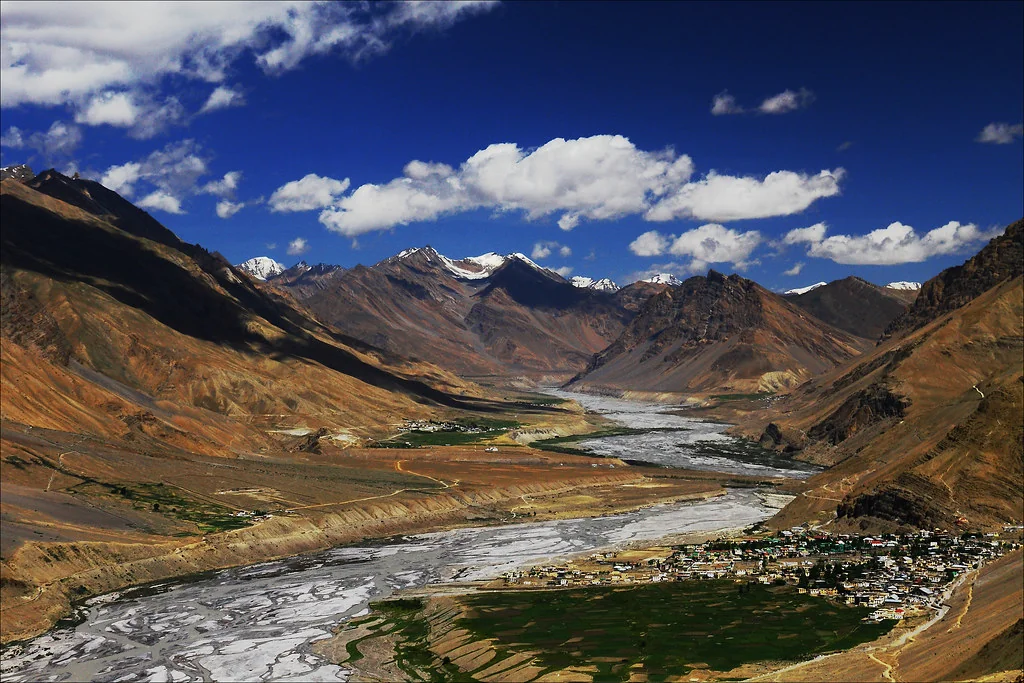
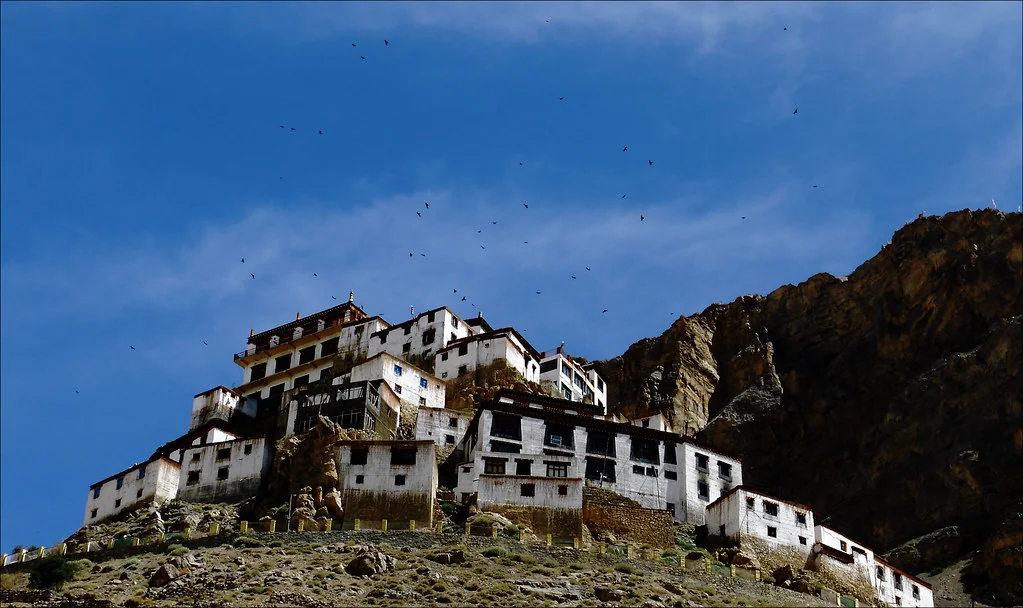
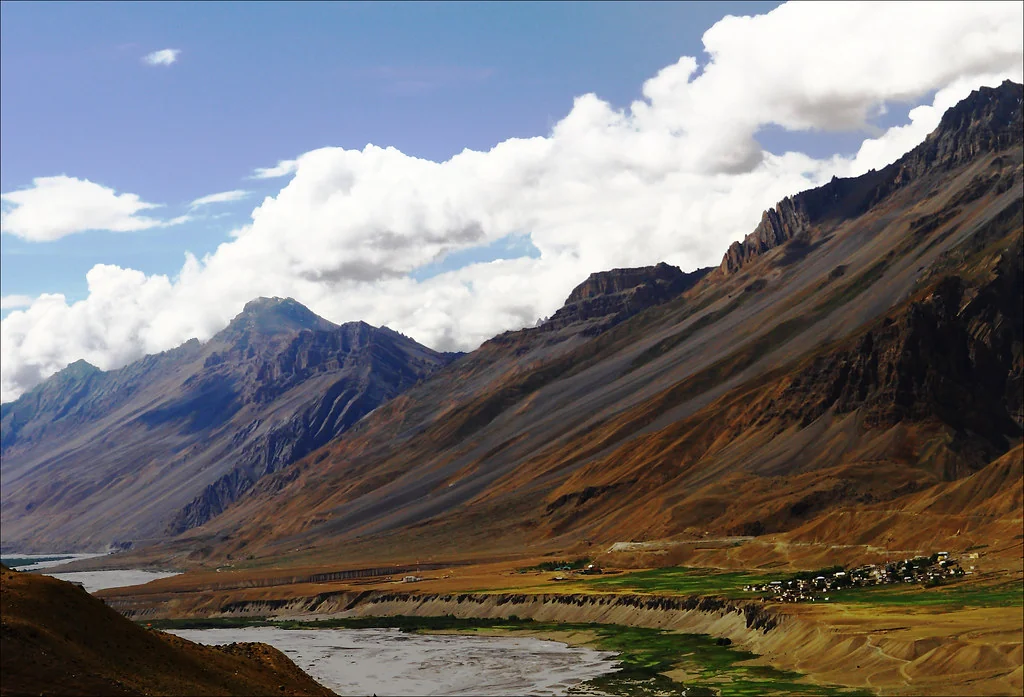
Key Monastery, perched on a hilltop at 4,166m above Kaza, is the region’s most iconic image and still home to over 300 monks. The view from its roof terrace across the Spiti Valley — the river turning in the valley floor below, the Himalayan ranges above — is the definitive Spiti panorama. - Kibber, Langza, Komic & the High Villages
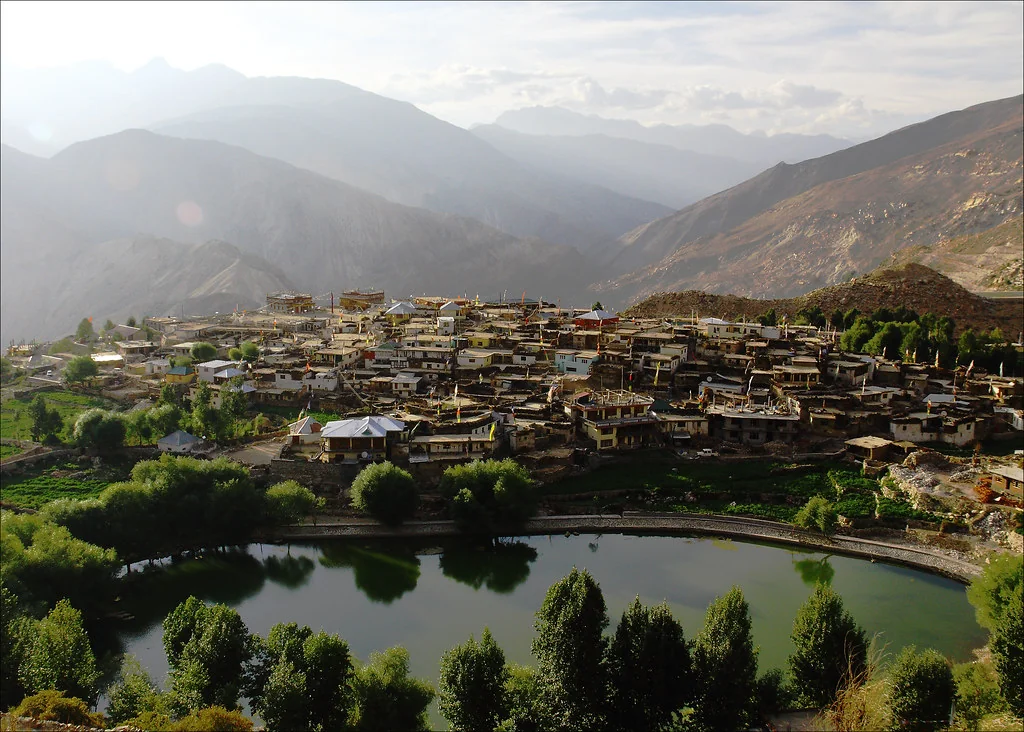
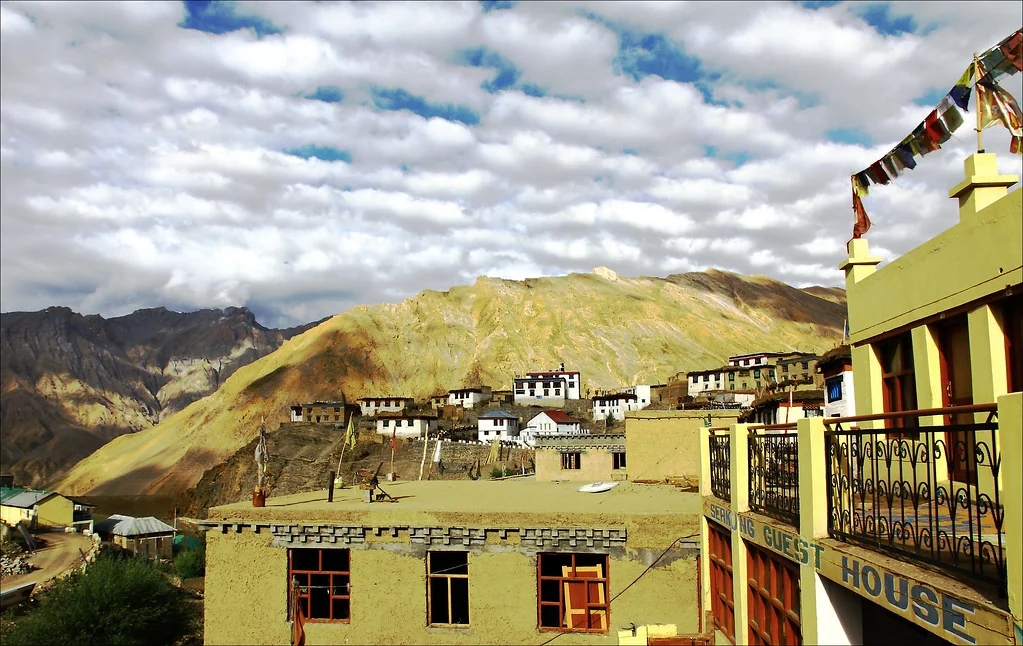
The cluster of villages above Kaza form one of the most extraordinary inhabited landscapes in India. Langza (4,460m) yields Tethys Sea marine fossils from its hillsides; Komic (4,587m) is one of the world’s highest motorable villages; Hikkim (4,400m) hosts the world’s highest post office. Kibber (4,270m) once held the world record for highest permanently inhabited village with a road. - Dhankar — Monastery on the Edge
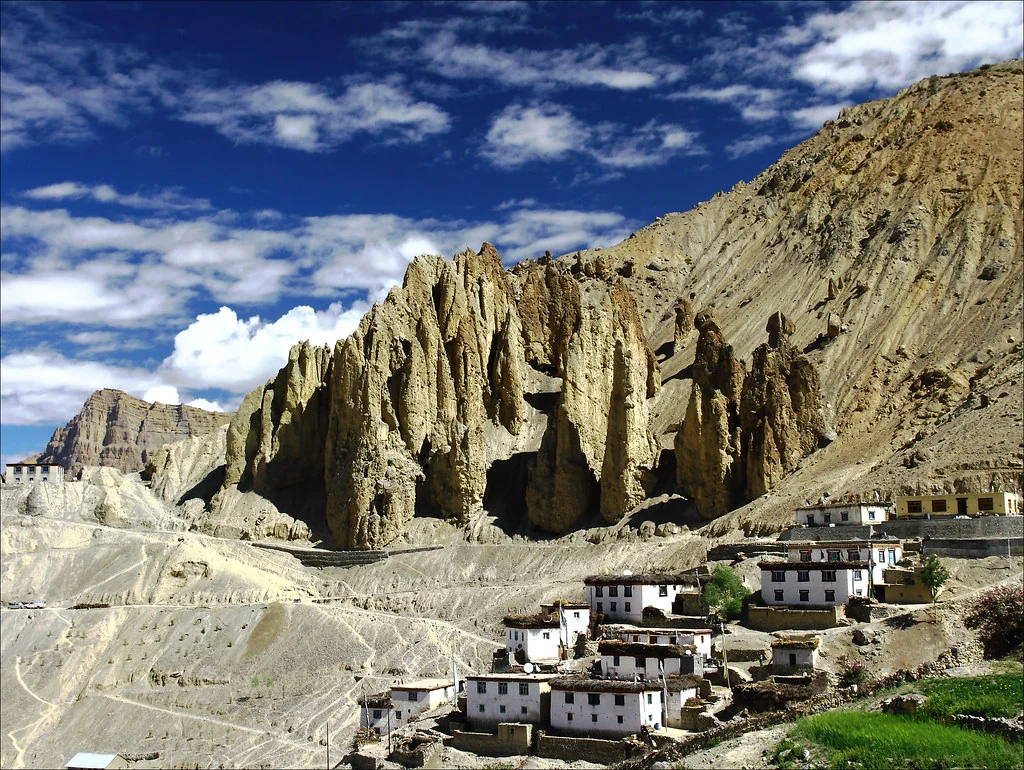
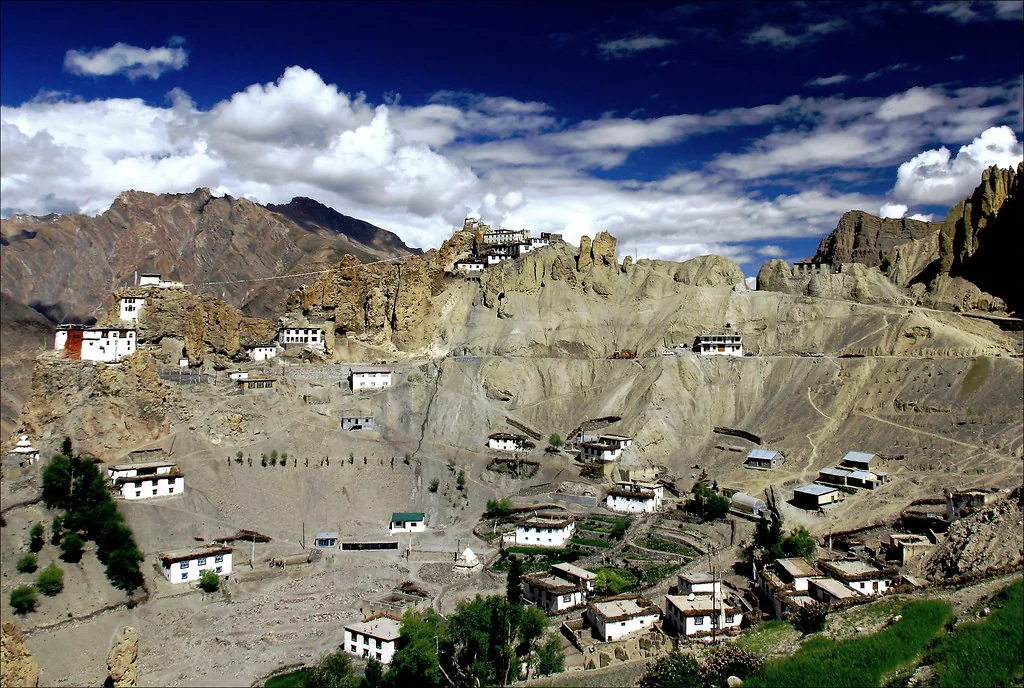
Dhankar Monastery clings to a crumbling cliff above the confluence of the Spiti and Pin rivers, 1,000m above the valley floor. Few positions of any religious structure anywhere match the vertiginous drama of this one. The hike to Dhankar Lake above the monastery is one of the finest short walks in the region. - The Kinnaur Approach — Entering Spiti Correctly
Entering Spiti via Shimla and the Kinnaur Valley is the right way to arrive. The route climbs through terraced apple orchards, Buddhist mani walls, and the dramatic Sutlej gorge before the landscape strips bare and Spiti begins. The gradual transition from Himachali green to high-altitude desert is part of the experience — arriving by the Manali approach alone means missing it entirely. - Chandratal — The Moon Lake
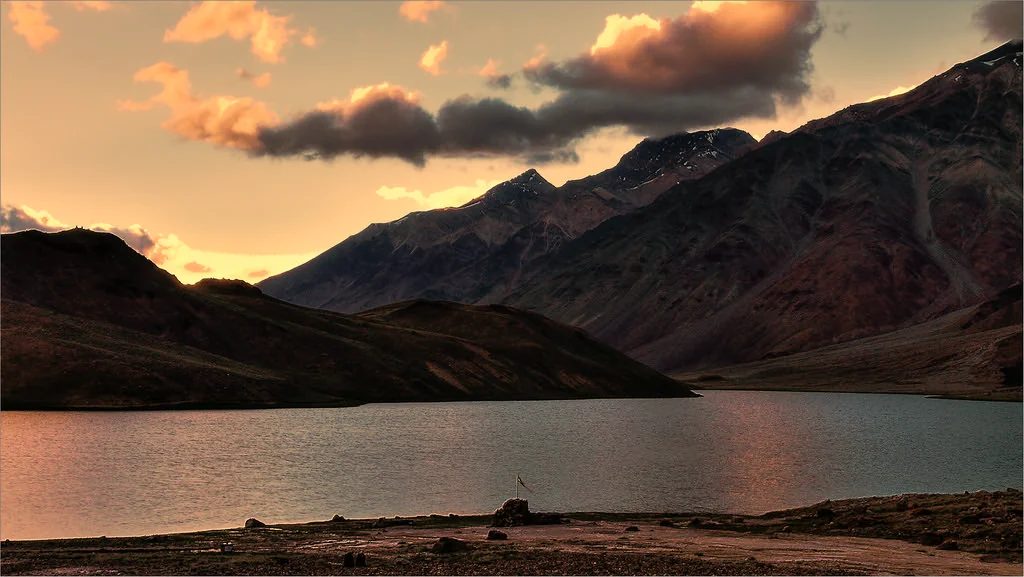
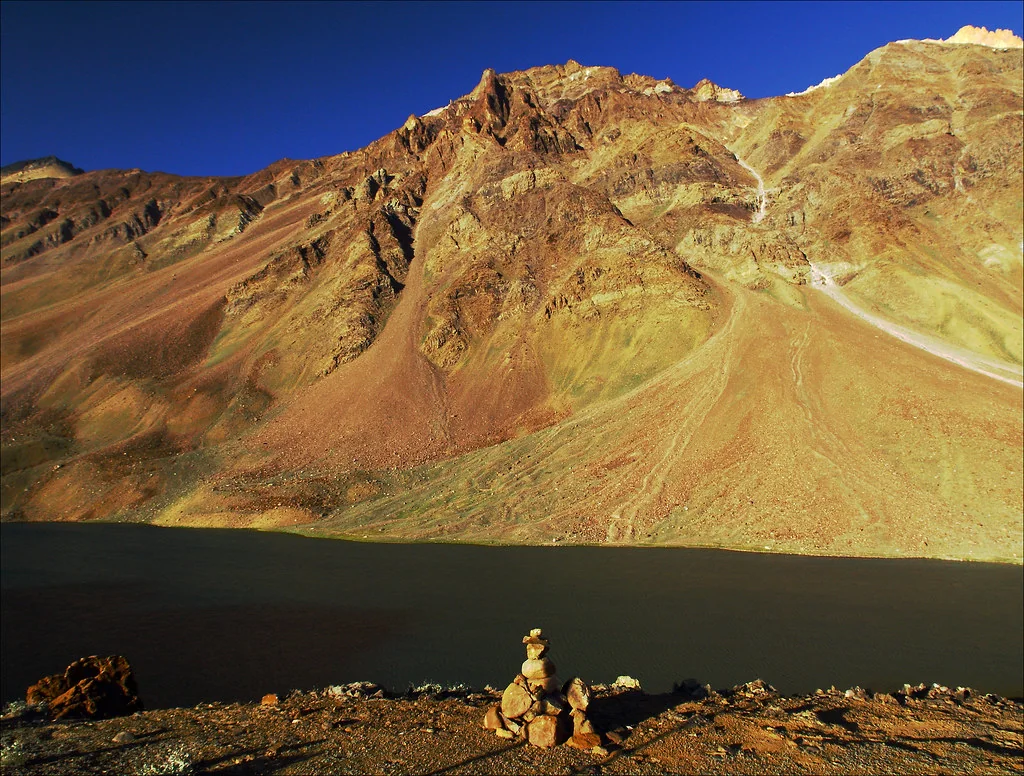
The circuit closes at Chandratal (4,270m), a glacially formed crescent lake in a landscape of complete desolation on the Kunzum La plateau. The water shifts from turquoise to deep blue across the day and violet at sunset. The 2 km walk around the lake shore is one of the simplest and most affecting walks of the entire circuit.
Important Notes
- Best Season: Late June to early October. The Kinnaur–Spiti road via Shimla is accessible from late May, but Kunzum Pass (the exit to Manali) typically opens in late June. September is the optimal month for this tour — the roads are fully open, the skies are at their clearest, the villages are at their most active before the pre-winter exodus, and the light on the valley walls is at its finest. October is possible for the first half of the route but Kunzum and Chandratal may close with early snowfall from late October onward.
- Activity Level: Easy to Moderate. The tour is primarily a drive-and-walk experience. The most demanding elements are the high-altitude driving days (Kunzum La 4,551m on Day 9) and the optional Dhankar Lake hike (Day 5, 2 hours return, easy to moderate). No technical terrain, no trekking equipment required. Comfortable walking shoes are adequate for all village and monastery visits.
- Tour Type: Point-to-point circuit — Shimla to Manali. Not a loop. The circuit begins at Shimla and ends at Manali; your arrival in Shimla and departure from Manali are not included in the programme. Allow extra time at both ends for onward travel connections.
- Altitude: The tour spends five consecutive days above 3,800m (Days 4–8) and crosses Kunzum La at 4,551m on Day 9. Altitude sickness is a genuine concern; the gradual ascent via Kinnaur provides better acclimatisation than a direct Manali approach, but the transition from Tabo (3,280m) to Kaza (3,800m) and the high villages (4,400–4,587m) still deserves respect. Read our guide to altitude sickness before departure.
- Inner Line Permit: Foreign nationals require an Inner Line Permit to enter Spiti. This is arranged by Summit Routes on your behalf before entry at the Sumdo checkpoint. Carry your original passport throughout — it will be checked at multiple points. See our permits guide.
- Accommodation Standard: Spiti is a remote region — guesthouse accommodation throughout the valley is simple, clean, and genuine rather than hotel-grade. The best accommodation in Kaza (Spiti Sarai or Deyzor Hotel) is a noticeable step up from the smaller village guesthouses earlier in the route. Expect shared bathrooms or basic attached facilities, locally cooked meals, and intermittent electricity and Wi-Fi. This is part of the authentic Spiti experience rather than a limitation of the programme.
- Cultural Respect: Spiti is a Tibetan Buddhist community. Remove shoes at monastery entrances, dress modestly, never touch religious objects or thangkas, and ask before photographing monks or ceremonies. Your guide provides full guidance at each site. The communities here have limited outside contact and genuine cultural respect from visitors is both expected and appreciated.
Brief Itinerary
| Day 1 | Arrive Shimla (2,205m) — Orientation |
| Day 2 | Drive Shimla → Sangla, Kinnaur (2,680m) | ~190 km |
| Day 3 | Drive Sangla → Kalpa (2,960m) — Kinnaur Kailash |
| Day 4 | Drive Kalpa → Tabo (3,280m) — Enter Spiti | ~170 km |
| Day 5 | Tabo Cave Temples — Drive to Dhankar (3,894m) — Dhankar Lake Hike |
| Day 6 | Dhankar → Pin Valley — Drive to Kaza (3,800m) |
| Day 7 | Kaza — Key Monastery (4,166m), Kibber (4,270m), Chicham Bridge |
| Day 8 | Kaza — Langza (4,460m), Komic (4,587m), Hikkim Post Office |
| Day 9 | Kaza → Kunzum Pass (4,551m) → Chandratal Lake → Manali | ~200 km |
| Day 10 | Departure from Manali |
Arrive Shimla — Depart Manali, Himachal Pradesh, India
Similar Tours

LADAKH DELIGHT TRIP
Level: Easy | Duration: 10 Days | Best Time: Jun–Sep | From: $880
MAJESTIC KASHMIR
Level: Easy | Duration: 7 Days | Best Time: Mar–Sep | From: $550
GOLDEN TRIANGLE TOUR
Level: Easy | Duration: 4 Days | Best Time: Oct–Mar | From: $495