How difficult is Island Peak Expedition Nepal?
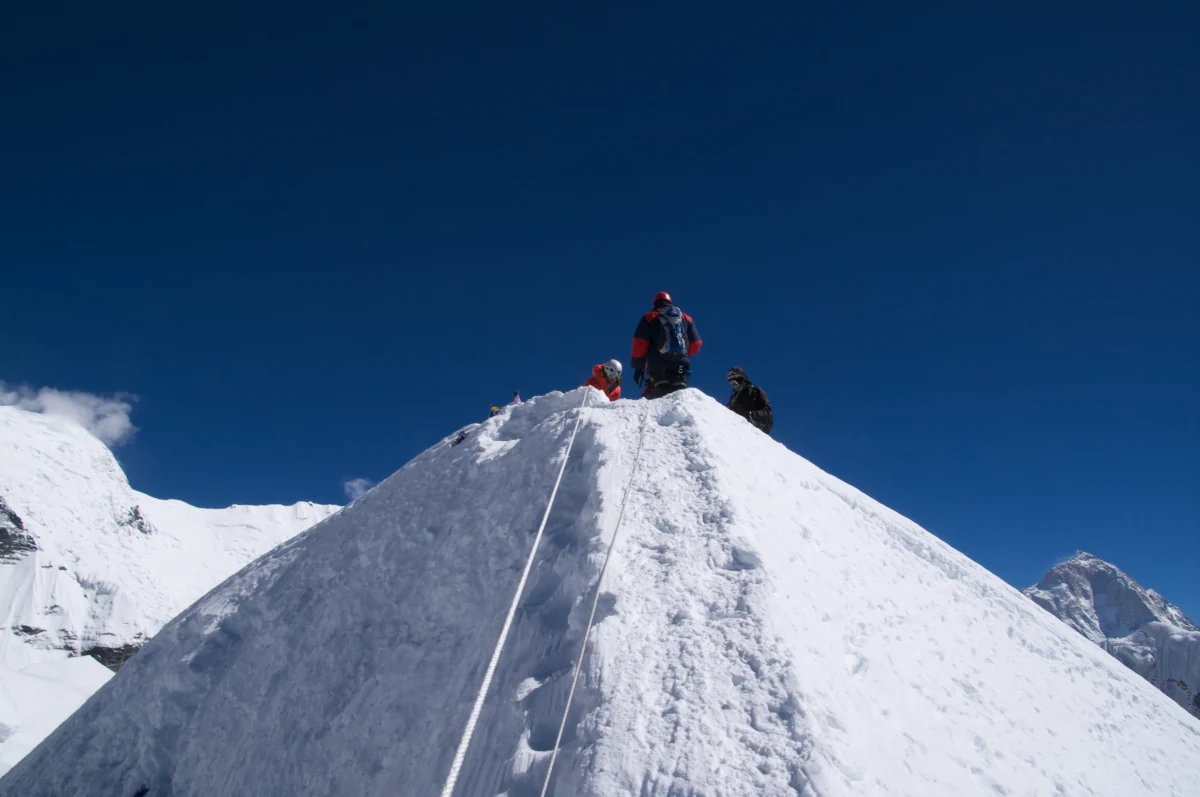
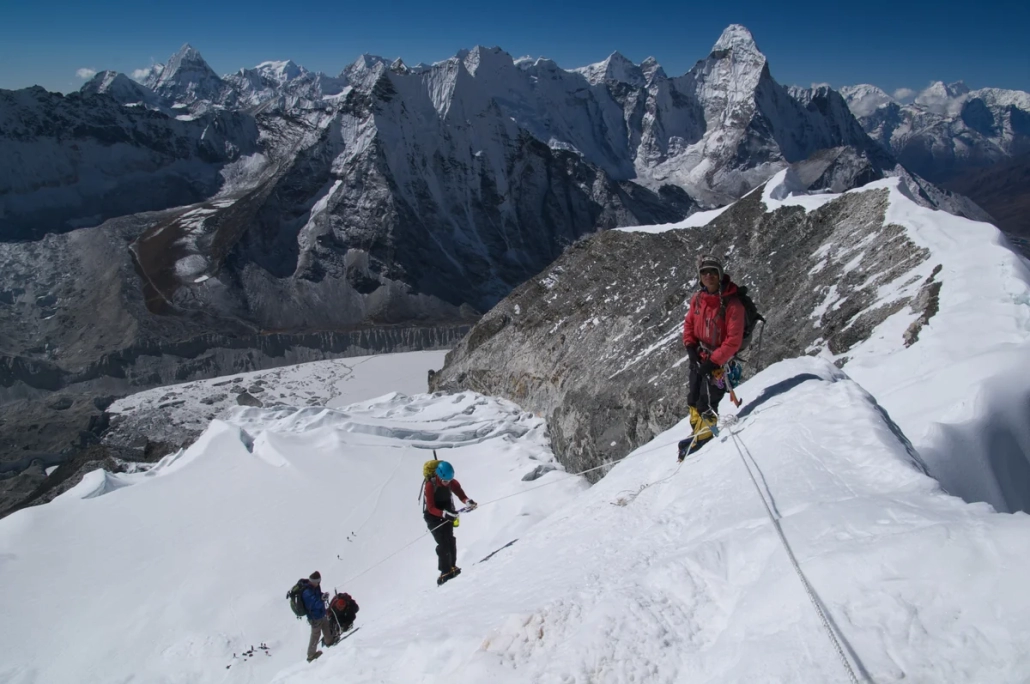
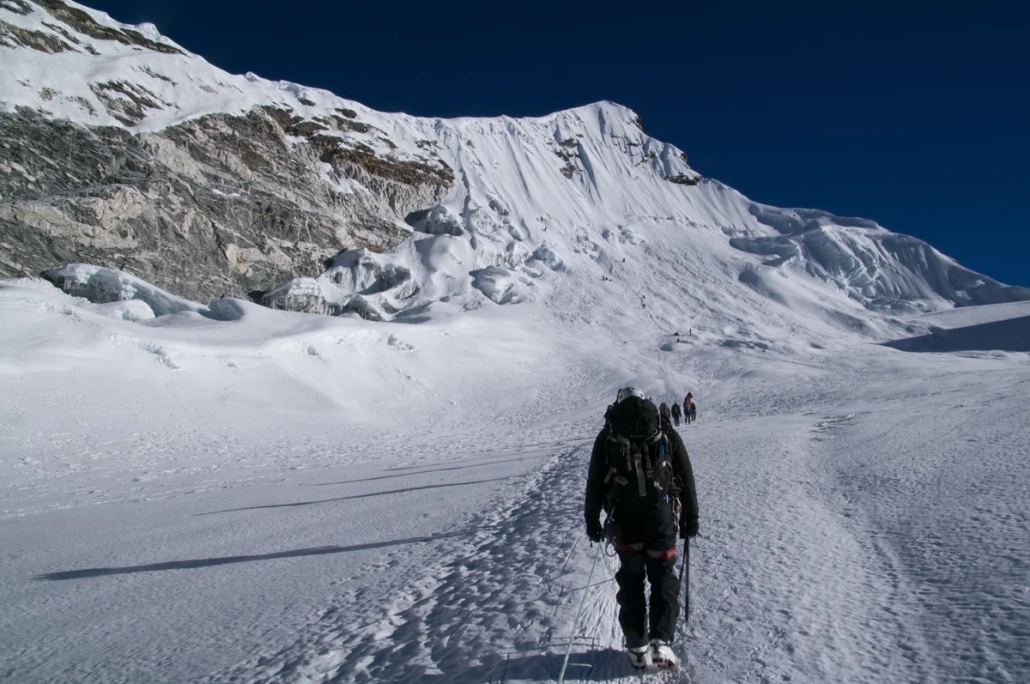
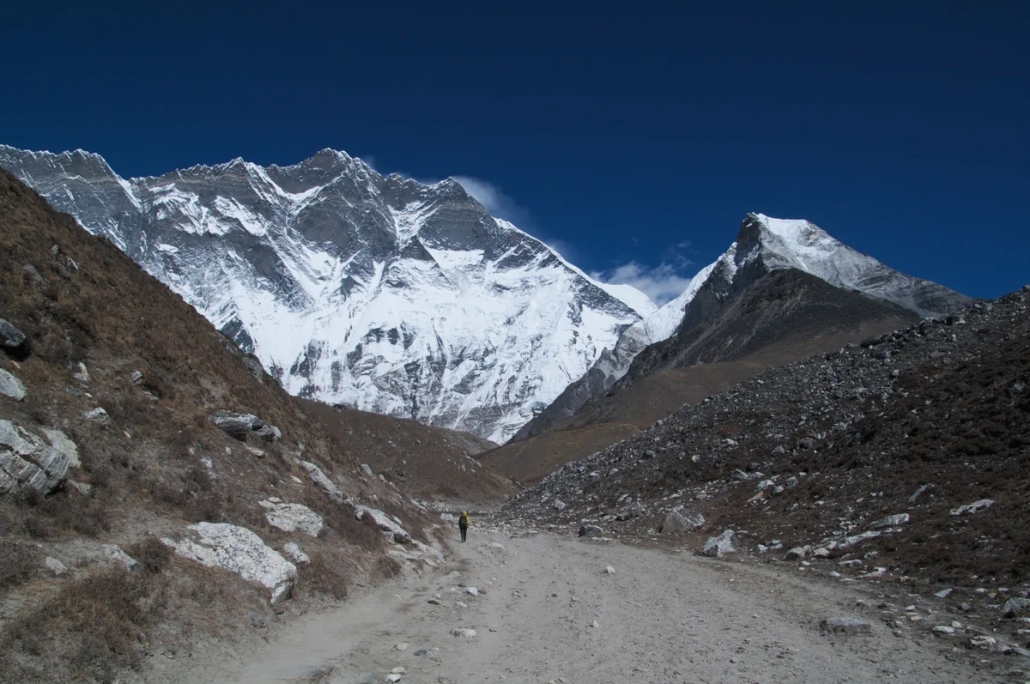
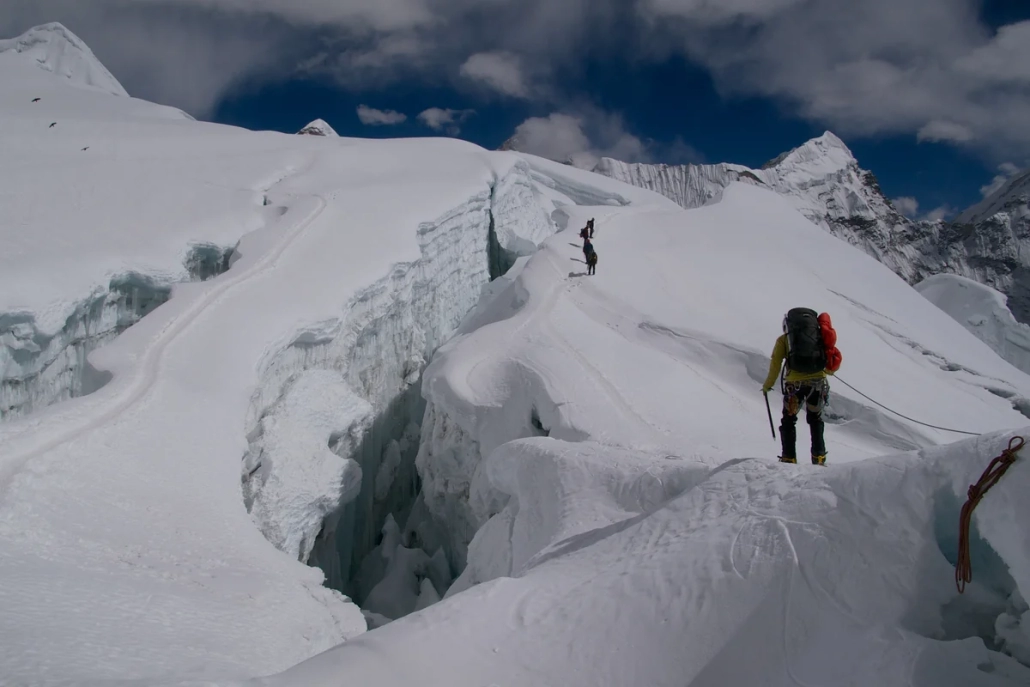
Island Peak is a serious technical climb rated strenuous-to-demanding. The approach is a well-established high-altitude trek, but the upper mountain features a crevassed glacier and a sustained 200m fixed-rope headwall at 40–50°. No prior mountaineering experience is required, but you must be fit, comfortable at altitude, and prepared to follow guide instruction precisely on the headwall.
Do I need trekking experience to join Island Peak Expedition Nepal?
Prior mountaineering experience is not required, but you should have completed multi-day trekking at altitude — ideally above 4,000m — before attempting Island Peak. A good base fitness level is essential. We include a full pre-climb technical training session at base camp covering crampon technique, ice axe use, fixed-line ascending, and jumar operation.
When is the best time to do the Island Peak Expedition Nepal?
Island Peak has two reliable seasons: spring (late March–May) and autumn (late September–November). October is the single best month — stable weather windows, settled jet stream, and exceptional visibility on the summit. Spring is also excellent and popular with climbers combining the peak with an Everest Base Camp approach. Monsoon (June–August) and winter (December–February) are not recommended.
What permits are required and do you arrange them?
Yes — we arrange everything. Required permits are the Island Peak climbing permit (issued by the Nepal Mountaineering Association), Sagarmatha National Park entry permit, and TIMS card. All are included in your expedition price and handled by Summit Routes before departure. You do not need to arrange any permits independently.
What's included in the price?
The price includes domestic flights (Kathmandu–Lukla–Kathmandu), hotel in Kathmandu, all tea house accommodation on trek, expedition tents at base camp and high camp, all meals as per itinerary, certified high-altitude guide, porter support, all technical climbing equipment (crampons, harness, ice axe, helmet, fixed lines, jumar ascenders, carabiners), all permits, pulse oximeter monitoring, and pre-climb technical training. International flights, Nepal visa, travel insurance, personal clothing, and tips are not included.
How do I get to the starting point?
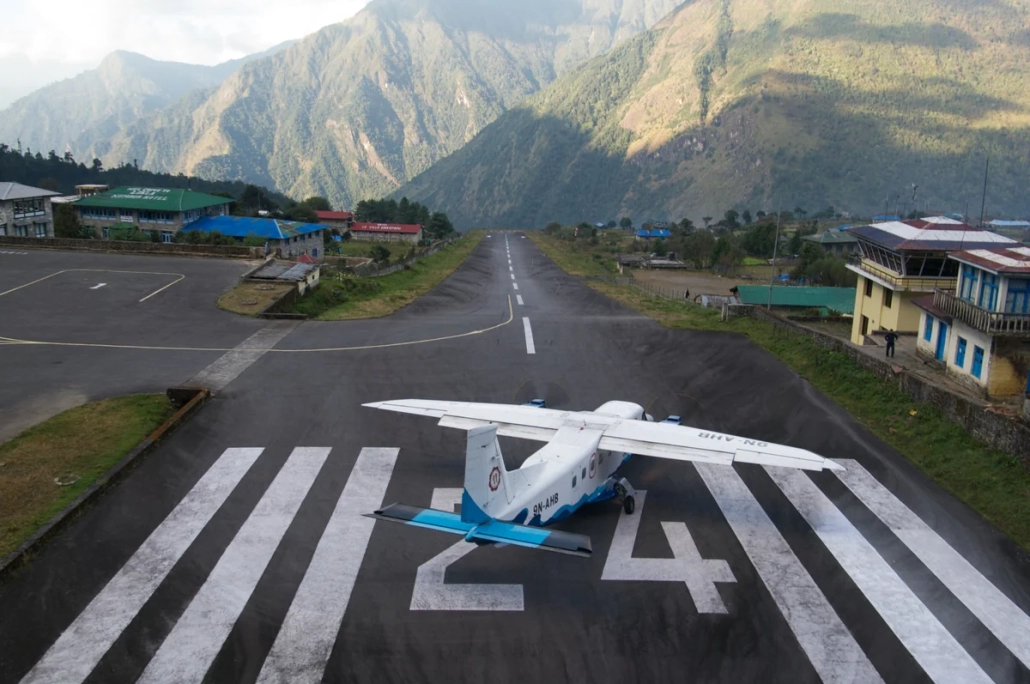
The expedition starts and ends in Kathmandu. From Kathmandu you fly to Lukla (35 minutes) on Day 2 — domestic flight tickets are included in your price. We handle all airport transfers and flight bookings. Lukla flights operate in the early morning and are subject to weather; our itinerary includes contingency time for delays.
What accommodation is provided during the trip?
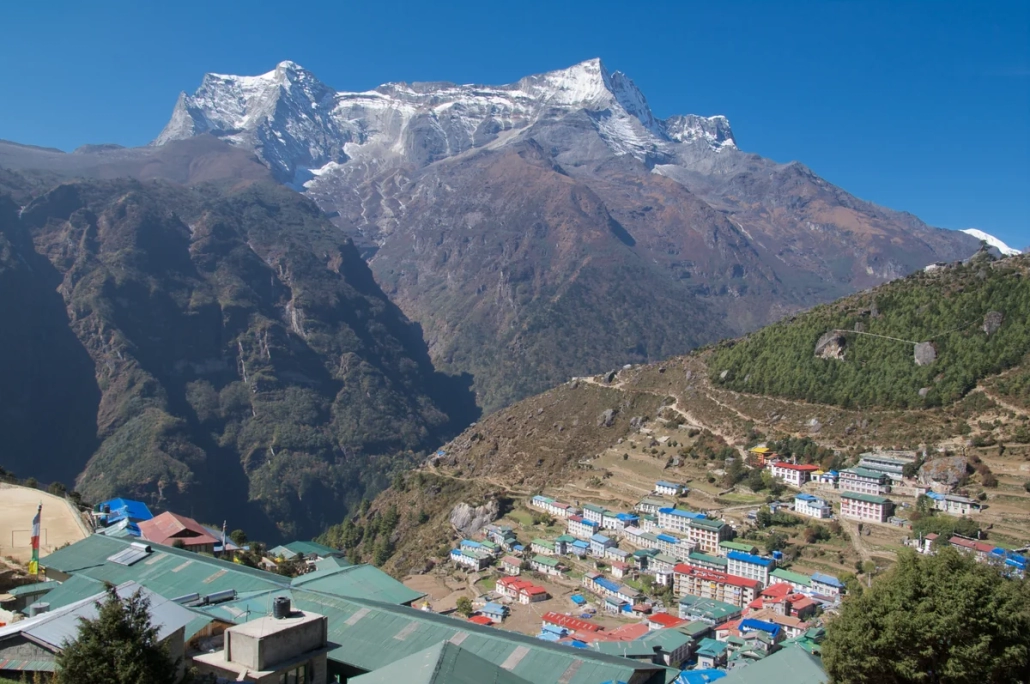
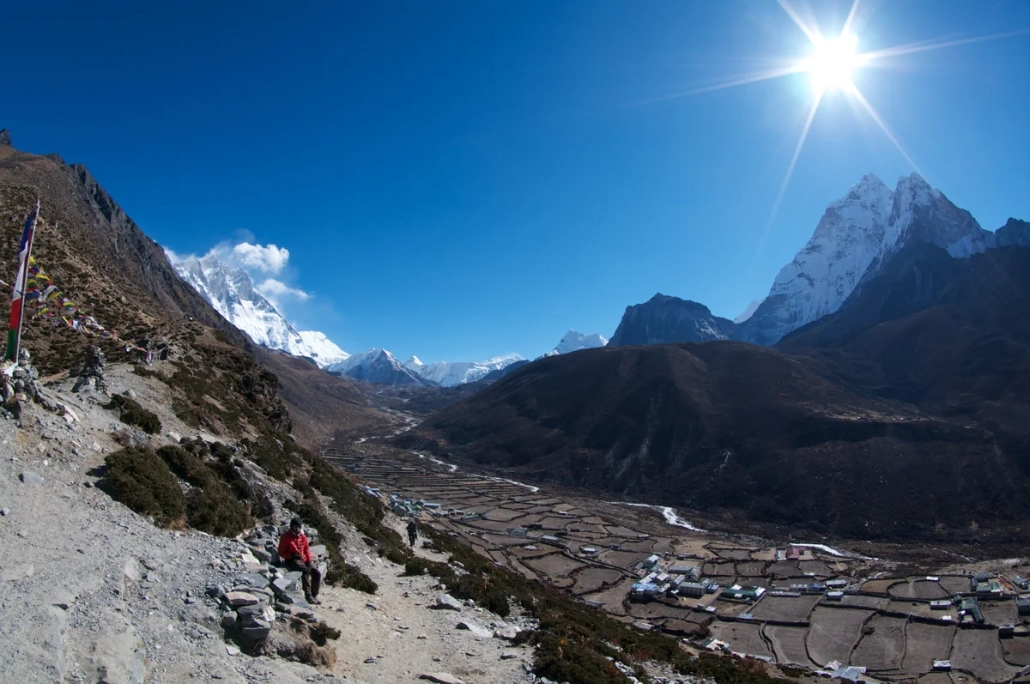
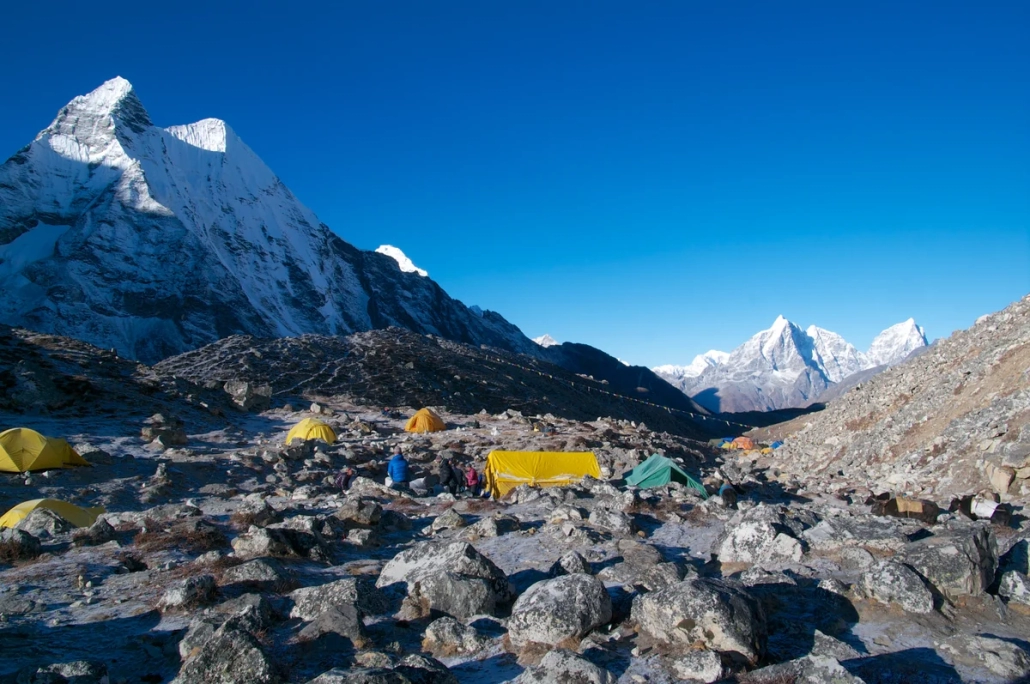
In Kathmandu: twin-sharing hotel (Hotel Amaryllis or similar). On trek from Lukla to Chhukung: twin-sharing tea house rooms. Tea house quality is good in Namche and Dingboche; facilities are more basic at Chhukung. At Island Peak Base Camp (5,100m) and High Camp (5,600m): expedition tents provided by Summit Routes. A sleeping bag rated to -15°C is essential from Dingboche upwards.
What kind of food is served, and can you cater to dietary requirements?
Tea houses serve a varied menu — dal bhat, pasta, noodles, soup, eggs, porridge, and local Sherpa dishes. Food quality is reliable as far as Dingboche; above that, menus simplify. At base camp and high camp our cook team prepares hot meals and drinks. We can accommodate vegetarian, vegan, and gluten-free requirements — please advise us at booking so we can confirm arrangements with tea house owners in advance.
What should I pack for this trip?
Key items: insulated mountaineering boots (compatible with crampons), crampons (provided), harness (provided), ice axe (provided), helmet (provided), -15°C sleeping bag, down jacket, waterproof shell jacket and trousers, mid-layer fleece, moisture-wicking base layers, trekking poles, headlamp with spare batteries, UV-protective sunglasses and glacier goggles, sunscreen (SPF 50+), personal first aid kit, and water purification tablets or filter. A full detailed packing list is provided on booking.
Can I join as a solo traveller?
Yes. Solo travellers are welcome and join small guided groups. The price listed is based on 2 climbers sharing; a solo supplement applies for single room and private guide allocation — contact us for the current solo rate.
How large are your groups?
We run small groups — typically 2 to 8 climbers. This is a deliberate policy: smaller teams mean better guide-to-climber ratios on the headwall, more personalised acclimatisation monitoring, and faster, safer movement on summit day. We do not operate large commercial groups on this route.
Do I need travel insurance?
Yes — travel insurance is mandatory and non-negotiable. Your policy must explicitly cover technical mountaineering above 6,000m and helicopter evacuation from altitude. Standard travel insurance is not sufficient. We recommend checking policies from specialist providers before booking and can suggest suitable options on enquiry. Proof of adequate coverage is required before the expedition begins.
What is the maximum altitude reached on this trek?
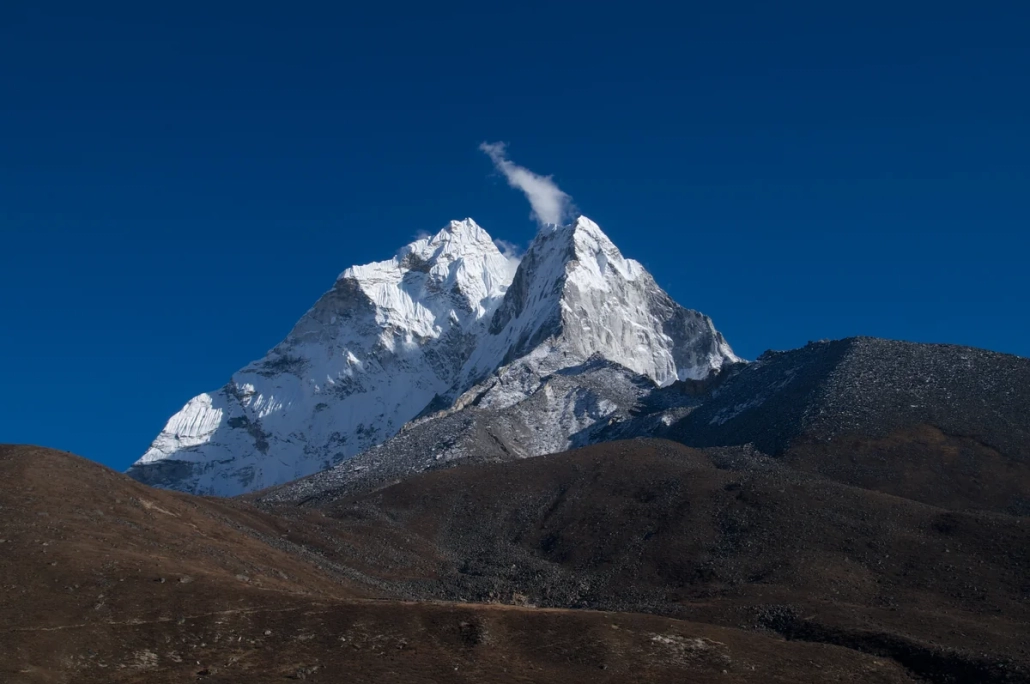
The maximum altitude on this expedition is the summit of Island Peak / Imja Tse at 6,189m. High Camp sits at 5,600m and Chhukung Ri — reached on the acclimatisation day — reaches 5,546m. Three structured acclimatisation days are built into the itinerary specifically to prepare your body for summit altitude.
How are meals handled on the trail?
All meals listed in the day-by-day itinerary are included. On trek, breakfast and dinner are served at the tea house where you are staying; lunches are taken at a tea house en route. At base camp and high camp, hot meals and drinks are prepared by our camp cook. Calorie-dense snacks for summit day are provided. Safe drinking water — via boiling, treatment tablets, or filter — is available throughout; we strongly advise against buying single-use plastic bottles.
What happens if I develop altitude sickness?
Your guide monitors every team member daily using a pulse oximeter and assesses symptoms throughout. If you show signs of Acute Mountain Sickness (AMS) that do not resolve with rest and hydration, the protocol is immediate descent — this is non-negotiable. We carry a Gamow bag and supplemental oxygen for emergency use. In serious cases, helicopter evacuation from the Chhukung area is possible — this is why comprehensive insurance including helicopter evacuation is mandatory on this expedition.
Is there mobile coverage during the trek?
NTC (Nepal Telecom) and Ncell mobile networks provide coverage in Namche Bazaar and Dingboche. Signal becomes intermittent above Dingboche and is unreliable at Chhukung and above. Base camp and high camp should be treated as off-grid. WiFi is available (for a small charge) at most Namche tea houses. We recommend informing family or contacts that communication will be limited above Dingboche.
What toilet facilities are available on the trek?
Tea houses from Lukla to Chhukung have basic toilet facilities — squat toilets are standard; Western-style toilets exist in some Namche establishments. At Island Peak Base Camp and High Camp, expedition toilet tents with portable facilities are provided by Summit Routes. Trekking poles are useful on steep descent sections where toilet stops require leaving the trail.
Are your trek guides licensed and certified?
Yes. All Summit Routes guides hold a Nepal Tourism Board (NTB) trekking guide licence and Nepal Mountaineering Association (NMA) climbing certification. Our lead guides have extensive verified summit experience on Island Peak specifically and are trained in wilderness first aid and high-altitude rescue protocols. You will be briefed on your guide's qualifications at the Day 1 expedition meeting in Kathmandu.
Can I combine Island Peak with the Everest Base Camp trek?
Yes — and it's one of the most popular combinations in the Khumbu. The Island Peak approach shares the EBC trail as far as Dingboche, making it straightforward to extend the itinerary to include Gorak Shep, Everest Base Camp (5,364m), and Kala Patthar (5,545m) before or after the climb. Contact us to discuss a combined itinerary — we build these on request and the additional days add significant value to the overall expedition.